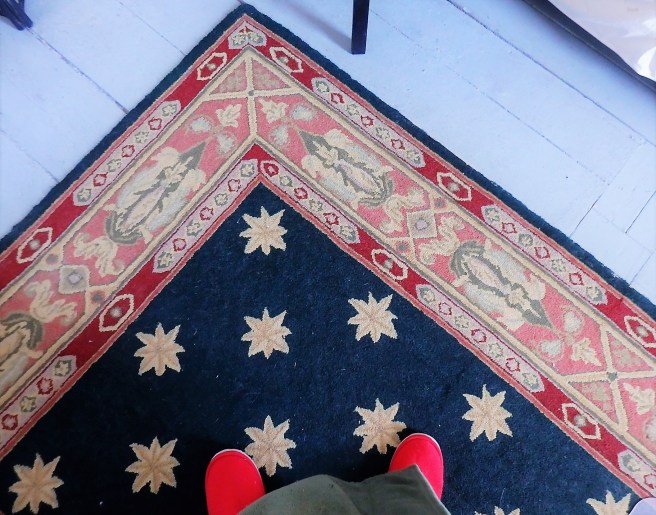
Early twilight
You never know what we'll churn up in cleaning a stall
It may be a small city, but even so, it was home. And much larger than where I’m now living.
So some of what I miss?
For someone raised like me far from the ocean, trying to pin down places along the coastline can be confounding.
Eastport, for instance, lies within famed Fundy Bay yet also has Cobscook Bay lapping its west banks and Passamaquoddy Bay on its east.
What gives?
Well, let’s say the bays are like Matreshka Dolls, one fitting inside another one that fits within yet another one and so on.
Cobscook Bay, for instance, includes the smaller East, South, Sipp, Dennys, and Whiting bays.
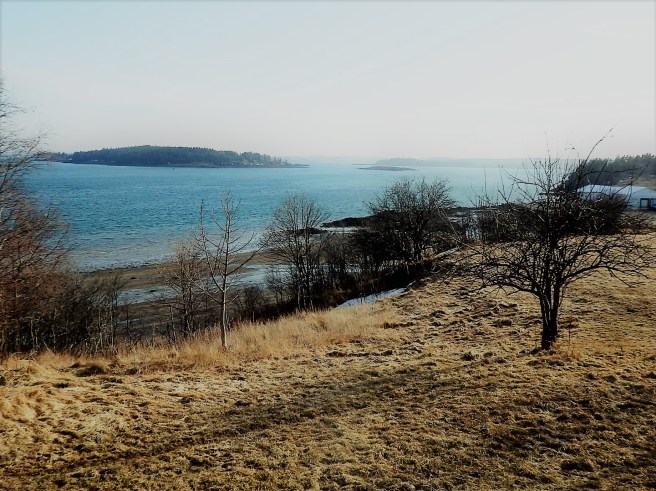
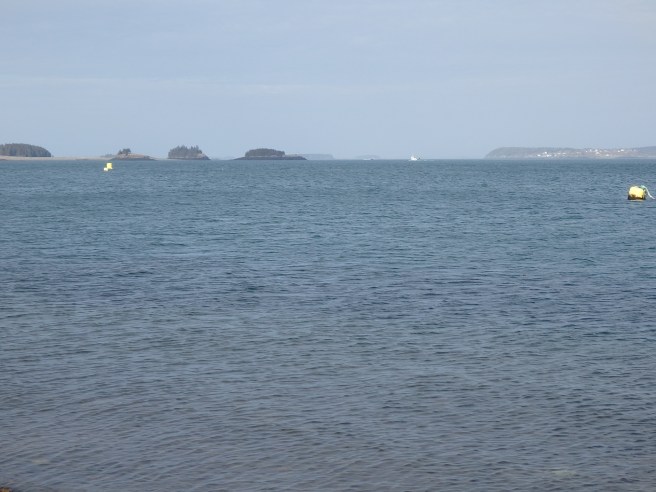
I guess it’s like a New Yorker saying she’s from Flatbush, meaning a part of Brooklyn within New York City, which does – contrary to the knowledge of many Manhattanites – sprawl far beyond their little island.
So Eastport can justly claim to be the City in the Bay. Or several.
There’s a widespread assumption across America that no household should be without a turkey on Thanksgiving Day. And that’s led many charitably inclined groups and individuals to deliver free turkeys to poorer families ahead of the holiday.
What gets overlooked is the realities of the recipients themselves. Some may not welcome the challenge in front of them. Some don’t cook, period. Some don’t have a full-sized oven. Some live by themselves and have no way of dealing with all that meat. Carving the heavy roast gets tricky, even if you have a large platter and the right knife and serving fork. Not everyone even likes the taste, white meat or dark.
I’ve heard of one group home that had a dozen of the brick-solid big birds stashed away in the bottom of its chest-style freezer, no date attached. A diligent volunteer finally took charge and into the trash they went, one a week.
Speaking of volunteers. Many people step up to volunteer for the holidays, only to be told the spots are already filled and then turn testy. What do you mean?
Doing good can get tricky and lead to hurt feelings.
The real needs continue all year, especially through the depth of winter, when the food and volunteers would be most welcome.
That holiday spirit doesn’t have to be expended all at once, does it?
Top student
Good son, good daughter
Good spouse
Careful and caring lover
Loyal and hard worker
Good citizen
Faithful member
Prized customer
Patient and firm parent
Quietly humorous
You know, the model of rectitude
Goodly recipe for disaster
Pinpoints of pain to remind
of deep shame
there were no fish in the moat
of the slimy castle
as for crocodiles?
One of the early centers of religious resistance was Salem, at the north end of Massachusetts Bay. Though infamous for the witch trials that began in 1692, it had a long history of dissenters, with the Baptist pioneer Roger Williams the most prominent.
It was founded in 1626, four years before Boston, not by Puritans but rather fishermen, led by Roger Conant from Devonshire, when the English settlers of Gloucester on Cape Ann relocated to the mouth of the Naumkeag River, the former site of an ancient Native village and trading center. After witnessing the mounting fear and despair at the Plymouth colony as its leadership devolved and a quarter of its population departed, Conant was especially troubled by what he saw as the rising violence and fanaticism of its Pilgrim authorities, even after he had moved away to Cape Ann.
Conant headed the new settlement for two years before he was replaced by John Endecott on the orders of the Massachusetts Bay colony and the village renamed Salem, reflecting the Puritan ideal of a New Jerusalem. It grew into an active seaport, becoming by 1790 the sixth largest city in the new nation.
Salem was also ten miles closer than Boston to Dover and soon had had a small but significant Quaker presence.
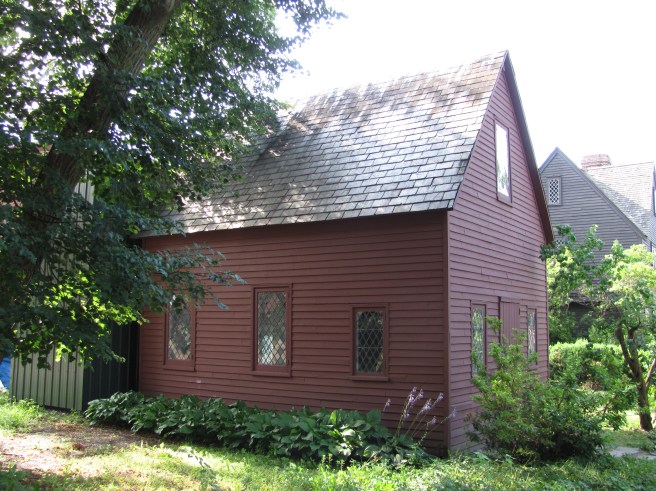
Its early persecutions were among the most intense anywhere, yet a remnant held on. The Meeting grew and spread, eventually relocating to Lynn and reaching up the Merrimack Valley of New Hampshire.
While Salem is infamous for its persecution of witches – events that ended the Puritan strand of New England Calvinist orthodoxy – I’m convinced that a bigger picture would be a culture clash between the Devon folkways and those of the East Anglia Puritans, something I investigate in Dover to the north.
In that fullness, Salem would be a really hot story all its own.
~*~
Check out my new book, Quaking Dover, available in a Nook edition at Barnes & Noble.
Welcome to Dover’s upcoming 400th anniversary.
my list: Desert Boots so I’ll have a very comfortable pair of shoes at the office, but it turns out that the original kind are impossible to find, and pricey but rather than being upset by that fact today, I found myself intrigued by the hunt, I’ll just keep watching and waiting a jaunty rain-repellant windbreaker to replace the decade-old one my now ex-wife gave me which I’ve never really liked, color or cut, even when it drew favorable comments, it just wasn’t me or a dressy raincoat as in a London Fog, I still wound up buying some nice, and essential, overdue items, including winter boots the old L.L. Bean muck-luck style, but fun and necessary for a New England winter now I can mud it up with the best of the locals and keep my head up and a new wallet as for the Japanese robe or pea jacket very nice cut but still more than the one at the sporting goods store), not yet a consumerist, yrs truly in comfy new wraps
His return address was his last name and nine-digit Zip code.