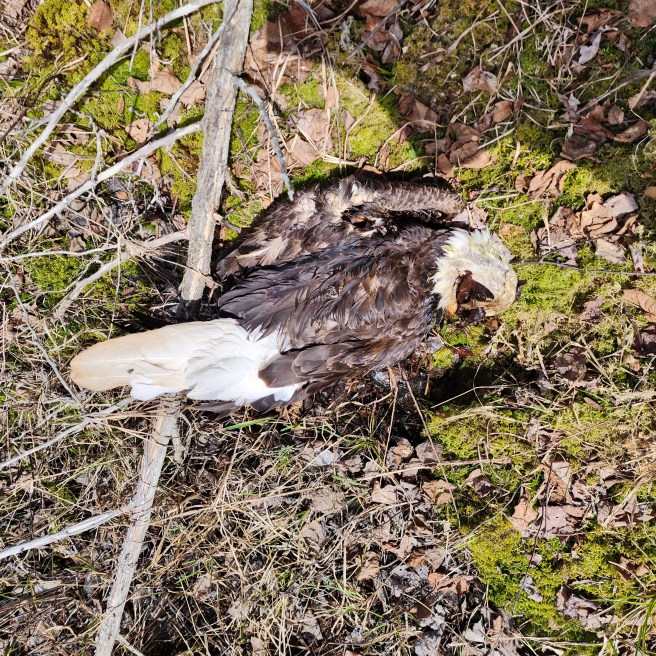
Message from another era

Art Newlin rose in Meeting and told of driving two- or twelve-hitch rigs as a young man. Once he hitched two strawberry roans to a tongue, and while they’d worked a rig before, they’d always followed and never really felt the bit or anything. Nonetheless, they performed well, even backing on command. Only later did he realize the risk he’d taken. “They could’ve become runaways. They could’ve killed me.”

He credited faith for protecting him.

Moody moon

Playing around with the night setting on my Galaxy cell phone has produced some surprises, beginning with the aurora borealis.

Here is a full moon that looks like a sun in the breaking storm clouds. Zoom in and you’ll see that the moon’s round. Cameras see a moon as being much smaller than our eyes do.

Any photo that shows otherwise has been manipulated. Care to discuss?

Sharpen your knives for social occasions

If you’re among those of us who have some reticence or even dread about attending social gatherings where you have to engage in small talk – with strangers, no less – I’m offering this. Admittedly, mostly for my own reference, as needed. Please, please, add to the list when it comes to comments.

Get ready to tell an offending bore:

  1. “It’s hilarious watching you try to fit your entire vocabulary into one sentence.”
  2. “I’d agree with you, but then we’d both be wrong.”
  3. “Thanks for sharing your misery. Now just go away.”
  4. “You’re as sharp as a marble.”
  5. “You’re so ugly you make blind kids cry.”
  6. “Your expertise in my life is both unexpected and unnecessary.”
  7. “I don’t have the time or the crayons to explain this to you.”
  8. “If you were twice as smart as you are, you’d be half as smart as you think you are.”
  9. “May you stink forever. Just the way you are.”
  10. “Keep rolling your eyes, and you might find a brain back there.”

If your slicing and dicing of their mental lack of ability doesn’t do the trick, you can turn to their vanity or birth origins.

  1. “You’re not pretty enough to be this stupid.”
  2. “You are depriving some village somewhere of an idiot.”
  3. “Your birth certificate is an apology letter from the condom factory.”
  4. “Your parents are disappointed in you.”
  5. “It was called a jumpoline before your mom jumped on it.”
  6. “You’ll never need birth control with a personality like that.”
  7. “Oh, did the middle of my sentence interrupt the beginning of yours?”
  8. “You’re the reason God created the middle finger.”
  9. “People who tolerate you on a daily basis are real heroes.”
  10. “You should really come with a warning label.”

I really do regret not having these when the character of Cassia was emerging in my novel What’s Left, they’re right up her alley. To continue in what’s becoming my first-ever Triple Tendrils:

  1. “I don’t know what your problem is, but I’m guessing it’s hard to pronounce.”
  2. “You look like something that came out of a slow cooker.”
  3. “I’ll never forget the first time we met. But I’ll keep trying.”
  4. “Please just tell me you don’t plan to home-school your kids.”
  5. “You look like a ‘before’ picture.”
  6. “You’re about as useful as an ashtray on a motorcycle.”
  7. “I’ve seen people like you before, but I had to pay admission.”
  8. “If you’re going to be two-faced, at least make one of them pretty.”
  9. “You are proof that evolution can go in reverse.” Or, “I believed in evolution until I met you.”
  10. “I hope your wife brings a date to your funeral.”

I suspect this just touches the surface of what’s exchanged on the scrimmage line of professional football games.

Besides, please remember, when somebody says, “Where have I seen you before?,” just reply, “I’m a porn star.” Or at least, “Was.”

Should you want to compare the before and after

You may have guessed we’ve taken tons of photos of the renovations in our historic home. You’ve been viewing some as progress reports in this weekly series, but those show steps along the way.

Sometimes it’s helpful to skip over those, going straight from how things looked at the beginning and then leaping to what the work delivered in the upstairs phase of renovations.

Should you be interested in that comparison, I’ve assembled a gallery of before-and-after contrasts in a free photo album, one I’m making available to you, should you be interested.

As I’ll explain next week, we’re hardly as far along as we had hoped. So I’m calling the album “Before & Midway After.”

In assembling the photographs, I was emotionally overrun in seeing how dramatic some of the advances have been. It’s helpful in facing the remaining work ahead.

~*~

That said, check out the free tour at Thistle Finch editions.

You’ll also find the history of the house and its previous residents in another booklet, should you be curious.

Gleanings from the pressroom

After four decades as a daily newspaper editor, I was recognizing I was among the last in a long tradition. I do worry about the future of community and democracy in the aftermath.

As I pitched my novel at the time, “Hi, my name is Jnana Hodson and I’m not surprised American newspapers are in crisis. In my four decades as a professional journalist, I’ve seen news coverage under attack – not just from the outside, but more crucially from owners who first bled billions from its renewed growth and vitality and now give the product away without a viable business model in sight. My novel, Hometown News, pays homage to the battle and what could have been, along with journalists’ role in the survival of communities across the continent and democracy itself. Along the way, Brautigan and Molly Ivins meet Dilbert and Kafka on the prairie, even when their names, sex, and races are changed. May I introduce you to the full story?”

An alternative version went, “Hi, my name is Jnana Hodson and my career as a journalist has placed me in enough decaying industrial cities to shape my novel of high-level global investor intrigue. If you think Dilbert tells of modern business operations, think again. May I show you my take?”

A bigger question was why anyone would be interested in this or see themselves impacted by these corporate machinations.

At their best, daily newspapers have shaped both a central identity for localities across America, and their conscience.

For many years, despite the arcane business structure in which advertising rather than sales of copies provided the bulk of the income, hometown newspapers were cash cows for their owners – who, in turn, paid their reporters and editors minimal wages.

The resulting management practices – reflecting those of surrounding corporate retailers and manufacturers – have put news coverage at risk, endangering both the communities and democracy itself. How will they, like the reporters and editors, survive?

As a journalist, my touchstones have been Accurate, Informative, Useful, and Entertaining. I wonder how those apply to poetry, as well.

The novel is cast on an experimental frame, one that anticipated AI and then backed away from it. The daily events, however, get weirder and weirder as the demands and tensions ratch up. You might even think of it a dystopian.

That said, you can find Hometown News in the digital platform of your choice at Smashwords, the Apple Store, Barnes & Noble’s Nook, Scribd, Sony’s Kobo, and other fine ebook retailers. It’s also available in paper and Kindle at Amazon, or you can ask your local library to obtain it.

So how are you, really?

If AGE was a sign of WISDOM, a vast age might have been a sign of great wisdom, so that Biblical ages stand not as a measure of time but as a scaling of experience or insight.

Methuselah, 969 years; Noah, 950.

Also, the the closer to historic times, the more normal – i.e., smaller the number, though still bigger than today’s.

Good thing negative numbers don’t apply here.