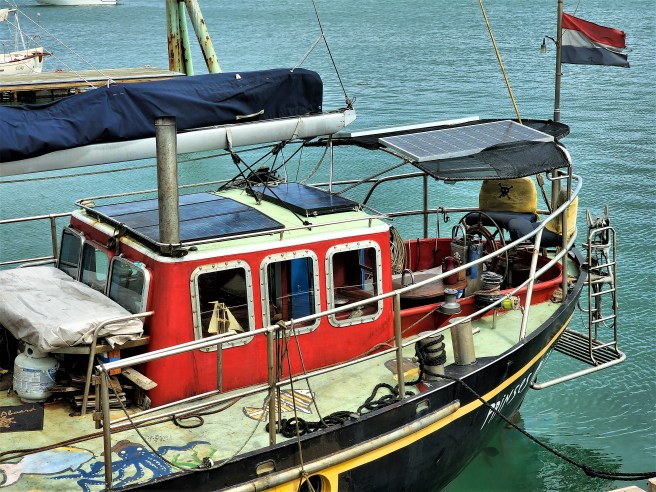
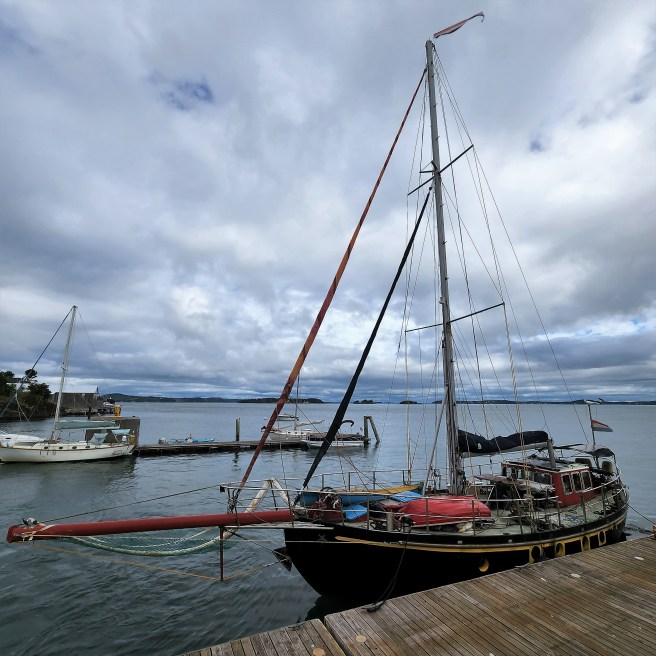
The Prinses Mia had been sailed across the Atlantic by one man.
You never know what we'll churn up in cleaning a stall
The Prinses Mia had been sailed across the Atlantic by one man.
Fellow blogger Gary Hart recently had an eulogy for Outdoor Photography magazine, which prompted this comment from me:
“Your post mortem is one more story of the toll the Internet is taking on the income of many creative individuals. Freelance writers were devastated early on when their secondary markets for republication withered (anyone could already find the piece online). In professional photography, you lost sales to people who found your images posted online and were content with copies they printed out at home.
“Magazines faced a double whammy as content moved to the Web. Not only were sales and subscriptions shrinking, so was advertising, which paid most of the bills. In the case of photography, the products themselves were being rendered obsolete. Film, chemicals, papers, enlargers, darkrooms, and so on became ancient history and then, for the most part, so have cameras. What I’m getting with my cell phone, for instance, is unbelievable (though I know its imperfections, too). As a parallel, you can discuss what happened to the professional wedding photographer.
“Finally, as much as I love paper, I’m using far less of it as either a writer or a reader. Downsizing is one reason but not the only one.”
I’m living in an apartment complex, at first something like the townhouses atop the hill, morphing into something more like the garden apartments with a central parking lot outside Baltimore.
We’re moving out or at least cleaning up, carrying stuff out to the dumpster.
I’m not sure who the “us” is, but soon it feels like just me, especially when body parts or something suspicious is found, say, under the front-door mat and then in strange corners within the house. Gotta clean ’em out before they start stinkin’. Into the dumpster, then, when nobody’s looking.
Early on, I’m trying to protect the chil’kins, not that I/we think she’s done anything but rather that she would be a prime suspect.
As this progresses, though, it’s my ex- who’s in question. For whatever reason, I’m still trying to help her, cover for her.
In either case, I’d be under heightened suspicion.
From the start of our travel season, things here have felt slow. I haven’t seen as many cars as I have in the past or as many states represented in their license plates, for one thing. While there are people on the streets, they’re not crowds.
Even down on Cape Cod, summer homes are available rather than reserved long in advance.
Somehow, we’re hearing that retail sales have been holding up, but we’re also seeing more vacancies in the Airbnb options, too. (The latter hits us as good news, considering how the investment buyers have been skewering the home market away from working families we desperately need.)
Still, visitors are the key to retail businesses in our part of Maine – our version of Black Friday has already passed or soon will, unlike the day after Thanksgiving push elsewhere. Maybe the visits by cruise ships in the foliage season will provide a much needed boost.
Could much of this reflect the reality that inflation is finally pinching family budgets?
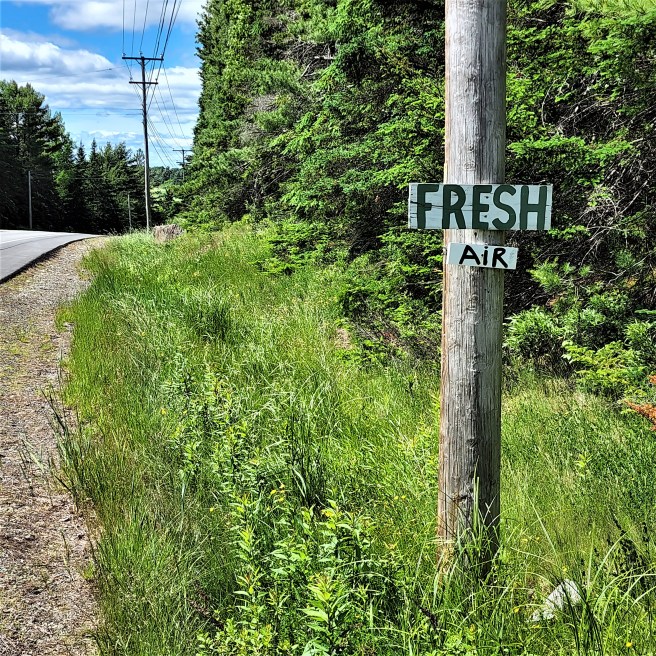
As seen on your side of U.S. 1 heading north in Edmunds Township. It always makes us smile.
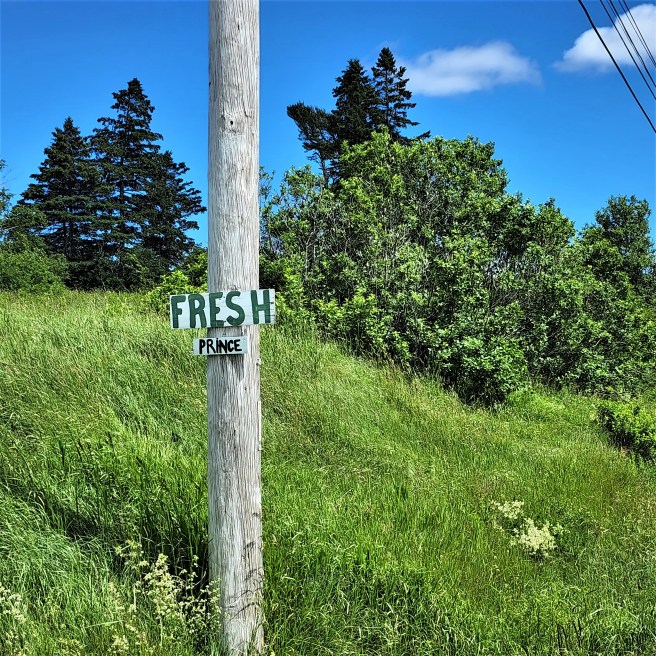
Or on the other side of the road when you’re heading south.
I’m still reeling from the decision at the New York Times to disband its sports department.
Admittedly, for much of my career, a newspaper’s sports staff was a mystery, set aside in a different room or even more elaborately from the rest of the reporters and editors. Sports seemed to demand a disproportional amount of newsprint, too, compared to, say, world news or even politics.
Only later, working at the fringe of Greater Boston with its intense team fanaticism, did I come to see things differently.
For one thing, the Boston Globe had some great sports coverage and I soon admired some of the writers. For another, I could see how the Red Sox, Patriots, Celtics, and Bruins held the region together at a gut level as an extended community. Many of our obituaries, for instance, included the line, “She was an avid Sox fan” or the like. Devoted? Sometimes “rabid” would have been more accurate, but “avid” was the term of choice.
As a journalist, I envied the excellence at the top papers that resulted from deep planning and commitment as well as top talent. I could see that a few papers stood head and shoulders above the rest on that front – the Globe, Washington Post, Chicago Tribune, Los Angeles Times, and, of course, the New York Times. Gee, they even had expense accounts and travel.
~*~
Thus, the idea of shuttering a first-class operation seems extremely drastic.
Yet, the Times does differ from most other dailies. It is, for one thing, a national newspaper far more than a New York paper. High school sports are trivial in its scope, as are many college games. The city itself has not just one or two professional teams – or even four, like Boston – but two in baseball alone and two in football plus two in basketball, does anyone even care about hockey or soccer or tennis or golf or whatever else in that crush? There’s only so much space in a paper, after all.
Much of the coverage will be drawn from the Times’ subsidiary website, The Athlete, which already has a national focus and staffing. There is reason for concern, though, that those positions do not have union representation, unlike the Times.
The decision likely reflects a recognition of major shifts in sports coverage across the city and the county as well. Internet access means that scores and other statistics can be instantly browsed from anywhere, rather than having to wait for the paper to arrive.
Cable has expanded game availability to fans, even those living far from the teams.
And then what’s there left to say after ‘round-the-clock sports talk radio and all the call-in chatter?
The Times’ arts coverage has already undergone a similar evolution, with less coverage of events and more emphasis on trends and influences. That seems to be what we can expect on the athletic front next.
In the newsroom, we were always perplexed that a section that generated so much readership – presumably male – failed to garner much advertising support. Department stores and supermarkets didn’t want to appear there, nor did auto dealers and parts stores. As for restaurants or movie theaters or politicians? Remember, advertising, rather than subscribers or newsstand sales, paid the bulk of the bills.
Deadlines, too, often hinged on the final score of the day, at least for the morning papers. Back in the day when we still had afternoon papers, you could get a more leisurely account there before the next game. Either way, those deadlines have moved up for other reasons. No waiting around breathlessly.
~*~
How this will play out on local papers remains to be seen. All I know is that staffing and space and advertising are all way down there, too.
And here I was about to investigate all kinds of melons, starting with cantaloupe.

That said, just consider:
Rather than making most of our charitable contributions ad lib during the year, we’ve adapted a new strategy since moving Way Downeast.
This is the time of the year when we decide what we’re supporting and then make those payments.
The process means deciding between giving smaller amounts to a wider range of organizations or instead sending somewhat larger amounts focused on a few recipients.
Mailing those checks off always feels good, though we also wish we were sending more.

Roseway in port
a place
as beautiful
as anywhere
on this planet
 Jnana's Red Barn