Now, for the latest installment of our island garden venture

Few of our nights until late as June have stayed above 50 degrees, a detail that will likely surprise fellow gardeners across the rest of the U.S. That’s meant bringing flats of basil and other temperature-sensitive plants indoors overnight, in addition to the plastic tunnels my wife devised to warm the soil and protect our tomato and pepper seedlings outdoors until now.

Our new raised beds, as previously noted here at the Red Barn, are an attempt to work around extremely high lead levels in our soil. Beyond that, the chicken-wire fencing is an attempt to deter Moose Island’s ravenous urban deer. That barrier will be further reinforced in the coming days.

The first night our fencing was up on the first bed, though, a wayward critter wound up bending – not just pulling over – one of the corner posts. The steel post was the stronger, pricier variety. I couldn’t bend it, I’ll tell you – not without an anvil and heavy hammer or maybe some heavy jumping. (Sorry I didn’t get a photo. We were too busy getting that corner repaired against a possible second attack.)

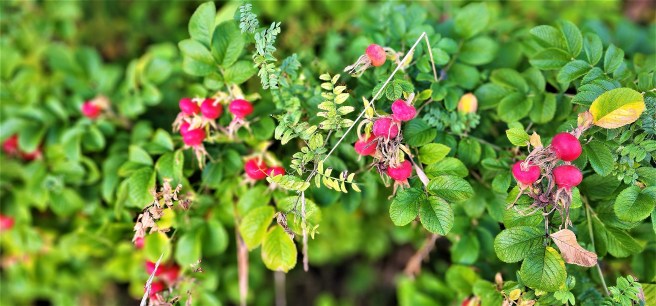
So here’s where we are now, in the midst of about three inches of rain in a week or so.

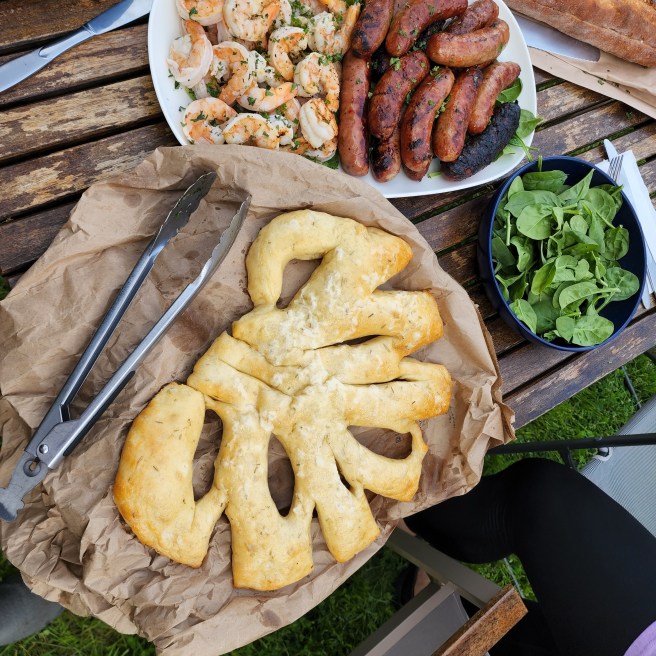
With a garden, there’s always more to do. Sometimes it even involves eating.

Massachusetts was primed for Revolution long before Paul Revere’s midnight ride

Quite simply, Britain betrayed the settlers in her colonies, from Ireland onward. The American plaint, “Taxation without representation,” reflected that all too succinctly. Where were the colonies’ representatives in Parliament or the House of Lords? What voice did they have?

The colonists identified as English but must have seen they were definitely second-class citizens. Or maybe third.

As I note in my book Quaking Dover, the Massachusetts Bay colony’s Calvinist intransigence had been at odds with the Crown from its inception. The first shot heard ‘round the world could have erupted at any point.

My pivotal question is just what turned the Loyalists in Virginia so far as to reject the monarchy as well and then join in taking up arms in the revolutionary cause by 1776?

The other colonies moved somewhere in between.

Not that all of this falls much within the scope of my little 400-year history volume as I try to keep a focus.

Echoes, sometimes with music

SITTING IN AN AUDIENCE, AWAITING the speaker, when a woman comes out to introduce the guest lecturer, I hear the name but get up and leave.

Hearing of my move, my therapist shouts his approval.


AT A CONTRADANCE BEING HELD IN A HOME … a place with multiple rooms … everyone knows me as a friend, at least the regulars. I hear that she’s also there, in another room. But this time, she’s trying to catch up with me as I circulate – and she never succeeds. A role reversal.


SHE COMES TO ME TO RECONCILE, but when we’re naked abed, I put my head into her loose essence – and push her away with such force it awakens me at 5 a.m.

Head? Not hand?


BECAUSE OF SOME ACCIDENT, has a porcelain face but her own lips. We must swim to the cove to get my car (somehow, the vital papers in my wallet do not get wet).


A SHADOW BRUNETTE IN HER DWELLING – very sexy, serious, freckled, long hair and a white peasant blouse – fleets through. She informs me the goddess had a ride lined up to Dallas (presumably her regular lover) but backed out when she heard I was coming, would be there … cancelled because she wanted to “square things off with you.”

Facing each other again, her kisses are conflicted, broken off as if she might want to return. Even so, a distance and brooding.

Of course, I was the one who was driving to her place.


A FIGURE – LONG FLAXEN HAIR – walks past the clump of people I’m hanging out with.

“Who was that?” a young woman says to me.

“Oh, just somebody I used to love. Used to love very much.”

I hate having to admit an unexpected ugly side of the hippie outbreak

The ’60s and early ’70s unleashed a revolution, one I tend to see from the progressive side of the experience.

But after writing about it in many of my novels, I’m having to acknowledge a dark underbelly.

There was a strand of ghouls who opposed any kind of common action, including politics. They were deeply angry but wanted to hide in a hole rather than celebrate oneness with each other and the greater universe and then work to advance that awareness.

That points, unfortunately, to the Trumpist ultra-right wing or Libertarians with no broader community sense other than what they can get out of it directly – or otherwise get out of supporting, period.

What I’m having to see as anarchy.

Yup, I’ve overlooked those who just wanted to escape any, well, Peace & Love revolution outside of their own turtle shell.

Maybe that’s the side the younger generations have perceived all too clearly in their negative view of hippie, despite the many other aspects they openly pursue.


A few prime strolls around here

Visitors on the street sometimes ask me about good places to hike around here, and looking at them, I don’t always want to recommend anything too strenuous. On my part, I do miss the old carriage road up Garrison Hill back in Dover, New Hampshire, but you can’t beat some of these.

  1. Quoddy Head State Park in Lubec. The parking lot is close to an iconic lighthouse, spectacular bluffs, and an Arctic peat bog. Not a bad combo as an introduction.
  2. Shackford State Park in Eastport. It almost became an oil refinery. The central trail leads to an incredible panorama of Cobscook Bay and a high probability of seeing bald eagles.
  3. Matthews Island. Also in Eastport, this Maine Coastal Heritage Trust site can be reached only at low tide. Getting there will give definitely give you a sense of mudflats. MCHT also has nearby Treat Island, which we intend to explore by renting a water taxi to get us there and back.
  4. MCHT includes other personal favorites, starting with Boot Cove in Lubec. If you like Acadia National Park, you’ll love these lesser known opportunities. Nose around in this Red Barn blog, you’ll find photographic evidence why.
  5. The Bold Coast public lands in Cutler. This is for the serious hiker, one willing to walk 1½ miles to get to the rugged ocean. From there, though, there’s a six-mile breathtaking clifftop trail along the restless ocean, and even primitive camping on a limited first-come, first-served basis at the end. The trailhead parking lot can be overflowing in prime season.
  6. Cobscook Shores. Thanks to a newer family trust, 15 small waterfront sites provide public opportunities for investigation. Most have outhouse or indoor plumbing facilities as well as picnicking, sometimes in screened-in pavilions around a single table. My favorite to date is Morang Cove.
  7. Moosehorn National Wildlife Refuge. So far, I’ve sampled trails at its Baring and Calais district but there is more in Edmunds township. Former roads, now used only for ranger access, make for broad, easy pathways through a variety of ecosystems. My big caveat for inland trails is to be prepared for black flies from late April into July. They can definitely spoil and outing.
  8. Downeast Sunrise Trail, atop an abandoned rail line. I see it primarily as ATV and snowmobiling in season, but it does offer insights in inland ecologies. Again, note the black fly warning.
  9. Mowry Beach in Lubec and Roque Bluffs State Park south of Machias. Sandy beaches in Downeast Maine are rare. Here are two wonderful exceptions for those who want to indulge in a long barefoot walk.
  10. Back in Eastport, the Hillside Cemetery is worth nosing about. It’s newer than many classic New England burial grounds, but the engraved stones add up to some fascinating stories.

With the Canadian border now reopened, I’m looking forward to some treks on Campobello Island, both at the Roosevelt international park and a few other sites.