Previous posts this year have presented my curiosity in petroglyphs and petrographs even before I relocated to the Pacific Northwest and saw them in the wild. That time in my life was accompanied by a growing appreciation of tribal mythologies, which I believe enhances an understanding of the region’s unique biosphere. Living at the edge of the Yakama reservation meant the ancient stories I was reading were local news.
The Indigenous spirit was something I missed in my dwelling-places since in my moves eastward across the Midwest, Baltimore, and then New Hampshire.
Eastport, however, with its Passamaquoddy legacy and presence, has revived that. The tribe somehow survived oppression and is rediscovering and reclaiming much of its culture, thanks to the pioneering efforts of individuals like the late Wayne A. Newell, who wrote more than 40 books in the supposedly dying Passamaquoddy language before his first book in English in 2021, Kuhkomossonuk Akonutomuwinokot, Stories Our Grandmothers Told Us.
The late Fredda Paul was doing something similar within herbal medicine and healing lore, while also continuing the storytelling tradition. They are both deeply missed.
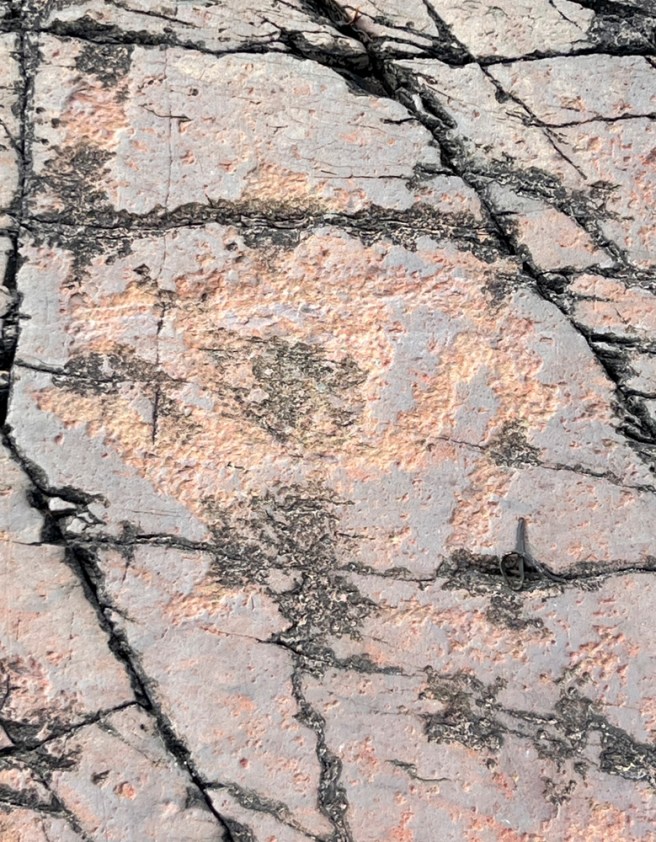
Tribal historian Donald Soctomah has furthered their work. These days, he’s part of a circle documenting and preserving the local petroglyphs in the face of rising sea levels. His online presentation earlier this year with the Border Historical Society in Eastport had me realizing I may have been overlooking impressions here – many are stippled into the rock surface in a way that they’re visible only early in the morning or late afternoon, especially if the stone is wetted. A video, A Song of the Drum, and several short YouTube videos from Machiasport can be found for free online.
Another wonderful video, Rhythm of the Heart, on the life of birch-bark canoe maker David Moses Bridges, is also available for free online. It’s a moving testimony. He passed way too early.


