… the federal senate will never be able to transform itself, by gradual usurpation, into an independent and aristocratic body; we are warranted in believing that if such a revolution should ever happen from causes which the foresight of man cannot guard against, the house of representatives with the people on their side will at all times be able to bring back the constitution to its primitive form and principles.
News reports of protesting students seizing administration buildings on college campuses do bring back memories, and I know I’m not alone.
While there had been earlier seizures of campus facilities in the late ‘60s at schools like Berkeley, Columbia, and Ann Arbor, Michigan, the killing of four protesters at Kent State on May 4, 1970, and two more at Jackson State on May 14 triggered student strikes across the country.
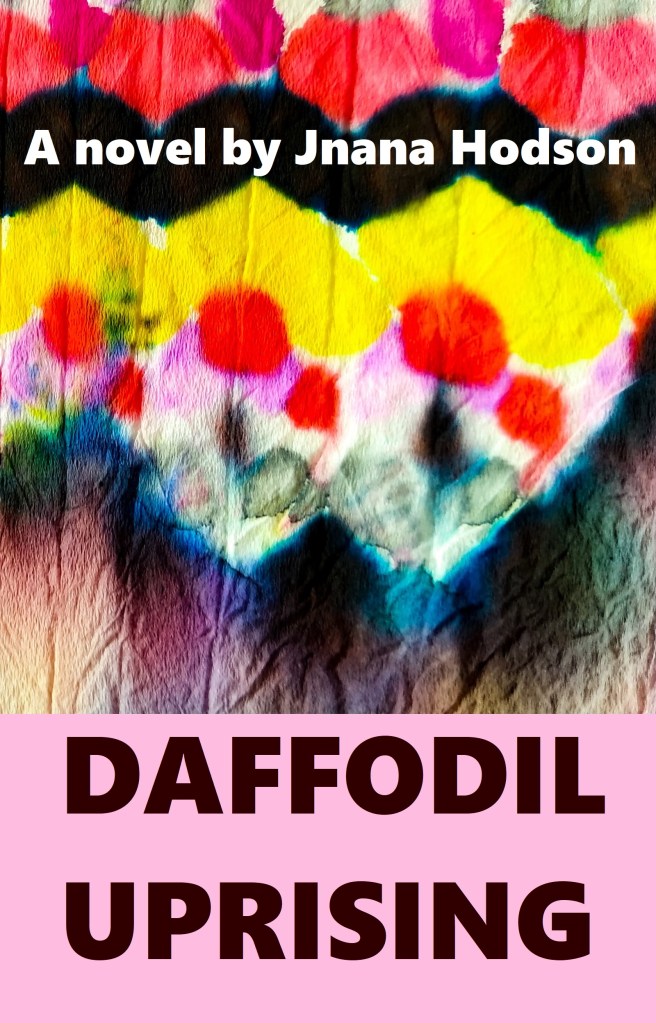
The causes ran deeper than just the ongoing warfare in Vietnam and surrounding countries, do note. My novel, Daffodil Uprising, reflects my experiences in Indiana.
The making of a hippie
While I’m not about to engage in comparisons of today and back then, I am fascinated in the focus on university funding in the current protests. My novel saw that as a crucial factor back then, too – it wasn’t just Dow Chemical, either.
Of special concern, now and back then, is the depth of frustration that finally erupts as rage and revolt. We can assume there are elements in the current actions that go back well before the current Gaza crisis, and not just in the Middle East. They need to be addressed.
I believe that many of the problems in contemporary America can be traced back to unresolved issues from the late ‘60s For now, I’ll leave it at that.
For any of you interested, my book is available at the Apple Store, Barnes & Noble’s Nook, Scribd, Smashwords, Sony’s Kobo, and other fine ebook retailers, and at Amazon in both Kindle and paperback.
Geographically, Maine is the biggest state in New England – almost as large as the other five combined. That still ranks it 39th in size in the USA.
We’re also famed for some very dry humorists and fresh-from-the-sea lobsters the way Vermont’s stuck with maple syrup and a red leaves identity.
Beyond that, here are some other things that are unique to the place.
It’s the only state that borders just one other state. But it’s also the only one that borders three Canadian provinces.
Half of the state is essentially unpopulated – mostly forests, wetlands, black flies, and mosquitoes.
Its craggy coastline is longer than California’s, but shorter than Florida’s and Louisiana’s and, of course, Alaska. While the state and its tidal waters are famed for lighthouses, Michigan – with four of the freshwater Great Lakes ringing its shores – has the most.
The bulk of the population lives within twenty miles of the Atlantic and its tides. Less well known are the interior towns between the ocean and the mountains. Much of that belt’s suffering, economically.
Some of the state’s biggest urban centers are divided into two cities by rivers: Portland/South Portland, Lewiston/Auburn, Bangor/Brewer, Biddeford/Saco, Brunswick/Topsham. Calias/Saint Stephen is complicated by the U.S.-Canada border. Augusta and Waterville are the prime exceptions.
Demographically, Mainers are the oldest folks in the country. The median age is 45.1 years. About 21.2 percent of the residents are 65 and above while only 18.5 percent is under 18.
Despite all the white steeples you see in the photos, Maine is among the four least churched states. Typically, it’s hovering at the bottom, with New Hampshire, Massachusetts, and Vermont as rivals. Some of the variation occurs when looking at religious affiliation versus measures of religiosity.
Famed outdoor outfitter L.L. Bean in Freeport can be seen as the epitome of the Pine Tree State. But quirky discount chains Mardens and Remy have their own loyal following, as adventurous visitors discover.
Maine is the leading lobster-producing state in the nation, employing more than 5,600 hundred lobstermen (male and female). The tightly regulated catch contributes more than a billion dollars to the state’s economy.
The state is also famed for its wild, lowbush blueberries. More than 70 percent of them are harvested in Washington County, where I live. Ranked by dollar value in the state’s agricultural output, the berries traditionally come in second, a bit above $100 million a year, but way below the $247 billion potato crop, mostly in Aroostook County to our north or the $137 million milk output statewide. But medical cannabis sales, at $266 million in 2020, surpassed them, and that’s without recreational marijuana figures, $72 million in 2021. They’re expected to go even higher this year.
Whittier is a poet I’ve come to know largely through Dover, where his maternal grandparents and an uncle and cousins on his father’s side lived. His parents in fact, married in our Quaker meetinghouse.
His poems aren’t about himself but rather a greater faithfulness. While he’s self-effacing, many of his works are deeply felt political and social protests that remain biting and land on-target.
Despite the seeming simplicity of his rhyming form, his lines are sharp. When you read his poems, don’t stop at the end of the line but keep moving onward as a full-sentence thought. There you can breathe. Robert Frost follows in Whittier’s footsteps.
His poem, “How the Women Went from Dover,” commemorates an important event that appears in my Quaking Dover as well.
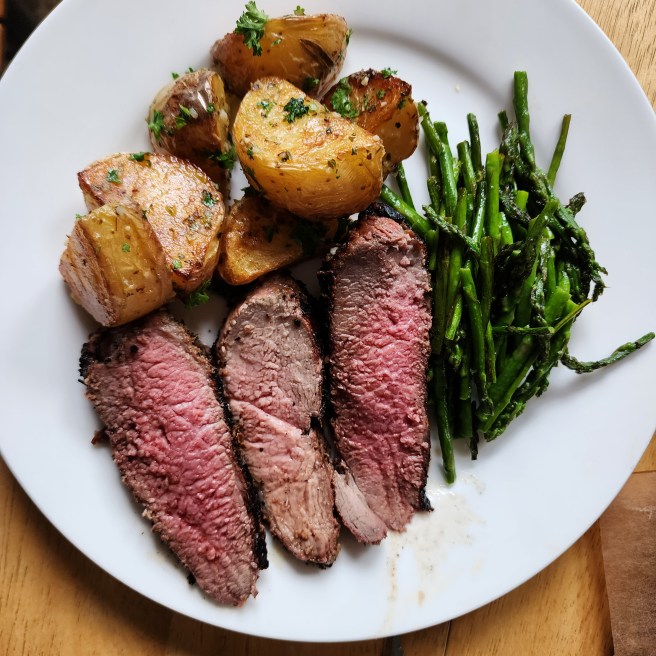
Here’s how our Pascha repast looked last year, when the Eastern Orthodox Easter observance came two weeks earlier than this year’s.
Grilled leg of lamb, medium-rare, roasted Greek potatoes, and fresh asparagus suit me as a perfect follow-up to the Eastern Holy Week observations. Or the marathon, as some justifiably refer to the sequence of services.
The quartered, peeled potatoes were coated with a mixture of olive oil, lemon juice, garlic, oregano, and fresh rosemary and placed on a small baking tray that had been sprayed with oil to make the cleanup easier. When done, the crusty exterior covered a hot creamy interior that melted in the mouth. As my late German mother-in-law would have said, this is better than God living in France.
Let me say I’m looking forward to another round today, fully aware of the glorious experience awaiting those who have observed the nearly seven weeks of strict dietary restrictions they call fasting. Truly.
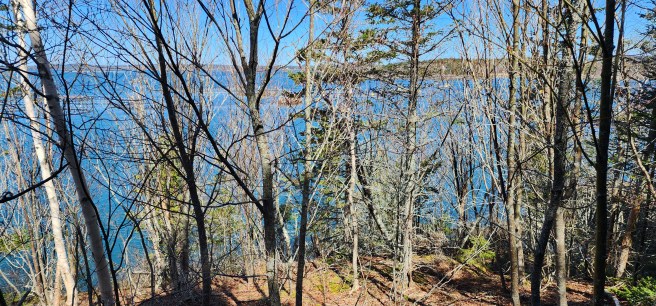
A state park right in our small city set upon Moose Island has some marvelous side trails. And to think, the site nearly became a stinky oil refinery. Hats off to citizen action!



 Jnana's Red Barn