With a sense of despair regarding the roof project and our lack of a contractor on the horizon, we went ahead and set about erecting raised garden beds for what would be my third summer of dwelling here. We would try to leave some space for a contractor to get at the house, should we ever, ever, find someone.
During one of the inevitable conversations with passers-by while installing the garden and its fencing, a trusted neighbor mentioned that she had just had some carpentry done by a former student, someone who had returned home after living and working away. She gave us his name and phone number, and an introductory conversation followed.
Yes, he could do the project, and he thought in could start at the end of August. I was startled when he said that was the upcoming August, not a year off. Could it truly be?
Naturally, there were delays while he wrapped up some other commitments, but we did find ourselves in a stunned state of disbelief when work finally began in earnest at the beginning of this past October. We finally had a contractor who not only showed up on the morning he promised, but also on the dot of the hour.
He hit the ground running, methodically, precisely.
At the heart of our big project is a new roof on the house. Not just the asphalt shingling, which itself has needed replacement – we could have found someone to do that – but the actual shape of the supporting rafters themselves. To gain much-needed interior space, the walls on the second floor are being raised. That structural work’s the complication. And how, as you’ll see.
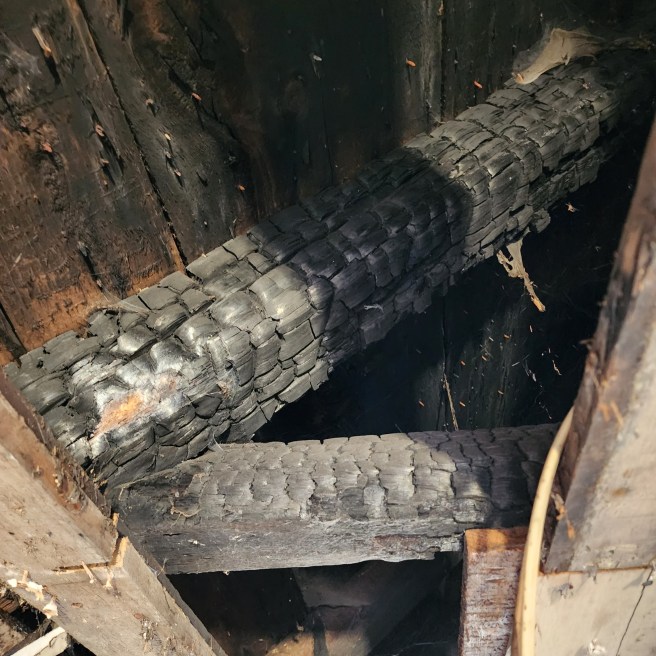
When we were considering making an offer on the house, we were told to check out the rafters for signs of charring, a consequence of the 1886 fire that destroyed the canneries, wharves, and downtown. Sure enough, ours was one of the homes suffering damage though left standing.
A few weeks before starting on the renovation, our contractor stopped by with his mentor slash consultant for a closer look. More concerning, from their point of view, was the lack of a ridge beam. The rafters from each side were simply mitered together. In addition, they were further apart than current coding would permit.
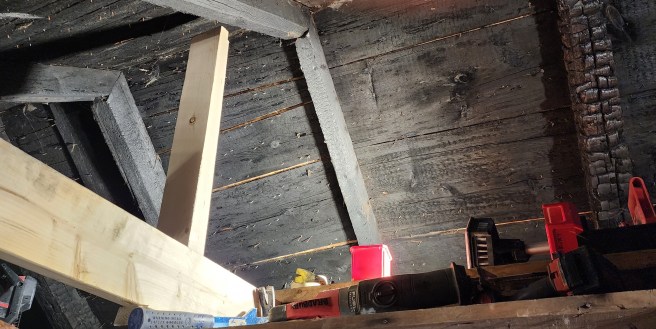
Our project would be taking place in two phases – the back half of the roof last fall and the front half in the spring. Without a ridge pole, there was nothing to hold up the remaining half and nothing to support the new raised framing.
You’ll discover where that leads.

 Jnana's Red Barn