Back in New Hampshire, our veteran carpenter/electrician had proclaimed how fascinating he found the underpinnings of an old house – what people usually call a basement, though in New England, it’s more likely to be a cellar. I’ll explain the difference someday, if I haven’t already in an early blog post. Rick said probing around the underbelly gave him insights into the soul of the residence.
He would have been impressed by our new residence at the other end of Maine, a post-and-beam full Cape with a mostly stone foundation up to 18 inches thick.
From our previous homebuying experience, which landed us in an 1890s three-story New Englander, we knew we’d face some immediate issues. At our new address, the ones that we able to address all involved the cellar.
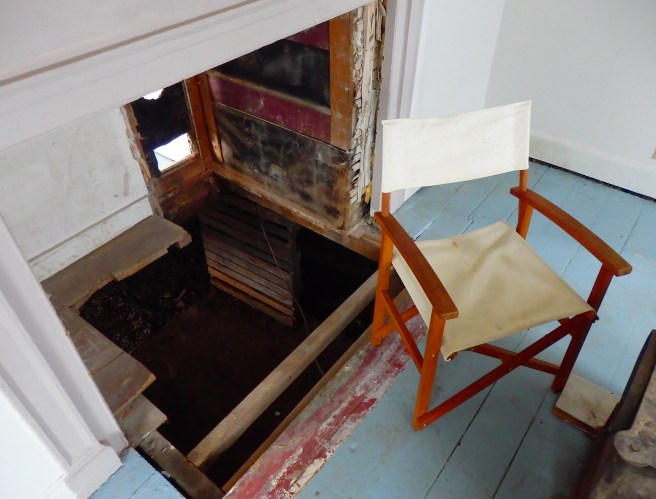
- First was the removal of a chimney that had lost half of its supportive brick arch in the cellar. The rest looked ready to go at any moment. Many of its bricks above had already collapsed into the Franklin fireplace, presenting a puzzling serpentine pattern. We insisted the chimney be removed before we closed on the house transaction. A temporary patch in the roof then covered the chimney hole.
- Next was a rusty fuel oil tank. One of its four legs was missing. The tank was replaced.
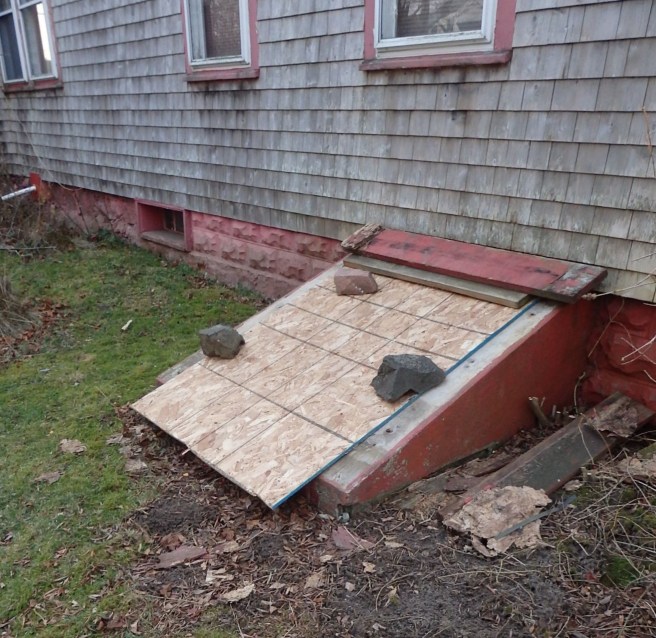
- Third was a bulkhead door. The previous cover had rotted away and, in its absence, the entry was blocked by stuffed green trash bags, which were removed before we signed off on the deal. When we moved in, that entry was a gaping hole with no cover at all. We couldn’t leave an opening like that. We’re still surprised we didn’t have raccoons or, worse, rats living down below. A strong metal bulkhead door now secures that portal.
The major issue needing to be addressed was the condition of the roof, as the insurance company insisted.
Complicating the situation was our intention of raising the rafters themselves and changing the two dormers to gain more usable and much needed space on the second floor.
The big problem was finding a contractor to take on the project. You’ll hear more on that in later installments of this series.
We simply couldn’t afford to replace the existing roof cover only to rip it off in a year or two. So we were in an anxious limbo, one that intensified with every blustering nor’easter.
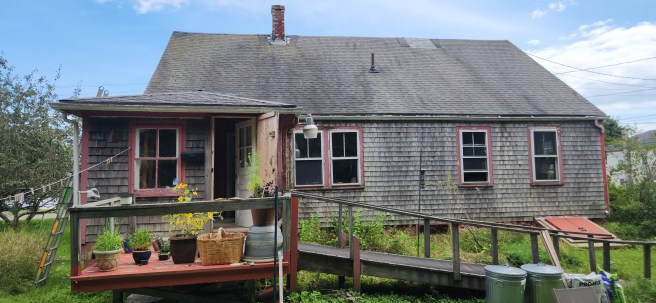
In the absence of someone willing to tackle the roof and its restructuring, we did eventually find a carpenter to address the serious floor sloping on the main floor. I do joke about being able to tell through my bare feet that I’m in an old New England house even if I’m blindfolded, so I’m not surprised our floors weren’t dead level. But structural sinking is another concern, and raising portions of the downstairs floor 5½ inches did cost us surgeon’s rates – or “away” pricing, as others told us later. It’s still not perfectly flat, but ours is an old house. For a view of that work, see Now Leveling Our Cape, posted March 8 of last year.
One benefit was that we can now use the washing machine without having it walk during its spin cycles into the cavity where the chimney had been and then crash into the cellar.
Maybe you remember the definition of a sailboat as a hole in the water into which your pour endless amounts of money.
An old house is a hole in the ground into which … as perhaps you already know.

 Jnana's Red Barn