Few of our nights until late as June have stayed above 50 degrees, a detail that will likely surprise fellow gardeners across the rest of the U.S. That’s meant bringing flats of basil and other temperature-sensitive plants indoors overnight, in addition to the plastic tunnels my wife devised to warm the soil and protect our tomato and pepper seedlings outdoors until now.

Our new raised beds, as previously noted here at the Red Barn, are an attempt to work around extremely high lead levels in our soil. Beyond that, the chicken-wire fencing is an attempt to deter Moose Island’s ravenous urban deer. That barrier will be further reinforced in the coming days.
The first night our fencing was up on the first bed, though, a wayward critter wound up bending – not just pulling over – one of the corner posts. The steel post was the stronger, pricier variety. I couldn’t bend it, I’ll tell you – not without an anvil and heavy hammer or maybe some heavy jumping. (Sorry I didn’t get a photo. We were too busy getting that corner repaired against a possible second attack.)
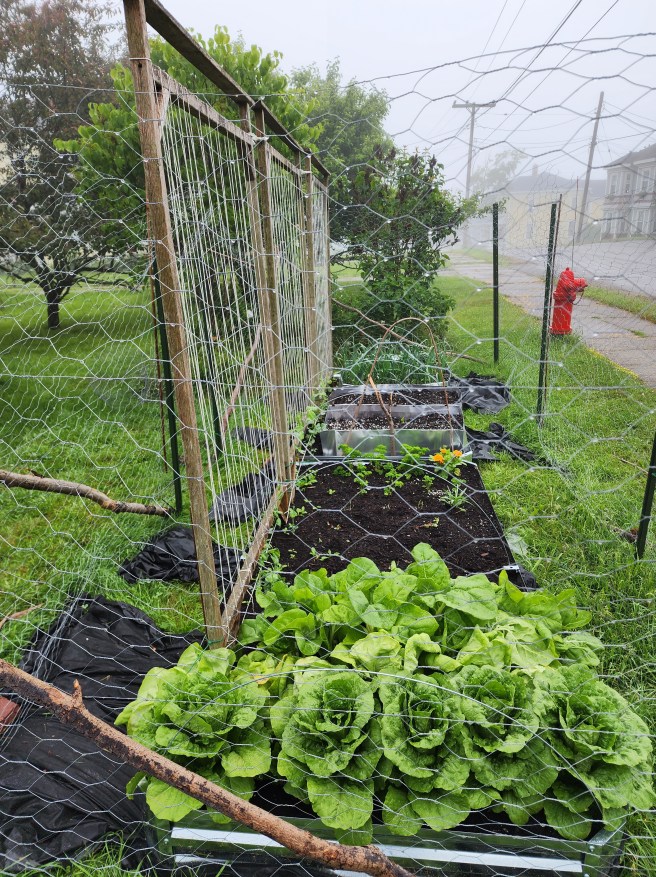
So here’s where we are now, in the midst of about three inches of rain in a week or so.
With a garden, there’s always more to do. Sometimes it even involves eating.
 Jnana's Red Barn