
You never know what we'll churn up in cleaning a stall
Ever encounter shining moments like these?
As I found in a Facebook comment mentioning me: “A compelling and brilliant man.”
Oh, my.
Or, another time, a friend telling of a colleague who asked, “Who was that distinguished looking gentleman you were with?”
Really?
That said, everyone needs some positive reinforcement!
We’re too far north to harvest oysters, at least for now. Ours come mostly for midcoast Maine. But our Downeast waters are famed for their scallops and other shellfish.
Last year, a Tendrils focused on lobsters, and I’m thinking of a few others in that vein looking ahead.
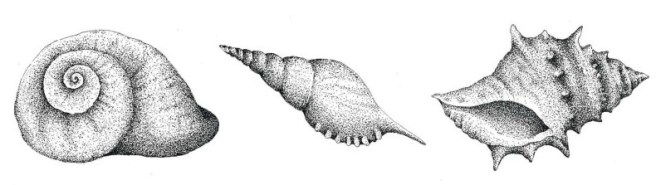
So today, let’s look at shellfish more broadly. You know, things like the fact they’re spineless and have hard shells. Now, for a few specifics, working around the fact that scientifically, they’re classified in three groups.
A comment from a professional historian after one of my Quaking Dover presentations has me realizing how much more needs to be seen in fresh light.
New England history, he said, is told through Harvard. And then, to smaller degrees, Yale and Williams College. A more accurate verb might be “filtered” or “focused,” but the implication was clear. The tale is party-line. Even Greater Boston-based.
When I delved into the roots of tiny Dover to the north, from the perspective of its Quaker Meeting, I had no idea how unconventional my stance would be.
The traditional history, I will argue, is Puritan-based and largely pushes aside the earlier settlers and the cultural differences or influence they had.
The well-organized Puritan invasion began full-force in 1630 with Massachusetts Bay and then the Connecticut colonies. Their utopian vision was far more fragile in practice than we’re led to believe. In that first decade, Roger Williams, Ann Hutchinson, and Samuel Gorton were banished, leading to the establishment of Rhode Island and quickly afterward, in reaction, Harvard College. Their own charter was under threat of revocation from the king, and they placed cannon on Boston Harbor to fire on Royal Navy ships, if needed. Think about that. And its Pequot War enslaved Natives who were exchanged for Africans, spurring the lucrative slave-trade.
That’s a lot in a small space in a short time.
Settlement to the north was not immune.
In New Hampshire, two of the four colonial towns were established by religious dissidents fleeing Massachusetts. Dover’s Edward Hilton conveyed his charter (exactly how or for how much remains unclear) to the Lords Saye and Brook for their own management … or mismanagement. As my book details, the New Hampshire province and neighboring Maine quickly became a hotbed of dissidents and misfits – a story that is largely overlooked in the traditional accounts. Let me just say it was a ripe time.
What I’ve also been seeing is that the story of dissent has focused on Rhode Island and largely ignored the north, including Salem, Massachusetts.
Should one of my upcoming presentations redress that?
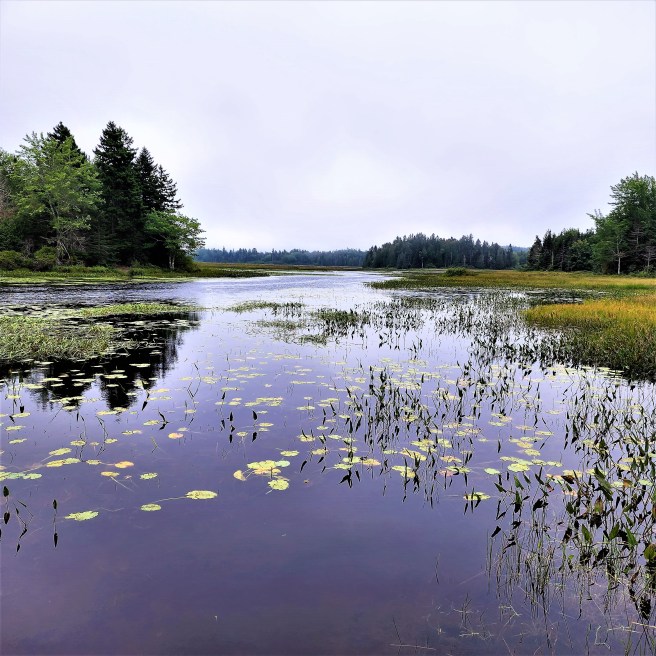
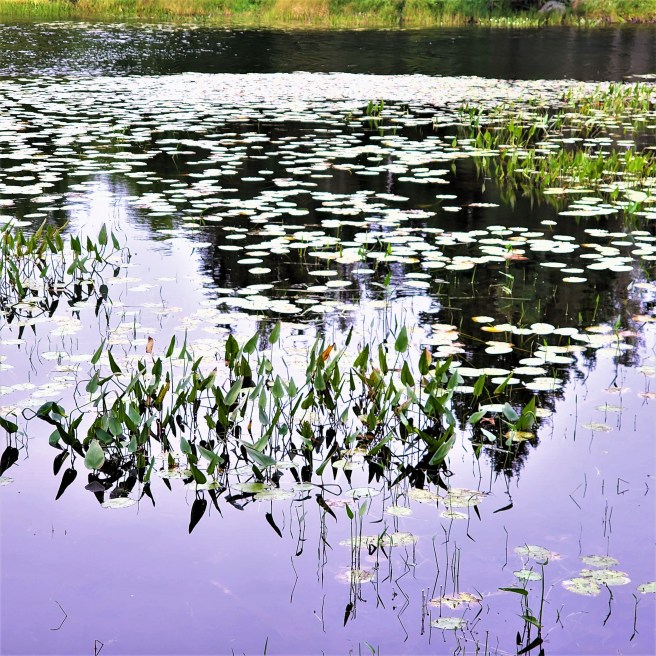
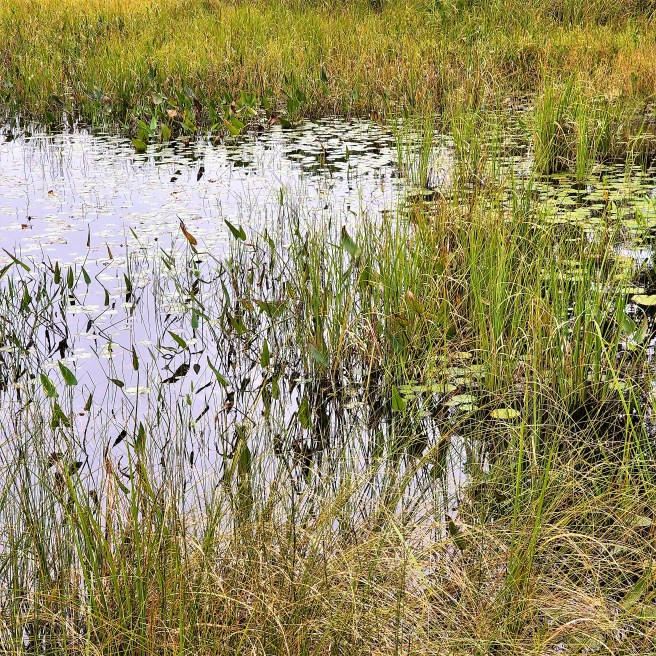
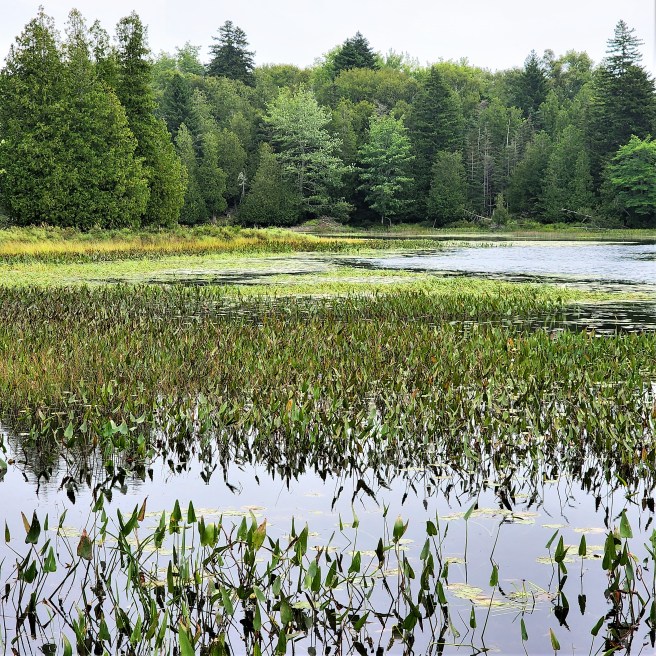
Streams passing through Maine forests often open out into a wetland known as a flowage, a flooding typically caused by beaver dams or other impoundments. The resulting broad habit is crucial to waterfowl production, and also provides for excellent kayaking, canoeing, and fishing.
These shots are all from one spot. Note the beaver lodge in the last one.
FLAY
FRAY
FADE
Despite nearly 60 years of writing, I’m still not accustomed to having readers come up to me in public with enthusiastic reactions.
My book Quaking Dover just may change that.
Here are two recent examples.
“It’s like you’re speaking right to me! It’s not like a history at all!”
That’s from a city councilor far from Dover.
I do hope that doesn’t put off history book addicts, though.
On the other hand, a Dover history buff said this:
“The clearest presentation of George Burdet I’ve read. Usually the histories of him are convoluted and hard to follow.”
When she first mentioned him, I felt some trepidation. Burdet wasn’t a Quaker and in fact predated them. He was one of those side details that could trip up the central argument if I had misread something.
More important than any praise is the confirmation. Or correction, too, for moving forward.
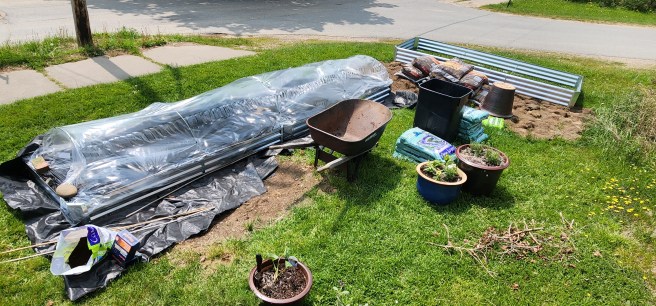
Filling the new beds with clean soil atop a landscape fabric and cardboard barrier against weeds and the tainted ground below takes shape. Our planting season here naturally runs late – early June still had overnight low temperatures in the 40s. So transplanting seedlings is running on schedule.
The plastic is to help warm the soil.
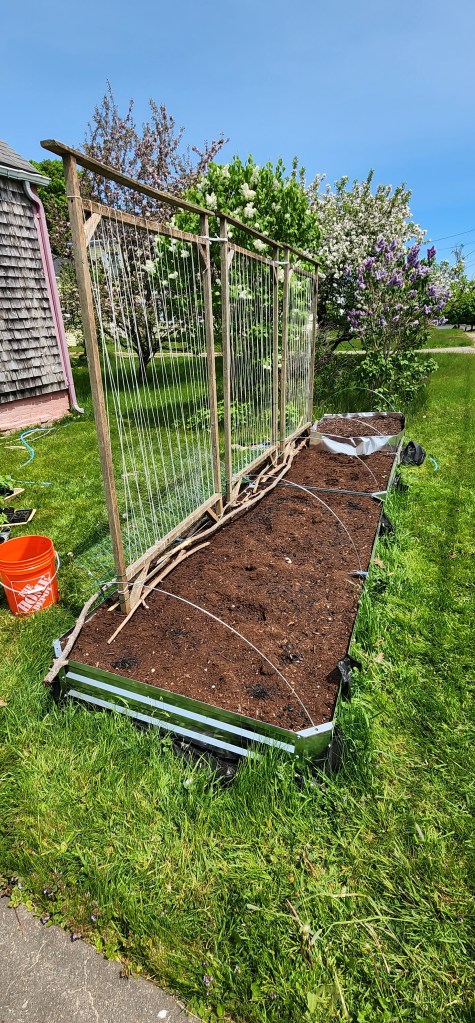
The upright frames are for peas, which will probably continue to produce through the summer, thanks to the cooler temperatures. Tomatoes, though, will be tricky.
The biggest challenge will be deer, as you’ll see.
A monument at Colonial Pemaquid acknowledging to the 1635 tragic sinking of a ship caught me up short. I had forgotten the vessel’s impact on Dover.
As background, the ship had been commissioned for Sir Walter Raleigh’s last expedition to America in 1617 and in several subsequent incarnations been involved in some high seas adventures, staving off repeated boarding by pirates and beating off three Spanish ships. Not that I knew that in my initial research.
As the monument at the Maine historical site proclaims, the Angel Gabriel was a 250-ton galleon carrying settlers to new lives in New England in August 1635 when it anchored at the village of Pemaquid. Most of the passengers and crew got off the ship before nightfall to rest on land as guests of the villagers. That night, August 14-15, a storm later known as “The Great Colonial Hurricane” struck the area and the Angel Gabriel was torn from her anchors and destroyed.
Or maybe it had happened earlier and the ship had limped into harbor. Still, I’m quoting there, from an account that continues: “In the mid 1970s, efforts were made to locate the wreck in Pemaquid Harbor with divers and a magnatometer and sideccan sonar but no artifacts form the ship were ever located.”
For context, “The Angel Gabriel was very similar to the Mayflower but 18 feet longer and bearing four more gun ports per side.”
I am now curious to see whether the small museum displays a trunk that went down with the ship and was found floating the next day. It belonged to a passenger named John Cogswell and his descendant of the same name agreed to lend the trunk for display.

This marker, though, stirred up some memories of a section that got cut from the final version of my book Quaking Dover.
Here’s what I had:
Three Dover Combination signers shared a tragic introduction to the New World when their ship, the Angel Gabriel, broke up in the August 14 “Great Colonial Hurricane of 1635,” either in the harbor at Pemaquid, Maine, or at the Isles of Shoals.
[Note the clarification in the site of the disaster in the bronze monument.]
Twenty-one-year-old William Furber settled next to his brother-in-law, John Bickford, at Oyster River and later relocated to Bloody Point, opposite Hilton Point on Great Bay. He married Elizabeth Clarke, daughter of William Clarke and Elizabeth Quick, in 1642 in Dover.
(The Bickford family, meanwhile, has John landing at Dover in 1623 and marrying Temperance Furber in 1624 in New Hampshire. If these dates and locations can be supported, they would significantly change the early history of the Piscataqua settlement. Their son, John, though, was born in 1625 in Devon, England.)
Samuel Haines was an indentured servant or apprentice to John Cogswell, who was also aboard and survived. They were bound for Ipswich [Massachusetts], where Haines finished his obligations the following year and may have moved at that time to Northam, as Dover was also called.
He did, however, return to England in 1638 and married Ellenor Neate within a few weeks after his arrival, suggesting they were engaged before his coming to America.
After a year-and-a-half, they set sail and established their home in Northam/Dover, where he had ten acres of land near the meetinghouse. Later, he had twenty acres on the Back River, where his neighbors were fellow Angel Gabriel survivors William Furber and John Tuttle.
He was taxed in Dover in 1648 and 1649.
In 1650 he leased Captain Francis Champernown’s Green Land farm for two years, and then secured ninety-one acres adjoining it, where he built a permanent home, and another ten acres where he eventually owned a mill. In 1653 he was one of the petitioners successfully asking the Massachusetts General Court to change the town name from Strawbery Banke to Portsmouth. That year he began the first of ten successive years as a town selectman. In 1666 he helped run the town line between Portsmouth and Hampton.
He was also the first deacon at the formal organization of the first church in Portsmouth in 1671.
At much of this time, the population of what now constitutes New Castle, Portsmouth, Greenland, and Newington was only fifty to sixty families.
Much less is known about survivor John Tuttle, who was about seventeen years old at the time of the disaster. After their rescue, he arrived in Chebasco (in Essex or Ispwich, Massachusetts). His age and destination suggest his situation may have been similar to Haines’. By 1638 Tuttle settled in Dover, where he was known as Shipwreck John and had a farm on today’s Bellamy River – one that grew into what was long known as America’s oldest family-owned and operated enterprise. (Never mind that Thomas Roberts’ heirs nearby would have a longer claim.) Tuttle’s son Thomas was killed by a falling tree while still a young teenager, leaving John Jr. to continue the family name.
~*~
Successive Tuttles became prominent Quakers. And, as I inserted, the monument is more specific about the scene of the disaster than I’d previously found.
Given a former resident of the White House’s insistence an election was stolen, let me argue that he’s upset because he couldn’t steal it a second time.
You know, the cheater who justifies his actions by claiming that everybody’s doing it. Except that they aren’t.
That sort of thing.
So for proof on the election, I’ll hold back until he offers evidence for his case regarding 2020. Pipe up or shut up, please. Or, as we might also insist, get off the toilet.
Please remember, he never won the popular vote in either run. It was all up to the Electoral College.
Or, in an earlier questionable presidential election case, the Supreme Court, which is no longer impeccable as a result.
Just sayin’ …
 Jnana's Red Barn