Dover Quakers moved well across Maine

To the northeast, resettlement of Maine’s Casco Bay region began in 1714 at Falmouth, a town that would also encompass today’s Portland, South Portland, Cape Porpoise, and Westbrook. Among its early residents was James Winslow, who arrived in 1728 with his wife and seven children from Bristol County, Massachusetts, to establish a gristmill on the Presumpscot River. Although he descends from a prominent extended Plymouth Bay family that includes Mayflower arrivals, Winslow became Quaker, likely in Maine. The questions of when, where, and how remain.

Portland Friends Meeting historian Wayne Cobb notes, however, “When the first regular Quaker meetings began here, they included James Winslow and his son Benjamin, as well as four men from Harpswell.”

That’s where the Dover influence appears. In 1750, Ebenezer Pinkham and his wife, Sarah Austin, and at least some of their 11 children moved to Merriconeag Neck in Harpswell and, as Dover Meeting’s family records note, were considered members of Falmouth Meeting once it formed. Over time, some would move on to Durham and its Monthly Meeting.

Friends moved from Dover to Falmouth and Vassalboro. So many, in fact, that all three locations were soon Quarterly Meetings.

The Dover connection with Falmouth and the Winslows intensified. In 1760, John and Jacob Morrill were granted certificates of transfer to Falmouth Friends Meeting, soon joined by brother Stephen and sister Mary, who wed Samuel Winslow, according to Dover’s records.

They were followed by John Robinson in 1767 and his brothers Stephen and Samuel as well as their sisters Sarah, who married James Winslow, and Mary, who wed Job Winslow.

In addition, Dover’s Huldah Varney wed Benjamin Winslow around 1770.

By the time of the Revolutionary War, 25 to 30 Quaker families were clustered around the Presumpscot River, by Cobb’s count. Dover had provided a significant core.

By the early 1800s, at least 60 Dover adult Friends had transferred to Falmouth, some with their families and some to marry, adding the surnames Allen, Dow, Hanson, Hussey, Meader, Peaslee, Purinton, Rogers, Tuttle, and Varney to the Pinkhams, Morrills, and Robinsons.

Cobb observes that for about 50 years in the mid-1700s, “close to half the land mass in Falmouth was owned by Quakers and they were a significant force. By and large they were farmers,” though some built mills on the Presumpscot. “Their legacy really shows up most in the 19th century, when the Winslow descendants became well-known industrialists, inventors, and abolitionists.”

Acknowledging that Quakers in and around Falmouth have been “largely forgotten,” Cobb points out “they’re really responsible for much of the early commercial success of Portland. And in their day, they were well respected and well thought of in the community.”

Expansion in Maine continued. In 1780, Friends began to worship together in Vassalboro in the Kennebec Valley near Augusta. Within 20 years, they had attracted 19 adult Quakers from Dover, beginning with Joshua Frye in 1787.

Vassalboro meetinghouse today.

~*~

Traveling around the Pine Tree State, I encounter these surnames seemingly everywhere.

I like to think that Dover Friends have made a positive difference.
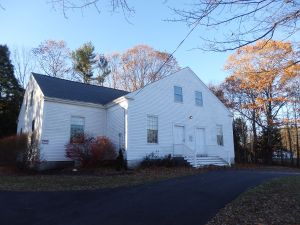
Windham Friends Church near Sebago Lake is one of today’s Quaker Meetings in Maine.

~*~

Check out my new book, Quaking Dover, available in a Nook edition at Barnes & Noble.

Welcome to Dover’s upcoming 400th anniversary.
 

This was once the sardine capital of the world

Don’t laugh. Sardines were once big business.

The first sardine canning in America happened in Eastport in 1876, and at its peak, 18 canneries were packed in against the waterfront downtown, along with the fishermen’s dories and fishing boats at the docks.

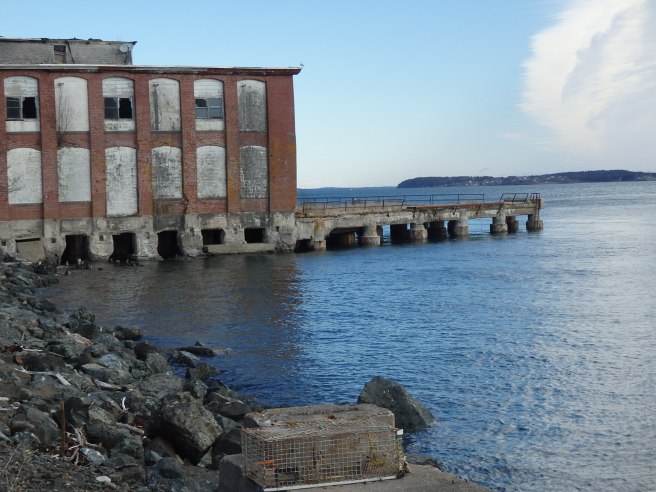
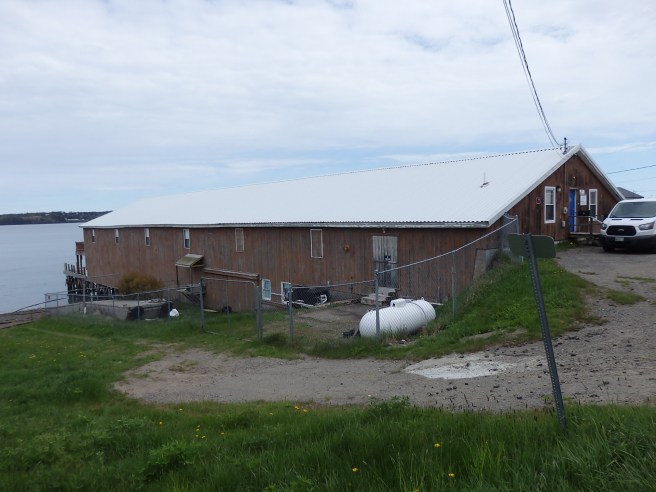
One of the few surviving cannery buildings. This one was small in comparison to others right downtown. 

The largest of them, the L.D. Clark and Son factory, extended far into the water from the north end of Shackford Cove only a block where I now live. It was the world’s largest sardine cannery, employing 500 men and women who packed 4,000 cases of 100 cans daily when the small Atlantic herring were available.

Heads and other parts were cut from the fish and dumped into the harbor, where they were devoured by bottom-feeders that then attracted whales close to shore.

Over the years, though, the fishery was depleted, though whales can still be seen in season.

And then the market and American tastes changed.

Does anyone eat sardines anymore?

Few signs remain of the city’s once flourishing industry.

The 1908 Seacoast Canning Co. plant, which made sardine cans.


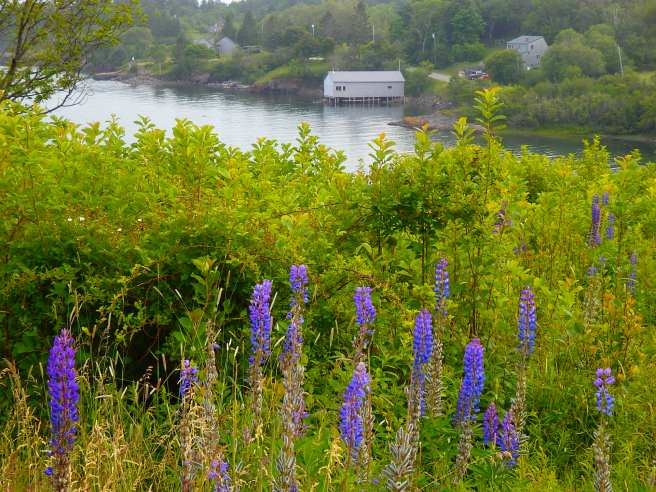
Little Prince Cove has its charm 

The inlet gets its name from an early family rather than royalty, even if the British Navy did land here when it captured Eastport during the War of 1812.

Its banks once were crowded with shipbuilding and later fishing operations.
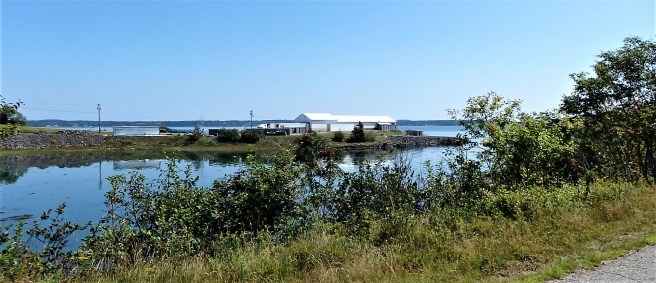
Eastport’s leading lobster wholesaler operates from the mouth of Prince Cove.
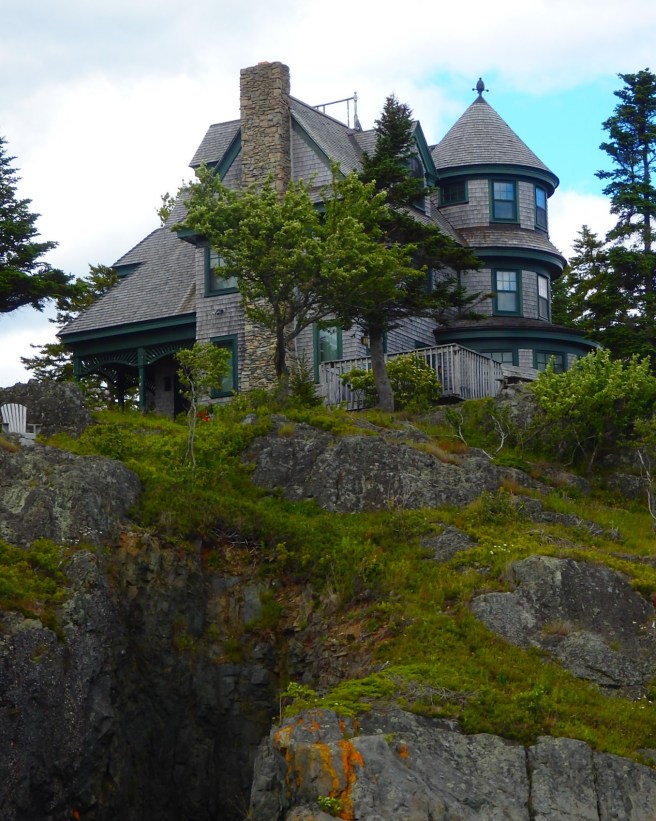
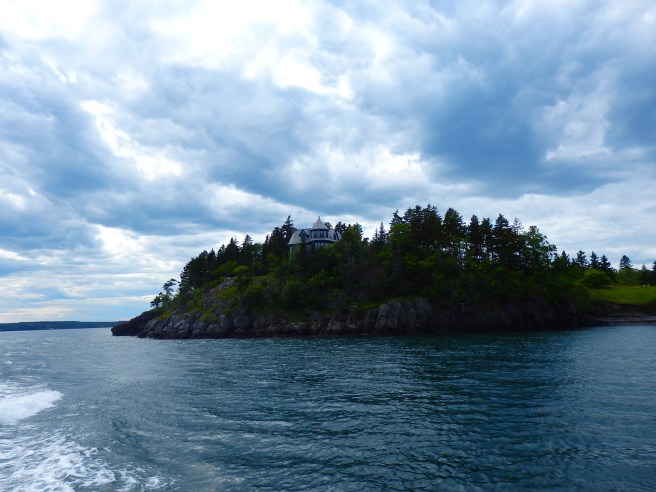
You can’t see this Victorian-style house from land, where it sits beyond an imposing gate at the end of the road. Nobody seems to know the owners, who come in the summer.
Somehow, it seems to fit right into a Stephen King novel. 


How about corporate naming rights for hurricanes?

Running out of baby’s first names for hurricanes and tropical storms has me wondering.

Can we turn to corporate behemoths, you know, for naming rights, like sports stadiums do?

Hurricane Amazon would be a natural. Or Geico, reminding folks of the need of home insurance. Victoria’ Secret Hurricane could be hot. You get the drift.

And let’s think about all the good uses we could put the money to, starting with relief for impoverished folks in those storms’ paths.

So how ’bout it?

What corporations would you nominate as the most amusing or fitting for the storms?

~*~

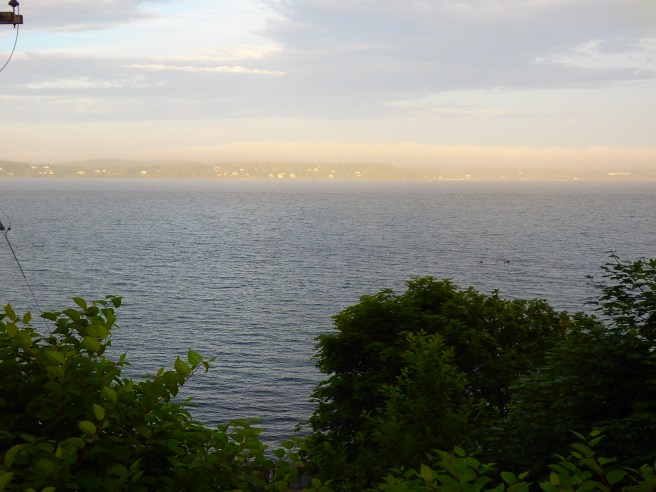
Misty afternoon light over Campobello Island as seen from Eastport gets me in a reflective mood.

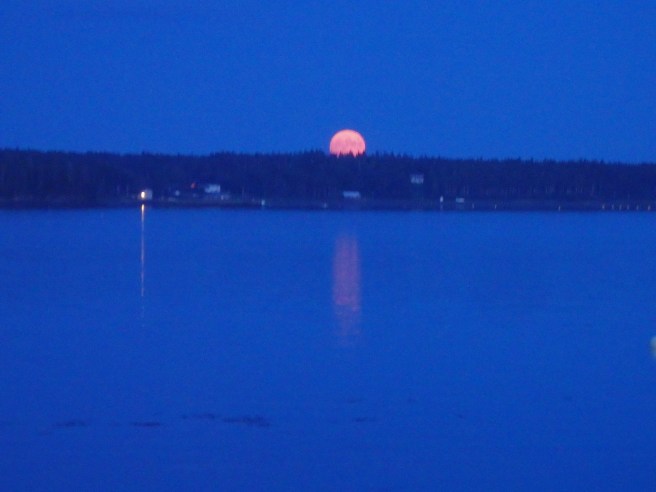
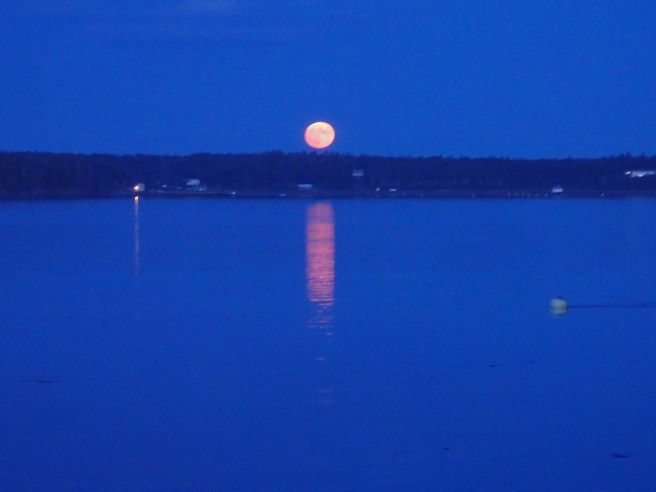
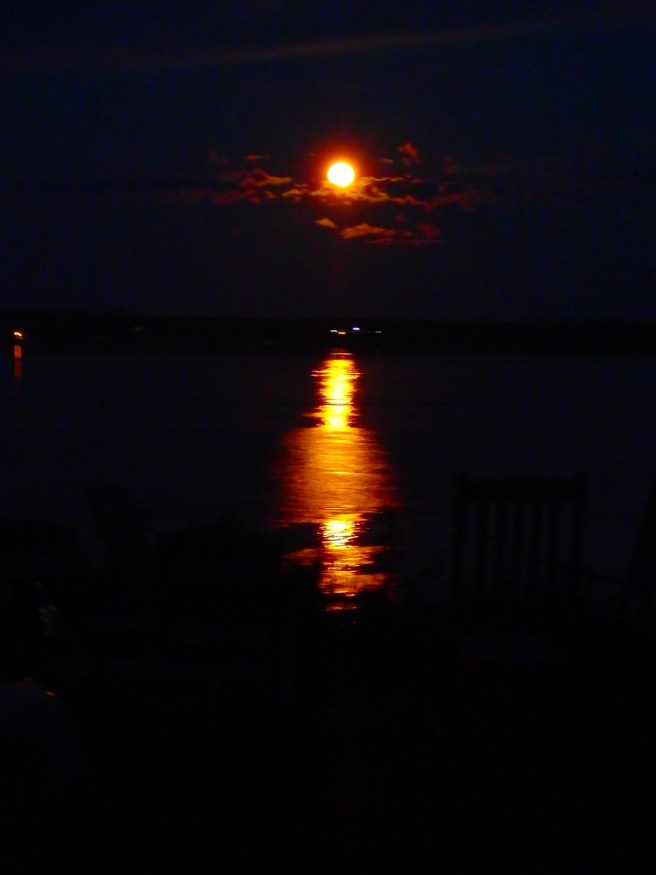
Full moon rising

Refined Japanese, I’m told, would gather with sake to watch the full moon rise. First there’s only the crown of the head, and then the brow and cheeks and chin before the moon lifts altogether in the air. The passage is both slow and fleet, maybe five minutes, if that.

The event would be celebrated with the writing of hokku on the spot.

Here’s how it happened one summer night in Eastport, looking over Campobello Island. And this is what you get rather than a cocktail or poem.


America’s largest cities in 1820

Shifts in the nation’s economy are reflected in the 1820 Census, where Missouri and Maine are about to be admitted as states. The major population centers, however, are still seaports.

  1. New York (123,706), making it the first American city to surpass 100,000 population.
  2. Philadelphia (63,802). If the two suburbs, below, were included, it would approach that 100k threshold.
  3. Baltimore (62,738). The port has leapt to third place and is nearly as big as Philadelphia City. While
  4. Boston (43,298) has fallen way behind.
  5. New Orleans (27,176). The biggest city west of the Appalachian Mountains, it’s still smaller than today’s Dover, New Hampshire. In other words, most of these cities weren’t really big.
  6. Charleston, South Carolina (24,780). It’s the center of urban life in the South. But from everything I’ve heard, it was largely of a small-town flavor.
  7. Northern Liberties, Pennsylvania (19,678). Now a neighborhood of Philadelphia.
  8. Southwark, Pennsylvania (14,713). Now a neighborhood in South Philadelphia.
  9. Washington, District of Columbia (13,247). First appearance of the new capital in the Top Ten, where it wouldn’t appear again until 1950.
  10. Salem, Massachusetts (12,731). New England is losing its edge in the American scene, relatively.