Some common fears

  1. Intimacy. Oh, my, this could lead to another Tendrils. You know, the ways we feel vulnerable.
  2. Poverty. This one even gets twisted up in white superiority and racism, if you look really closely.
  3. Being pulled over while driving. Though it’s unlikely to be a death sentence for me.
  4. Lawsuits. Which can lead to poverty, above.
  5. Being held up or robbed. Well, that can be like a lawsuit plus potential violence.
  6. Rejection. Which also leads back to intimacy, above.
  7. Shame. Well, usually shame is linked to something you’re born with, but it still connects with fear, along with its first-cousin, guilt – arising from something you did bad, really bad.
  8. Hunger. Not that most Americans actually go without food long, but just watch their reactions when they have to fast or go more than two or three hours without a nibble.
  9. Debilitating illness or physical handicap. Blindness, deafness, dementia, for starters. Or falling off a ladder at my age.
  10. Dying as a failure. You know, without achieving something big to advance mankind. Or just plain going to Hell.

Do these all involve pain?

What would you add to the list?
We just did two live concerts!

Even with the masks, it was an incredible experience. Appearing live in concert usually is.

Not every singer I’ve known enjoys performing in public, a situation that can be anxiety-inducing. Yes, even chorus members suffer butterflies. Going on stage or the equivalent is a much different encounter than singing together in a rehearsal space, perhaps even in a circle facing each other.

Wisely, our part of the program was shorter than usual, reflecting the Covid-restricted rehearsal schedule and our return after two years of distancing and general inactivity. Our vocal cords were rusty and have had to get in running order again.

Even after some of the pop standards I’d sung in the Boston Revels autumn equinox affair on the banks of the Charles River, I still didn’t expect to be performing a rock hit, much less a five-part arrangement that was mostly counterpoint with some wildly shifting time signatures. REM’s “Shiny Happy People,” anyone? It’s more sophisticated than I would have believed, even with a bass part that felt, well, like playing air bass guitar.

The Wailin’ Jennys’ “One Voice” and Eric Whitacre’s “Sing Gently” were gorgeous paeans to the art of vocal music made when we unite as one, in this case including singers and audience.

There was the premiere of conductor John Newell’s five-part memorial to longtime Eastport arts inspiration Joyce Weber, “Lux Aeterna.” I hope we did it justice.

The traditional spiritual “Keep Your Lamps” was lively fun with a bouncy piano accompaniment and some fine bass lines, something that’s not always a given.

Dan Campolieta’s passionate setting of Emily Dickinson’s “Will There Really Be a Morning” gave us males a chance to sit out and just listen.

The heart of a concert is the audience, somehow completing the art at hand and making it real. I’ll add there’s a parallel with a readership for a writer or poet or a table of diners for a chef.

The arts center’s upstairs performance space seats about 120, so we were close to an audience of family, friends, and neighbors sharing our love of making music together.

How can I not be looking forward to more?

These stones speak

Say what you will, the Chamber of Commerce lists the Hillside Cemetery as a thing for visitors to do here.

It’s unlike other celebrated burying grounds across New England I know of. There are no Colonial three-bump gray slate stones, the ones with the famed death angel heads, for one thing.

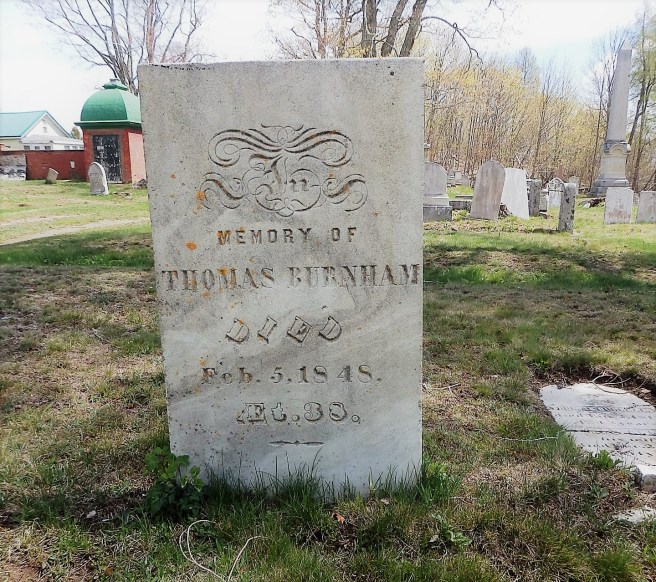
This one is newer, meaning mostly 1800s and Victorian, when the town thrived. Yet many of the inscriptions, in softer stone, have weathered to illegibility.

Many of them lean precariously or have toppled over, giving the site a spooky feel. Or at least neglected, even though it’s mowed regularly. The sandy soil itself is anything but level, instead mounded over many of the family plots.

Yet I keep going back, often reading between the lines.

Quite a flourish

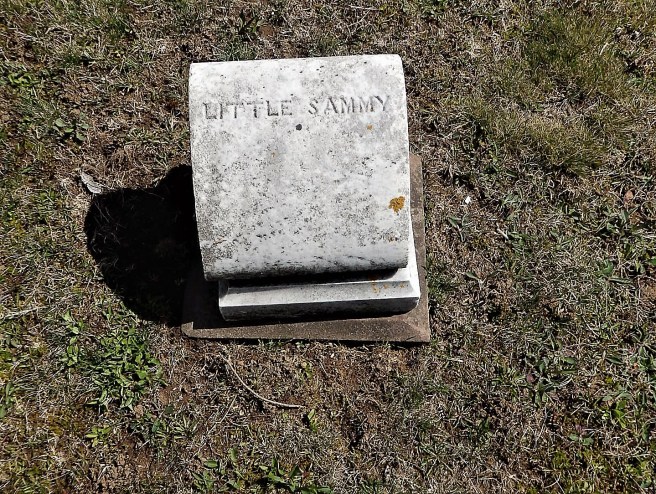
Many of the men and women died young, along with a large percentage of children.

Young Sammy

Many of the stones tell of birth origins elsewhere in Maine or even New Hampshire and Massachusetts, as well as a few defiantly proclaiming “born in Ireland.”

A toppled memorial.

Many of the names begin with “Capt.,” sometimes followed with “lost at sea,” which is also found on other stones of first mates or sailors. Others tell of falling in Civil War action – many New England towns suffered heavy tolls.

Some of these markers were erected as memorials, with no bodies buried below.

Fittingly, in places as I walk, views of the ocean and islands in the distance open below me.


Dear Ab’gail

there’ll be no gardening to ground down to the end of this place bitterly eliminating so much accumulation before swimming through the cloudy first day at liberty disregarding temptation right off the bat to say nothing of ferocious loving What discipline will emerge? except in the leaves of greenhorn pages there’s work awaiting, oh boy, I bought this overnight woods heavy and wet but daily shaving’s a pain so perhaps by the time thee sees me again I’ll be scraggly not paying bills is hardly superfluous still wish you were here on the trail

Chickens and the meaning of life, chapter whatever

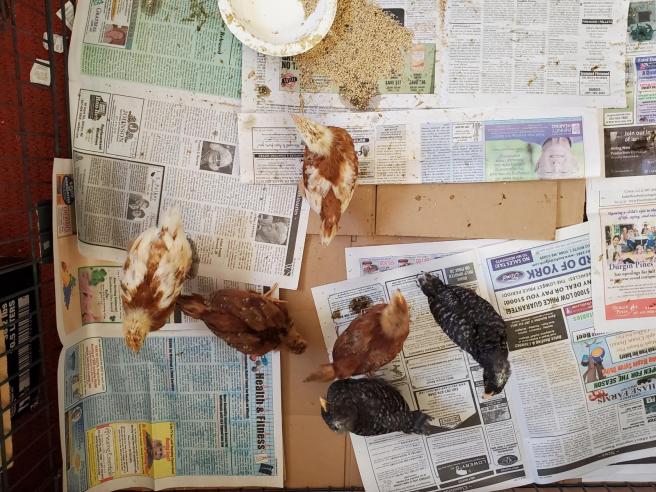
A couple of incidents regarding my daughter’s chickens have me thinking about human affairs.

Her hens were increasingly picking on one another and squabbling until an incident with a neighbors’ dog posed a terror. In response, they instinctively banded together, including their otherwise useless rooster. For weeks after, their antisocial behavior was transformed, focused on a common enemy.

A year later, the same thing happened when a red tail hawk picked off two of the hens in the yard.

That leads to the question:

Do we humans really need some villain, however small, to make our own lives meaningful?

We see it in politics, for sure. And in sports. As for personal development and ethical living?

I am convinced we need to keep an eye on Satan, in whatever garb, but also need to be careful we don’t start “preaching for sin,” as early Quakers cautioned. The fact is that in fiction it is much easier to create a believable bad guy than a good one.

So even secular novelists must make sure to avoid exclusivity in their vision.

We also need to keep another eye on the Light and its leadings. Otherwise, well, we’d still be chickens at the mercy of foxes and weasels.