IN THE PASSAGE

squirrels thrive, after all, largely solo
apart from the mating chase or bout
though they’ll sleep six or seven together yet
repeated delays that autumn allowed little rest

and precluded burying nuts as well as his lady’s
daffodil and iris bulbs et cetera packed away
what they could, hoping they could cobble a nest

*   *   *

or any of the time-bombs
ticking away

among the not-so-everyday matters

*   *   *

you think you’re settled, but you’re not

in any of the different schools of thought

*   *   *

even on a clouded night, the stars incant
“Look where you are, in your small space”

Poem copyright 2015 by Jnana Hodson
To read the full set of squirrelly poems,
click here.

DIMENSIONS OF ARTISTRY

The space of art also works in other dimensions. The artists themselves are rarely of the same social class as their benefactors or audience. We repeat the cliché of starving artist, even when some become comfortably wealthy and dwell in chic locales. Still, they’re employed in ethereal fields — actors, musicians, painters, the stagehands and gallery owners, box office managers, and a host of others. They work different schedules from the general populace. Many sleep late or stay up through the night.

There are even the spaces as a work moves away from its creator into other locations. A painting, for example, appears one way in the studio, another way on one’s walls, and still another way in a gallery — none of them resembling what happens when the same piece is hung in a major museum. Musicians and actors know the difference between the intensity and argument of rehearsal and the propriety of performance itself. An author can observe how different a piece appears in manuscript, in galley-proof, in a magazine or literary review, or in a bound book. A poet or a poetry supporter becomes aware of the differences between viewing a piece on the page, voicing it on the lips (either in a public occasion or for one’s own private pleasure), or performing it in a formal reading.

We can move outward, of course. Into ballparks or arenas. The loud crowds. But those are other spaces, in some ways overlapping fine arts and religion.

We might consider as well the ways the fine arts have been acceptable as civic religion. An Oscar or a Grammy is more valued than a Crucifix in our society. A comedian is a better master of ceremonies than a preacher or priest. We’re nervous about civic events held in houses of worship. A wedding or funeral, perhaps, though it carries a sense of crossing into something private.

On the other hand, as religion has retreated largely from public awareness, or perhaps simply to the suburbs and better parking, it has abandoned earlier houses of worship, especially those downtown or in the inner city. Some have been converted to arts spaces — galleries, concert halls, night clubs, theaters, restaurants. I regard these as being somehow different from structures designed and built for arts uses. It’s more than recycling, I’d say.

For more insights from the American Far West and Kokopelli, click here.

PRELUDE & FUGUE 35/

red maple on gray rock against
vertical tan stripes
the pooling and hill

*   *   *

blue-eyed moth on yellow chopstick folder
star lilies against horizontal green striation
Chinese river scene, the coin inscribed
from a tickle-free zone of “Dried Dark Plums”

red maple on gray rock against vertical tan stripes
pooling under a blue-eyed hill of moths
over another yellow river, the Chinese “Dried Dark Plums”
held aloft on scenic chopsticks or inscribed coins

as folded red maple on gray rock against vertical tan
line up between the pooling and hill of star lilies
as horizontal green striation from a tickle-free zone
the blue-eyed river inscribed with yellow moths

as “Dried Dark Plums” are maple red on gray rock
against vertical tan striped pooling water buffalo work
in a wet field of chopsticks between star lilies open
against the blue-eyed horizon with its variations

as coins and moths inscribed in yellow Chinese
calligraphy, the tickle-free zones become a river scene
for a “Dried Dark Plums” holder of chopsticks
made from red maple in their tan stripes

as the gray rock against vertical pooling
toward the hill of star lilies and their horizontal
green striation from a tickle-free zone
water buffalo patiently work a field

~*~

Poem copyright 2016 by Jnana Hodson
To see all 50 Preludes & Fugues, click here.

YES, ‘TIS DEEPLY INGRAINED IN THE NEW ENGLAND SPIRIT

Autumn truly is New England’s premier season, and I’ve spent much time pondering its influence. Here are some of my reasons:

~*~

~*~

Click away as you will.

The color suits our settlements.

BEYOND CONSENSUS

I’d gladly renounce any desire
to conduct holy business

if I had it

spare me, O Holy One, please

*   *   *

this session leaves me
a headache and troubled

this is not Gospel Order

look at this agenda!
and these to-do lists!
where’s the Sabbath?

our lives already so
cluttered and overbooked
before adding yours

*   *   *

always the responsible one
in a relationship
gets tedious or exhausting

let someone else
raise money, sweep the floor
change the dead bulb
manage the children

everything I would leave to Martha
while enjoying Mary

if only I could return to sleep, and dreaming

thank the treasurer
by writing a check, yes?

Poem copyright 2016 by Jnana Hodson
To see the full set, click here.

CAN WE BREAK THROUGH POLARIZATION?

A pointed observation from the concluding chapter of Douglas Gwyn’s Seekers Found: Atonement in Early Quaker Experience continues to echo in my mind. After noting that religion and spirituality, East and West, are being traded on a world market, a situation itself that reflects today’s dominant mindset of global capitalism, Gwyn remarks:

Global economic integration today is leading to social and spiritual stagnation, much as the progressive political consolidation of the Roman Empire slowly stifled spiritual energies in the ancient world. As the superstructure of the Roman Empire became increasingly otiose, cynical, and corrupt, men of rank increasingly withdrew from public leadership to pursue private life and philosophical speculation.

This immediately had me thinking of the nastiness of the current political scene and wondering why anyone of sensitivity or kindness would want to be subject to the abusive public glare that’s become the norm today. Gwyn continues his paragraph with a confirmation of my assumption:

Similarly, as multinational corporate conglomerations engulf the globe, we find people of means withdraw into private life, esoteric beliefs, and financial speculation. In both periods, the masses are left to seek truth in a din-filled marketplace.

Remember, this was published in 2000, and I’d say the situation has only intensified since then.

It’s a troubling situation, even before we get to the polarization now stressing the nation and much of the world. Gwyn sees much of that polarization and its way of captivating its partisans arising over the question of gnosis – that is, of knowing – with both sides disagreeing over essentially Platonic and Gnostic orientations toward truth. Crucially, he sees both sides assuming “that the truth is some static entity.”

At this point, Gwyn turns the perspective: “If we return, however, to the Hebraic and Johannine Christian sense of truth as something enacted through faithfulness and love, these polarities become academic. We act faithfully toward one another as we enter honest conversation with one another.”

The immensity of that task, I’ll admit, fills me with despair. It’s not just religion, which is largely marginalized from the dialogue; the polarization rips across economic, educational, geographic, and political fields as well. Looking around, I feel I might as well be speaking to a stone. A Wailing Wall would be more efficacious. Retreating from the public sphere makes all too much sense.

~*~

Here, though, the example of Jesus also comes into play. He, too, retreated to the wilderness, but he also returned to the marketplace and spoke truth, forcefully and ultimately with love. Moreover, he was willing to bear the consequences.

Anyone else want to elaborate? We live in desperate times.

~*~

More of my own reflections on alternative Christianity are found at Religion Turned Upside Down.
GOING FOR THE GOLD … FOLIAGE

Being mindful of what’s right in front of us can always be a challenge. Here are 10 new items from my end.

~*~

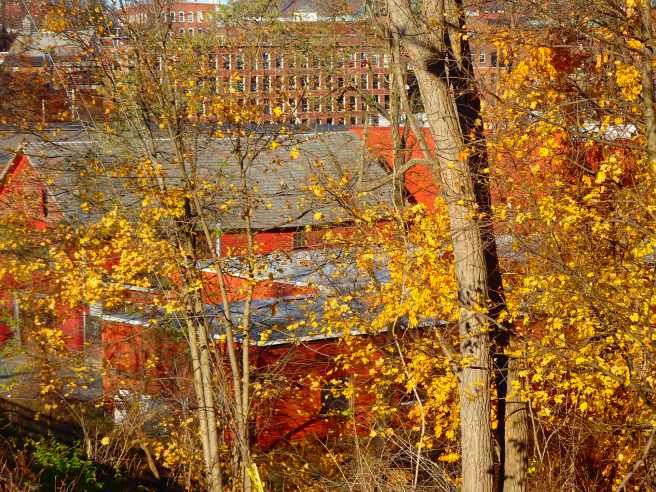
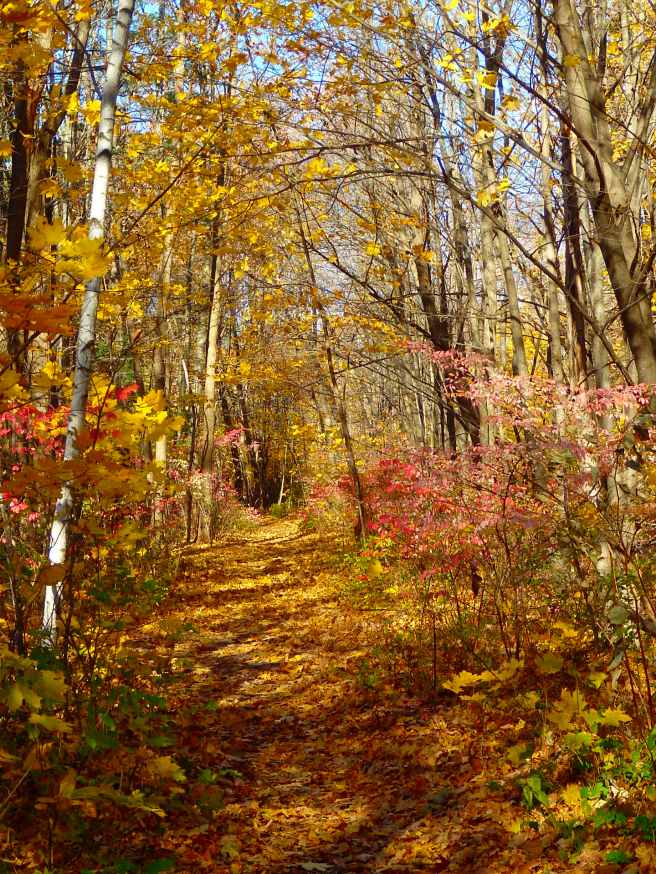
  1. We’re well into the foliage watch. Weather plays into it, too. Heavy rain, followed by glorious clear. Or sunlight blazing against slate-gray clouds. As for the chores, in advance of winter? “I’ve been on my feet all day.”
  2. Each October I revisit the symphonies of Charles Ives. It’s not just his birthday month but also an acknowledgement of his deep New England roots. The annual tradition often leads to the symphonies of George Whitefield Chadwick and then John Knowles Paine. Inevitably, I wind up with the one symphony and the piano concerto by Amy Beach. Big, magnificent, often richly Romantic pieces, for the most part. Wish they were much, much better known by the public. (For more.)
  3. A stay-at-home morning: pad about, get some writing and reading in, finally shower and dress at 2 p.m. And then? Swim in the indoor pool.
  4. Am wondering what might have happened if I’d achieved “success” – at any number of points. I would have wound up moving along that groove the rest of my life, likely without exploring many of the other facets I now find overlapping.
  5. My third-floor lair and my loft in the barn are both tree houses!
  6. My wife resisted when I insisted on the dishwasher. How much she objected! My, my, how that’s changed! These days she even argues it can be cheaper than hand-washing the plates and flatware in the sink.
  7. We live close to the state university but partake of so little of its arts programming. Even now that we know where to park.
  8. Bought a new calendar but back home saw it was for the wrong year – this one, rather than next. Still, the illustrations are marvelous.
  9. To gain the reader’s trust is the central issue of each work. It’s how transformation through action across time connects.
  10. Degrees of Truth? Now this really gets complicated.

~*~

Stone angel in the city cemetery behind the Quaker meetinghouse.

TOO MANY, TOO MUCH

two horny squirrels on a tree

I hate cartoon slapstick … as for real actors …

The Dead See Squirrels

who know nothing of the next state nor the globe
their world branches endlessly, effortlessly
and is anything but round

the thistle feeder found in one of our coolers … ah! the safe place!

a girl named Bambi
sounds like a dear
or at least, a little fun

Snow White
lighting
a cigarette

a hummingbird in our herb garden
enough to make me think my sighting over the barn
was a goldfinch, but can they – do they – HOVER?

the fact our yard’s so full of wildlife pleases me
as long as the squirrel population’s held in check
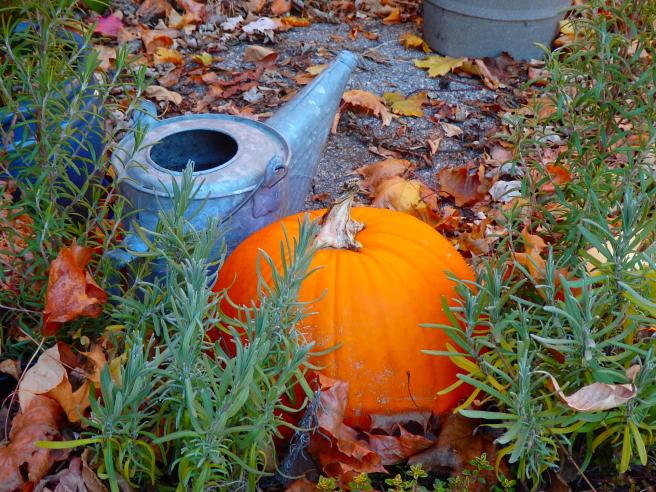
allowing us a bumper crop of pumpkins and
self-seeded sunflowers

with binoculars from the deck, a goldfinch in a sunflower bloom
only to discover two more feasting in the same cluster
when one breaks away, she initially thinks the flower is taking flight

remove the pea vines and the cosmos and cabbage breathe a bit more

with the binoculars again, watching incredibly high gulls
moving east-west
and then, all alone, the unmistakable bald eagle
sailing south, not a single flap
to be lost to a cloud and then sun glare

how is it the eagle soared southward
while the gulls kept going east-west
before and after?
or did the eagle simply Trim Sails somehow
in the upper wind?

May, a profusion of birdsong before sunrise
September, a profusion of cricket fiddling after sunset
incessant, rapturous chorus

September, why so few birds singing?
May, why so little fiddling?

migrating geese sound like a squeaky floor

suet, downy woodpeckers tweet for each bite

in the pile of garbage bags, rustling
a skunk determined to rip it open by the back door
the colors reversed – a black stripe on a white body

Poem copyright 2016 by Jnana Hodson
For more,
click here.