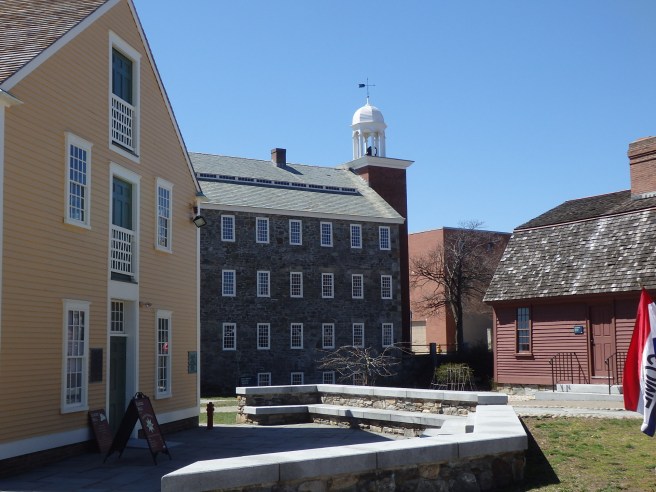
The modest Slater Mill complex in Pawtucket, Rhode Island, is honored as the birthplace of the American Industrial Revolution.
The operation originated when apprentice Samuel Slater slipped through British security with secrets for textiles manufacturing and was hired by Moses Brown to replicate them in America, with the mill opening in 1793.
The fact that Brown, a Quaker, and his partners advertised for what was essentially stolen information troubles me – I do wonder how they justified their actions when questioned by their Friends meetings. The English, meanwhile, had long before enacted barriers that penalized fellow citizens in Ireland and America. Perhaps that was sufficient inspiration, even before the American Revolutionary War. Perhaps one action apologized for the other.
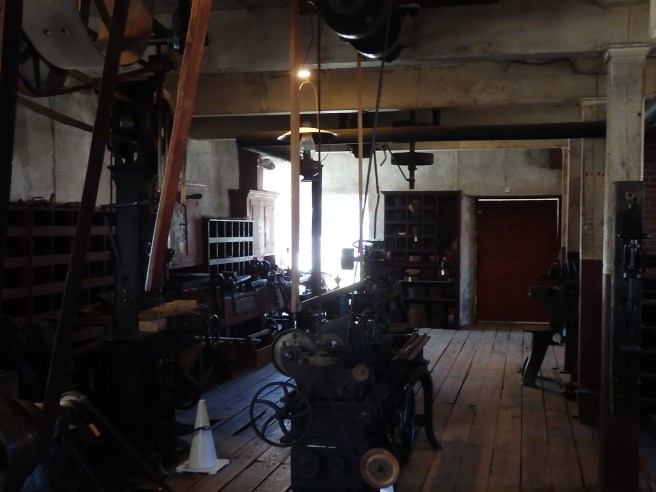
More remarkably, though, Slater’s assistant, David Wilkinson, then provided the next leap – a lathe that produced large screws that were far more uniform than those painstakingly made by hand. Whether he or Henry Maudslay in England was the first to produce such precise work can be argued, but the results were the foundation for the innovative precision toolmakers who would transform industry. This was, in effect, the foundation for mass production. The thinking behind Wilkinson’s model inspired a league of New Englanders to advance the technology in applications across the region.
I doubt this was the origin of the phrase “Yankee ingenuity,” though it certainly fits.
My fondness for old mills, by the way, did prompt a novel, Big Inca.

 Jnana's Red Barn