WHAT AN AUTHOR SEES IN AN AMBITIOUS NOVEL

A young organist once mentioned that he doesn’t listen to music the way some of the rest of us do. While I’m usually aware of the time signature, or at least a basic pattern to beat, much more than that fills his awareness. We could begin with the key or chordal progressions or structural development or phrasing. As for emotions? Way down on his list.

Of course, something similar happens for me as a reader. The author looks at much else besides the story, as reading reviews of Jeffrey Eugenides’ Middlesex reminds me.

I’ve already mentioned that my primary interest was in its presentation of Greek-American life. These aren’t celebrities or university professors or artists but people trying to survive the economic challenges of everyday existence. He does so in a matter-of-fact way, with a darker view of humanity than I’d usually take but more accepting of their foibles and failures, too. Everyone’s flawed. He’s not afraid to reveal the villains among them, family or not. If only I could revisit my own Sunday dinners with such cold accuracy! (The skeletons in my family closet, from what I can tell, are much further back and mostly in my mother’s ancestry. But the dysfunctions, well, that’s an entirely different matter.) To put his accomplishment here in a different light, his details are both particular and universal. They hit close to home. If only we had terms of affection like Dolly mou, which I take to be a variation on Koukla mou. Or, for that matter, if we were only so outwardly open and affectionate, period.

The novel’s more prominent theme, Cal’s sexual identity, advances in good taste. Nothing salacious but rather an ongoing, almost innocent discovery by narrator and reader alike. Eugenides manages the rare accomplishment of being a male who writes a convincing female character from within. In fact, he gets close enough to have had me wondering if were writing autobiographically of his own condition. That, alone, is astonishing.

As I was reading, I wasn’t yet aware of his reputation as a short-story master, but it makes sense. Much of this novel builds as shifts between stories separated over time.

Technically, his use of point of view is amazing. His Virgin Suicides was acclaimed for its daring use of first-person plural. Here, though, he mixes first-person singular, with its immediacy and intimacy, and third-person, with its semi-omniscient awareness, sometimes in abutting sentences, so that you get a stereoscopic view at once from within and without. Through the first half of the book, especially, much of this happens before Cal’s birth, which creates a kind of time travel. And it works. How much of the related details are “real” and how much merely imagined by the narrator, we should note, remains up in the air. But it’s effective, all the same.

Eugenides’ presentations of the massacre by the Turks and later race riot in Detroit are masterful and moving.

Throughout, the factual accuracy feels right. He’s done his homework and often conveys complexities with a few confident brush strokes. His insights on Eastern Orthodox Christianity are especially notable that way. As for his takes on hippie experience, I’ll simply say, Ouch! As I said, he often takes a darker view of humanity than do I.

Another major subject is his corner of the American Midwest. Contrary to common opinion, the region is hardly homogeneous and is anything but compact. Ohio, for instance, is the size of England. Presentations of it in contemporary literature are surprisingly rare, at least in proportion to the population. And there are many variations in the underlying cultures and outlooks. Kurt Vonnegut’s Indiana, for one thing, is quite different from Saul Bellow’s Chicago – and neither of them resembles what I know of Eugenides’ locale, Detroit. (Let me add my own emphasis on the importance of place itself to the extent it might be considered a character within much of my writing.)

What Eugenides presents is a more compact metropolis than I remember, but definitive in a blend of influences I recognize across much of northern Ohio and Indiana as well. Whether dealing with the older inner city, which then leads into issues of race and racism, or later suburban life, the descriptions resonate with what I found throughout the industrial Rust Belt. Cal’s grandfather’s encounters with Ford Motor Company’s melting-pot police or Cal’s father’s dealing with the real estate point system quickly demonstrate the cost of maintaining a unique identity. You didn’t have to be an immigrant to run afoul of that, either, I’d add from another direction.

It’s not a “perfect” novel, but nothing this ambitious could be. As the Detroit Free Press review expressed, “What Dublin got from James Joyce — a sprawling, ambitious, loving, exasperated and playful chronicle of all its good and bad parts — Detroit got from native son Euginides.”

For me, a drift sets in late in the volume with the introduction of the Desired Object and Cal’s sexual desire awakening. The tight construction seems to be coming apart, sprawling, but! In retrospect, it’s more that a second novel is taking off with leaps to Manhattan and then San Francisco before coming to a powerfully focused and moving conclusion.

So here I am, full of admiration and wonder. How does he pull this off? Where do those brilliant flashes of humor spring from? How does he make some essentially unsympathetic characters come to life in daily survival?

He plays throughout the story with Cal’s grandmother’s skillful touch with silkworms and the ways their silk reflects events around them. It’s one more stream of knowledge that runs like a thread holding the work together.

Eugenides, then, may be seeing himself as a silkworm issuing the long, long filament – for that matter, a nearly endless stream of organ chords – or, as we’d say, spinning a yarn.

Somehow, it all fits. Marvelously.
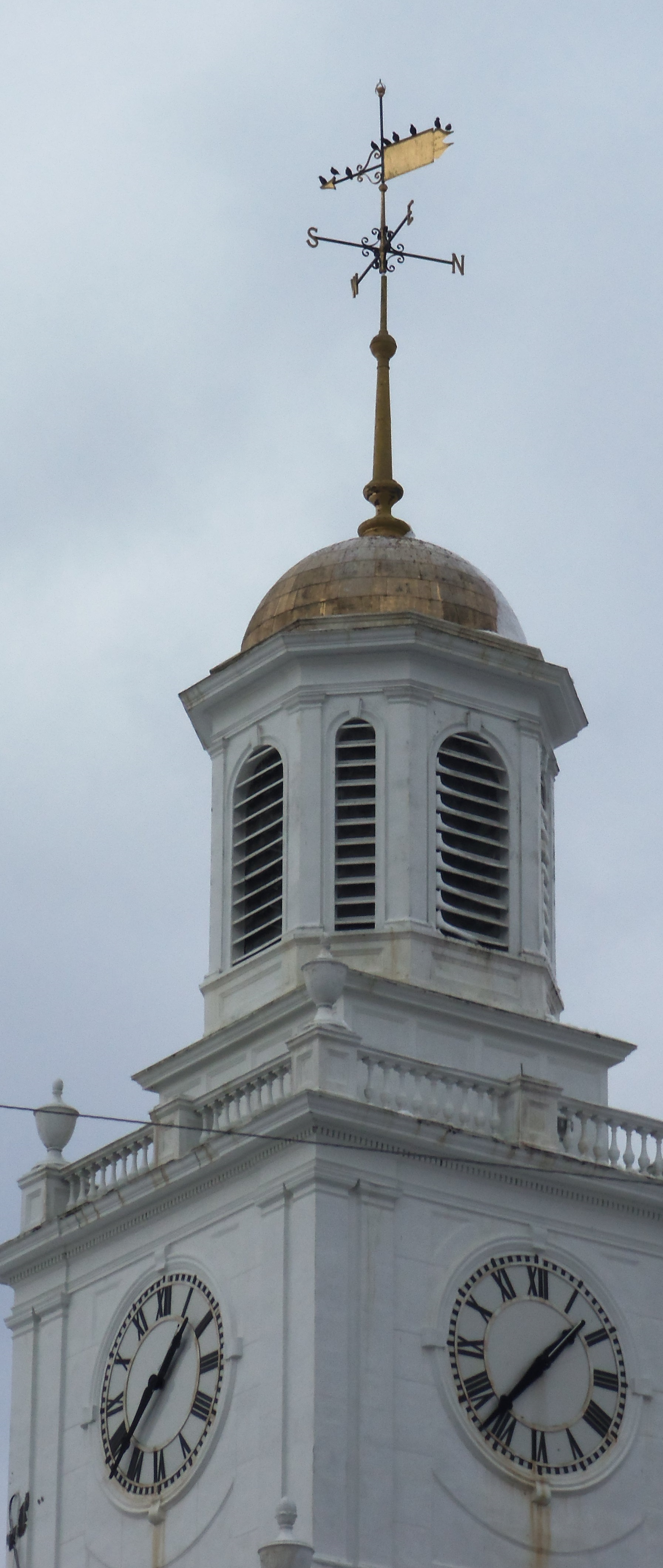
FLOCKING TO CITY HALL

I love seeing birds perched atop a prominent weather vane.

The previous building included an opera house that would have been the largest auditorium in New Hampshire, if it hadn’t burned down. Rather spectacularly, at that.

Numbers 122
Without the birds, too. Once a month, folks flock to a contradance on the top floor.


STRENGTHENING WITH AGE

The output of some artists sometimes falls into an arc of Early, Middle, and Late – and nobody exemplifies this more than Beethoven. For others, it’s often just Early and Mature periods, which can be quite satisfying in its own way – think of the continuity in the evolving symphonies of Mahler and Bruckner, in contrast.

As I, too, have grown older, my appreciation for Beethoven’s late works – the string quartets and piano sonatas, especially – has grown, eclipsing the charming classical period influences of the early work or the relentless drive and passion of the stretch that followed and continues his fame. In contrast, the late works are thorny, cerebral, introverted, brooding, even surprisingly contemporary in their affinity. He sometimes seems preoccupied with the intellectual puzzle – immersed in theory – turning his back on the audience. And, for years, these were considered pieces musicians tackled in private. Fortunately, that part has changed, especially for connoisseurs.

It’s not just Beethoven, of course. You can look at your own preferences in reading or music or painting or theater – take the list where you will. How has your focus shifted or your tastes changed?

Think, too, of your life aspirations, especially if the children have left the home or you’ve entered retirement.

I once desired to learn to fly and to hike the entire Appalachian Trail, but never seem to have the time or money. Now that I have the time, those aren’t among my priorities or maybe even my skill sets. And the writing efforts have taken center stage, in addition to gardening and similar projects here at home.

Think, too, of possessions – for me, collections of books and recordings, especially, I’m now thinning, along with the clothing, since I no longer have to dress for the office.

In some ways, it’s all part of the flesh turning bony. A unique approach of simplifying. You can hear that, too, in Beethoven’s late works – an emerging new strength given voice, even as the muscles weaken.

AS A SPIRITUAL AND MORAL COMPASS

Here’s a quote I’ve long treasured:

The statement commonly heard in some circles, “All religions lead to the same goal,” is the result of fantastically sloppy thinking and no practice.

It’s by a not-yet-30 Gary Snyder, “now making it in Japan” as the contributor’s blurb proclaims, where he’d gone to immerse himself in Zen Buddhism. I love the youthful bravura, not just “slopping thinking” but “fantastically sloppy.” And, of course, I totally agree with his conclusion that all religions don’t lead to the same goal, much less arise from the same promptings.

His very next sentence, though, continues to jolt me:

It is good to remember that all religions are nine-tenths fraud and are responsible for numerous social evils.

Ouch! Remember, he’s already deep in what would be years of Zen study in Japan and he’s aware of social evils in even that track? And fraud? Despite the many shortcomings I could cite in Quaker action past and present, “social evils” and “fraud” do not come up on my radar, even acknowledging the years when entertainment was taboo. As for the ashram? Well, I’m discovering much I didn’t see at the time.

Still, it’s that one-tenth that redeems the rest, the three elements Snyder values at the conclusion of the essay:

… contemplation (and not by use of drugs), morality (which usually means social protest to me), and wisdom …

The essay – “Note on the Religious Tendencies,” originally published in 1959 in Liberation magazine and republished a year later as “Notes from Kyoto” in Seymour Krim’s The Beats anthology (“Raw, penetrating stories, poems and social criticism by Jack Kerouac, Norman Mailer, Allen Ginsberg, Lawrence Ferlinghetti, and many others” – Snyder was not yet famous) has not reappeared in his later collections, as far as I’m aware. I am curious if it’s merely been overlooked or if he’s rather backpedaled from its brashness. I still love to reflect on it, though.

“Social protest,” I might add, for me comes in traditions that challenge the conventions of the larger society at large. Think Amish, for instance. Just living, that is, as a witness.

FREE COFFEE, LOAVES, AND FISHES

At a week-long conference last summer, the caffeine addicts made rounds through the campus bookstore, where coffee was available all day, unlike the cafeteria between meals.

So the first morning I poured a cup from the carafe and prepared to pay, I was told, “It’s free.” Eh? The sign says one dollar. “Somebody already paid for you.”

So I smiled at getting a free cup … and threw a buck into the jar for the next person to come along.

Let’s say simply, I had free coffee all week. Really felt good about it, too.

Keep thinking that was the secret of the loaves and fishes when the thousands gathered to hear Jesus. What happens when we simply open up a bit rather than hoard.

MARKING THOSE CALENDARS

Universally among Friends, you will find a roomful of calendars whipped out during announcements. (Or at least we did – these days it’s more likely to be Smartphones and the like, even for those in the retirement years.)

We need help keeping all of our activities in order, after all.

Religions also have their seasonal schedules, something known as a liturgical calendar. We chance upon it when we hear of saints’ days, Advent, Lent, or, of course, Christmas and Easter. Historically, Quakers rejected all of that – even birthdays or anniversaries went unobserved. That’s not to say we didn’t have our own kind of liturgical calendar. Quarterly and Yearly Meeting sessions were much more important than they are now, times of family reunions and courtship as much as religious business. Feasting, too, would be part of the celebration, as I can testify from one such gathering in a Wilburite Quarter in North Carolina – “It looked like the first Thanksgiving,” is how my traveling companion described it to his wife afterward. Fifth Month always reminds me of Salem Quarter in Ohio, the annual time when rhubarb was added to the ever-present applesauce. (For the record, the associations also run the other way; show me rhubarb, and I’m suddenly thinking of Salem.)
When it comes to celebrating, we’re not nearly as strident these days. Our Quaker calendars are overlaid with birthdays, anniversaries, secular holidays, Christmas, Easter, maybe even Super Bowl Sunday (where I live, depending on how the Pats are doing). It’s enough to make me wonder what we’ve lost along the way, as well as what we’ve gained. The many ways our focus has changed. In the meantime, don’t forget to pick out your calendars for the coming year – whatever size and style you find most fitting. The Tract Association of Friends has the one that keeps the old-style naming of the months and the days of the week, along with pithy quips from Scripture and historic Quakers.

And here we go again.

CREDIBLE CREDIT?

I’ve long been perplexed by some banks’ claims about credit-card business, especially after seeing their approaches to gullible college students and rates that can approach 20 percent a year if you’re not careful or get in a jam.

Those of you who have older kids or grandkids can share those worries.

That’s even before wondering about the vice presidents or higher-up executives who approve what seem to be high-risk strategies – and then come to the public for relief. You know, handouts, 20 percent annual rates, and protection from bankruptcy filings by average people. Or should we say Real People unlike the corporations?

A recent experience of trying to close an account with one of them was especially trying. In the end, I’m not sure who closed whom except that the clock was still ticking on the interest – on the consumer, of course.

And then less than a month later, I’m getting solicitations to open another account with them – “We’ve matched you with this exclusive offer,” as one proclaims.

No thanks. And by the way, the same day’s mail included one that would give me money back on the transactions. It’s not 20 percent, but it’s in my direction.

From my perspective, that one has some credibility.

Gee, and we haven’t even touched on the retailers’ complaints here. Let’s just say they have my sympathy.


THE ECUMENICAL TWIST

A statement by the Roman Catholic chaplain during a coffee table conversation back in my freshman year of college has stuck with me: “It’s easy to be ecumenical when you’re all losing members.” Remember, that was back in the ’60s, before the real declines kicked in.

At the time, I’d recently abandoned the mainstream Protestant teachings of my childhood and anything else that smacked of religion. It would be another five or six years before I’d venture into anything vaguely spiritual, and that would be by way of the physical exercises known as Hatha Yoga as they led on into meditation and then the monastic life of the ashram.

(Ecumenical? I may have jettisoned the teachings, but I was still a tad scandalized by the fact the chaplain smoked cigars, something that was definitely taboo among the clergy I’d known.)

One of the lessons of daily practice in ashram was the importance of upholding a tradition and delving ever deeper into it rather than importing from others. I remember Swami’s negative reaction when I introduced some Hindu chants that didn’t come down through our line. Sometimes, too, we’d have visitors who were essentially hopping from one yoga ashram or Zen center or Tibetan temple or otherwise exotic circle to the next, the way a tourist might “do” Europe. We were told to be polite but not expend too much energy on them, sensing their desire was basically superficial or shallow.

Over the years I’ve come to appreciate the unique aspects of different communities of faith practice. In each tradition, to go deep requires focus – and no one can do everything, much less do it well. “Ecumenical,” to my ears, has usually conveyed a sense of generic blandness, a reach for the lowest common denominator, an erosion of something.

But not always. Sometimes, especially in smaller localities like mine, it’s been a means of sharing resources for action. The soup kitchen and food pantry are two examples, along with the monthly gatherings of the clergy for mutual support.

An annual Thanksgiving service is a highlight, too, welcoming all faiths to participate. I’ve come to see it as a festival of prayer and music, along with a dash of Quaker silence or holy dance by an Indonesian congregation. It can be a sampler of what each of us does best – and perhaps even aspects we don’t get in our own traditions. If anything, I hope each of us comes away with a renewed appreciation for what we do uniquely as part of a broader mosaic.