Many of these Red Barn postings have illustrated the historic seacoast region of New Hampshire where I live. While our downtown is 16 or 17 miles inland from the Atlantic, the tides roll in all the way up to the waterfalls and mill dam at the heart of our city, and then roll out, usually twice a day. In fact, Dover was an active seaport until floods and silting took their toll early in the 20th century.
Situated on the Cocheco River, as well as the Bellamy and a stretch of the Salmon Falls, Dover was once a major textiles manufacturer and railroad center. It’s part of a cluster of small cities and adjacent towns, each with its own character, that drain into the Piscataqua River before it, in turn, pours into the ocean.
In contrast, downstream on the full Piscataqua, Portsmouth boasts of an active port – one with iconic red tugboats, oceanic freighters, and active passenger cruises around the harbor, its islands, and coastal sights – stretches familiar to us from both the shoreline and ventures out on water. On the Maine side of the river, the Portsmouth Naval Shipyard builds and repairs nuclear submarines.
Upstream, however, has remained far more mysterious. Since it’s hard to glimpse much of the waterway from public roads, we’ve long wondered how the route would appear. Long ago I discovered how different a shoreline fits together when viewed from a boat rather than the lands around it. This is, after all, a major part of where we live.

At last, hearing of the Inland River Fall Foliage Cruise offered each September and October aboard the 49-passenger MV Heritage, my wife and I got a chance to see for ourselves. Depending on the timing of high tide, its daily two-and-a-half hour trip ventures from downtown Portsmouth to downtown Dover 11 or 12 miles upriver or, as an alternative, into Great Bay, itself a remarkable estuary.
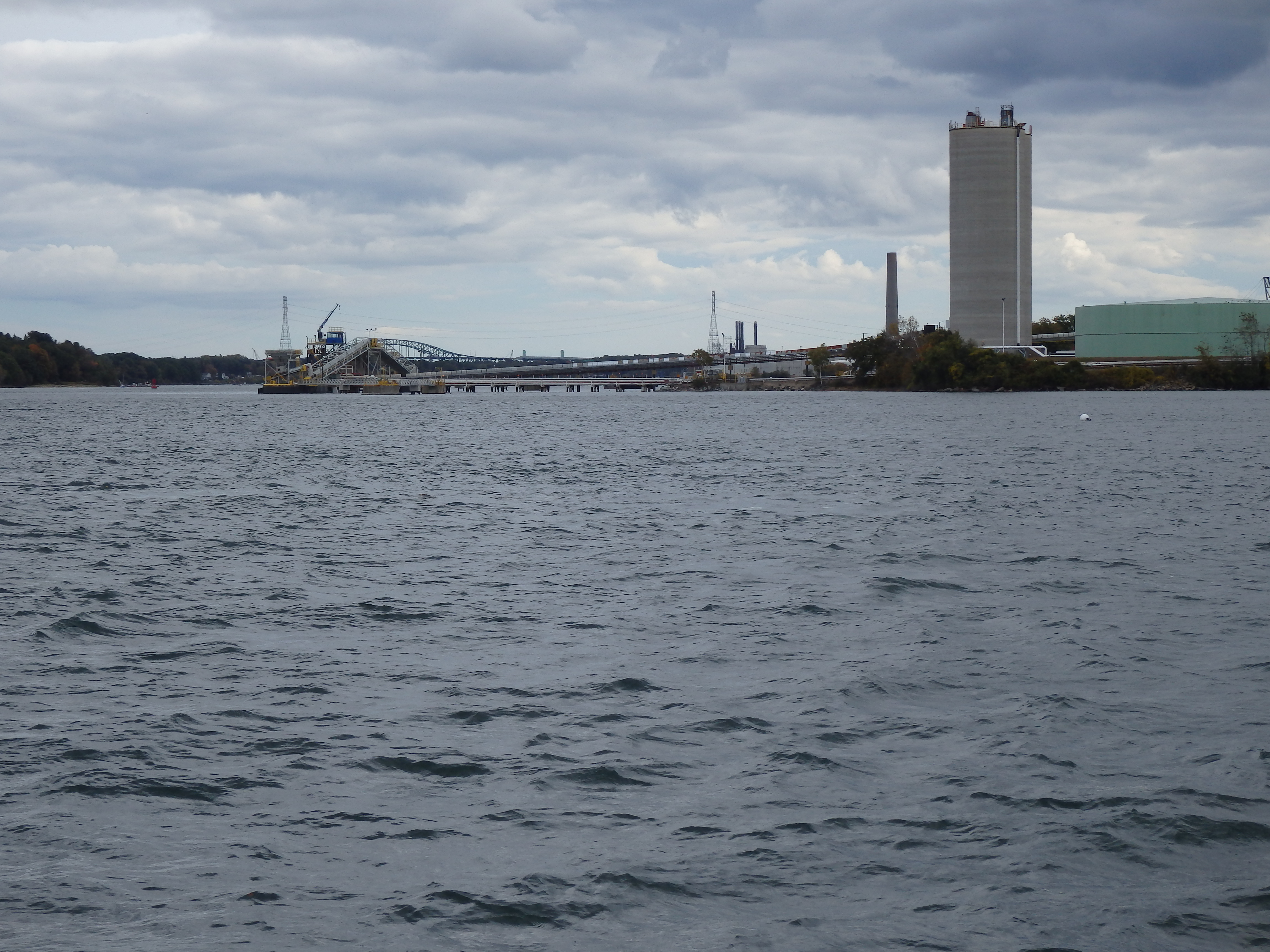
It was an eye-opener. Once we left the familiar, picturesque Colonial-era Portsmouth Harbor, we began passing all of New Hampshire’s industrial waterfront, which includes three electrical power plants, the world’s largest lobster operation, an oceanic underwater cable producer, oil tank farms, and the like – each with major docking facilities for oceanic freighters or other vessels. I hadn’t envisioned the extent of this activity. Nor had we anticipated the width of the passageway, in many places approaching three-quarters of a mile. Not what most folks would call beautiful, but it was impressive, even if we were grateful Aristotle Onassis failed in his attempt to put an oil refinery a bit upstream.
Once we’d passed the mouth to Great Bay, we were surprised by how much of Dover itself sits on the Piscataqua – and how much very expensive waterfront housing with expensive docks to match have been built there, mostly, as we were told, in the past two decades, now that the river’s been cleaned up from its earlier industrial pollution. In fact, looking at this and at the Maine side of the river gave the impression of passing high-profile lake shores with their ever more imposing year-round mansions. To be frank, we were a bit stunned by the wealth we were witnessing – where are these people in our otherwise modest city and what’s their source of income? Theirs is a different world, we’d say.
That’s not to say there weren’t stretches of colorful foliage or fascinating wildlife. In addition to a host of herons, gulls, and cormorants (we most loved the ones who stood atop mooring buoys marked “private,” as if the birds defiantly owned them), we viewed a soaring osprey and then a bald eagle in flight, an impressive hawk high in a pine overlooking the river, and a seal or two – all close to home.
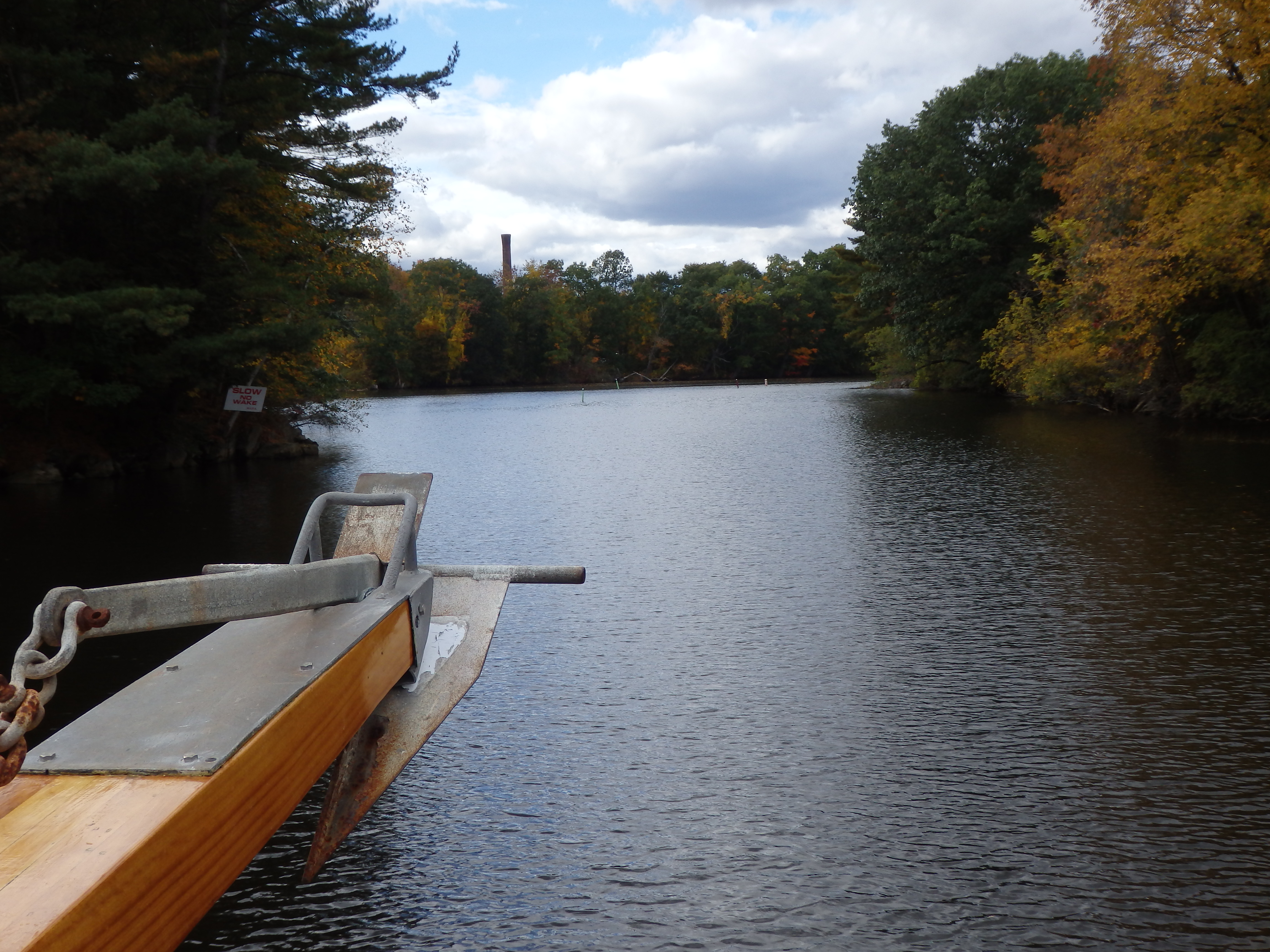
The Pisacataqua originates at the fork of the Salmon Falls and Cocheco River, which we then followed as it narrowed on its way to downtown Dover.
What a contrast!
At one broad pool, we were told that tall-mast ships turned around here before reaching the mills by being poled by hand on high tide or pulled by oxen the final few miles. And, at the upper narrows, we appreciated a friend’s work with the Army Corps of Engineers in dredging power-plant tar from the river to reopen the passage. (That could be another posting in its own right.)
We passed the marina at the edge of downtown and circled, to retrace our journey.
Why is it, the return always seems to go faster than the first part, outward?
On our drive home after debarking, we stayed close to the rivers. Surprising how discrete the lanes to the big houses! You’d never, ever, suspect they were there if you hadn’t taken the cruise. Makes us wonder how much more is hidden just out of view.

 Jnana's Red Barn
What a beautiful way to spend a day. If I had my choice, I’d spend tomorrow there. Thank you for the trip.