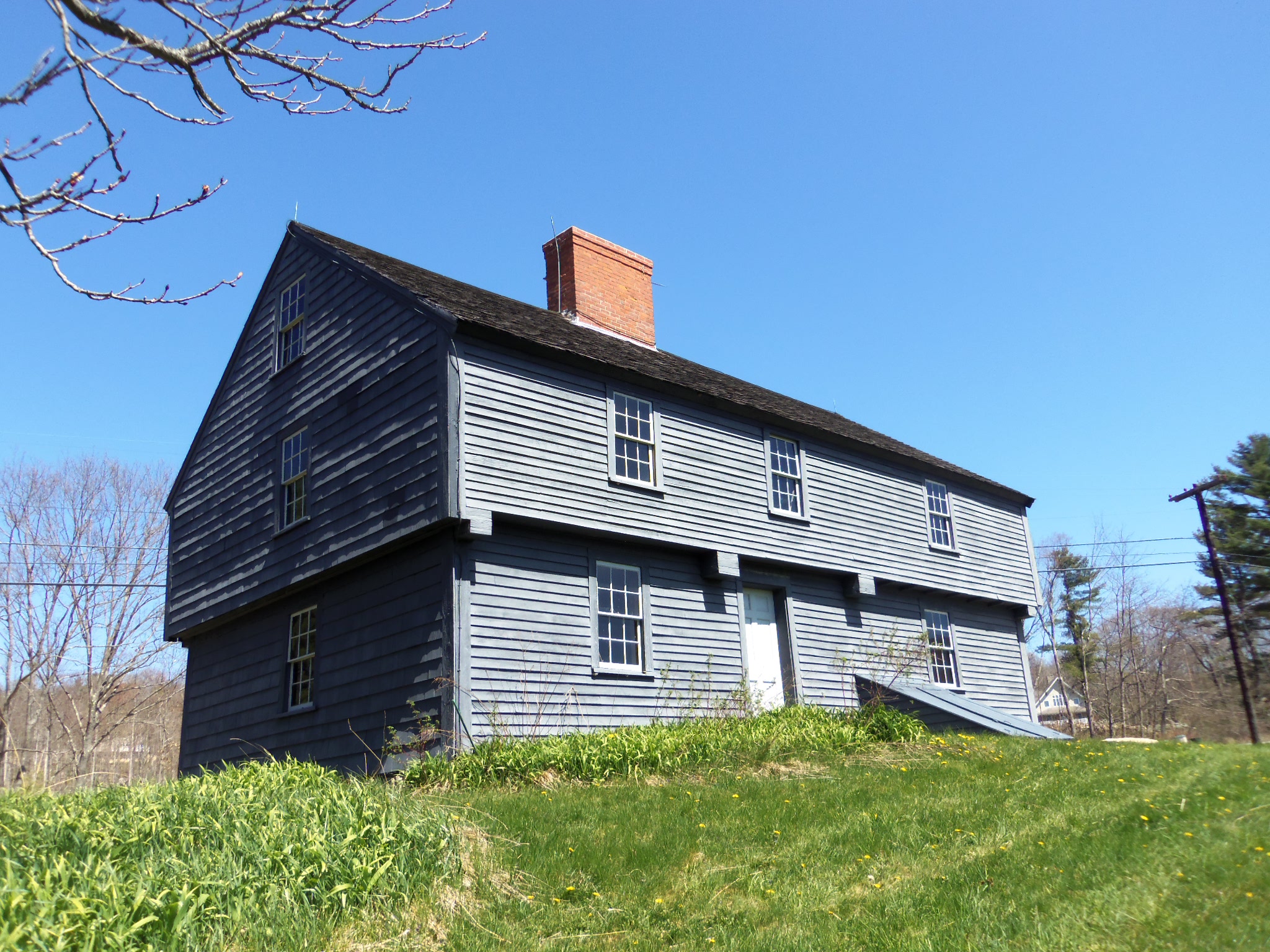
GARRISON HOUSE

The distinctive overhang design allowed for self-defense from within.

From the outbreak of King Philip’s War in 1675 until the conclusion of the French and Indian War in 1763, much of northern New England was under an ongoing threat of violence along its frontier. Nearly all of the English settlement in Maine was pushed back to a few towns nearest New Hampshire, and many villages, including Dover, suffered devastation and massacre.

Indeed, officials ordered many residents to construct fortified garrison houses, like this reproduction along Cider Hill Road in York, Maine, where families could retreat for armed protection when an alarm was sounded.

The site overlooks the inland tidal salt marshes that give rise to the York River. The hay from such spots was prized, even though feeding it to cows would produce a distinctively salty milk.
Also on the site is a more traditional New England style of construction -- shingle siding that weathers to gray.
Also on the site is a more traditional New England style of construction — shingle siding that weathers to gray.

Leave a comment

This site uses Akismet to reduce spam. Learn how your comment data is processed.