Remembering another dear Friend

I’ve previously posted on the Quaker tradition of recording memorial minutes for “public Friends,” meaning those whose service extended beyond their local Meeting.

I have even posted some of those as examples.

As I’ve noted, a memorial minute differs from either an obituary or a eulogy. Its intent is to recognize ways the Divine has found service through the individual’s faithfulness.

After the minute is approved by the local Meeting, it is forwarded to the Quarterly Meeting, essentially a district of neighboring Quakers, and once endorsed there, sent on to the Yearly Meeting, where it may be included in a collection of similar minutes.

Here’s the draft for Charlotte Fardelmann, 1928-2023.

~*~

Deeply grounded in her faith of God and angels, Charlotte Fardelmann heeded spiritual nudges that bubbled up within her, an inner life we glimpsed in her warm smile and sparkling eyes, especially when accompanied by lively hand motions as she voiced a holy leading.

Many fondly remember her hospitality at her pink home on Little Harbor in Portsmouth, New Hampshire, the scene of Meeting picnics, multiday silence retreats, or more mundane committee deliberations. From childhood on, she loved the water and wordlessly shared with us her sense of its wonder and renewal.

A quiet, gentle, self-effacing manner accompanied her nurturing presence amidst us, opening her to listen closely and actively in private conversations.

Raised in a family with two brothers in Minneapolis that enjoyed sailing in international waters, Charlotte experienced the privileges and discomforts of wealth. She did, for instance, sail her father’s 32-foot sloop around the Baltic Sea and later around Greece.

In college, Charlotte underwent a religious awakening, along with service in inner city neighborhoods of major cities, to the consternation of her agnostic father. She also took a spring break on Nantucket Island, where she was part of a circle from Wellesley who met a group of men from Yale who had access to a sailboat. With its occupancy limited, they decided to draw straws on who could go, and Charlotte’s led to Dale Fardelmann, who shared a sailing passion.

Charlotte and Dale married and had four children in Hanover, New Hampshire, while he served his medical residency. By the time they moved to Portsmouth, where he established a urology practice, she was worshipping as an Episcopalian, a faith shared with her mother-in-law.

Her family had experienced mental illness and other dark struggles, which she would continue to address.

In the adversity of divorce, she discovered an opportunity to be something more than a devoted mother and a supportive housewife. With her four children raised and headed in separate directions, she found liberation to pursue new interests, including professional photography and writing that led to her published books “Islands Down East: A Visitor’s Guide”; “Illuminations: Holding Our Life Stories Up to the Light”; “Sink Down to the Seed”; “Nudged by the Spirit: Stories of People Responding to the Still, Small Voice, of God”; and “Create in Me a Clean Heart.” Her freelancing appearances included a Boston Globe story that fronted its Sunday travel section, “Mom, You’re Not Hiking That Alone, Are You,” her account of backpacking the New Hampshire Presidential Range of mountains solo.

In the midst of the Vietnam conflict, she searched for a faith community that pursued peace rather than military programs and that functioned free of an implicit patriarchy. Peace and women’s rights mattered deeply to her. Ultimately, that brought her to Dover Friends Meeting.

A decade later, she undertook a nine-month residency at Pendle Hill, a Quaker retreat and studies center near Philadelphia, to deepen her spiritual focus. It was a life-changing experience. After returning to Portsmouth, though she was reluctant to appear as a public speaker, she created a photographic slide show about the center and presented it to Quakers around New England. That step opened other opportunities for her to share her spiritual insights, in addition to classes she taught at Pendle Hill itself. She also established ongoing close relationships of mutual spiritual support, including a prayer partner she spoke monthly for forty years. In her prayers, her style was boldly specific.

She served Dover Friends Meeting as a sensitive presiding clerk, as well as through many other positions, including its longstanding representative to the Ministry and Counsel committee of New England Yearly Meeting. She presented many workshops during its annual sessions over the years.

One of her practices was to set aside a day each week to listen to God. She nurtured a childlike delight in life, likely a response to the dark night journey of the soul she also knew.

A central discipline was journaling, often involving black ink or color sketching rather than words, as well as a midday gathering at Dover where all were free to similarly engage and share with the others, if so moved.

Add to that her delight in music, including participation in a 200-member women’s chorus in Portsmouth, Voices of the Heart.

Frugal and self-effacing, her one indulgence was travel, which included participation in Servas, a program that had her staying in homes around the world in exchange for welcoming those families to her home in Portsmouth. Other travel connections included her experiencing the Eastern Orthodox midnight celebration of Easter in the then Soviet Union, with its congregational exclamations, “He is risen! Truly, He is risen!,” a resonance that moved her deeply. She also went to Central America as a witness for peace during the Iran-Contra conflict, putting herself at physical risk, and to Hiroshima, Japan, among her other appearances on behalf of global peace. Additional trips took her to Friends in Cuba and Kenya, prompting Dover Friends to support a unique AIDS orphan.

She was not immune to tragedy and endured the loss of a beloved grandson and then, in roughly a year-and-a-half span, the deaths of both of her daughters and a cherished son-in-law.

The fortune she inherited came with her father’s instruction, “Keep it in the family,” meaning its principal, placing it in tension with many needs she saw in the world around her. With counsel from several other Friends from similar backgrounds, Charlotte found resolution in redefining family itself and, with the approval of her brothers and children, established the Lyman Fund to assist individuals and groups in following their unique spiritual leadings by helping them overcome financial obstacles in taking their next step. Carrying her maiden name, the fund had granted more than a million dollars to some 800 recipients by the time of her passing and is poised to continue its mission.
Worshiping in another Quaker Meeting

Vassalboro,
how many times I’ve driven an hour to worship,
even my own home Meeting

sunflowers outside the window
a gray morning
ten of us, now eleven

so many of the surnames from Dover
arrived here and abouts

edgewalkers
part of a message

the Zoom view of the Meeting room
shows only me
surrounded by white walls

“green walling,” a term I just learned
no, a green washing
by conniving corporations

a carpenter tells me of working on the renovations
of the schooner American Eagle

all new to me
but not for long

A multiparty political system is predicated on a loyal opposition

Its origin, I’ve heard, arose in the Quaker peace testimony of 1662, with its refusal to swear oaths. Before that, political factions were supported by their own armies. The Quakers, or Society of Friends, promised to hold firm to their beliefs and yet not coerce others to their stand. Persuasion was another matter altogether. And William Penn, in the colony of Pennsylvania in the years we knew it as the Holy Experiment, insisted on having at least two candidates for every public office.

The Quakers not only refused to bear arms but also conducted their faith community business by consensus, without ever taking a vote. Minority opinions were respected, often leading to a third solution superior to the original options. This was not, do note, a compromise, seen as the lower common denominator, but rather something superior.

Theologically speaking, we sensed that Christ had a better answer for us, if we would only listen. “Mind the Light,” as we said.

Flash ahead to today’s death grip in the United States, where one party has steadfastly stood to obstruct anything proposed by an administration other than theirs. President Obama learned the hard way that they wouldn’t participate in crafting a third way. And he faced their open disrespect, which continued during President Biden’s term. Just look at the F— Biden flags for confirmation. Or their chants of “Lock her up,” regarding T-guy’s first opponent. Not that they would acknowledge the same for their guy, for far better documented reasons.

The Don Old, as we’ve seen, has significantly worsened the conflict and is threatening to imprison those who don’t agree with him.

The conundrum with a democracy could rapidly pivot on what to do with a disloyal opposition.

This could get very ugly, indeed. Before and after the national election.

If these were paper books …

Discounted “sale” prices would be used to move a backlog of volumes, either at the bookstore itself or at the publisher’s warehouse. It was rarely a good sign.

With ebooks, there are no stacks of boxes or precious book-shelving problems.

Maybe you remember the “remaindered bin” with its cheapo prices. What you likely don’t remember was that authors didn’t get paid royalties on those.

Still, they got books moving into readers’ hands.

Events like Smashwords’ big July-long ebook sale exist to stir things up a bit.

Check out my four selected entries at my Jnana Hodson author page at Smashwords.com to pick up some real deals.

Here’s your chance to get my newest book for free

It’s not just a whole different way of looking at religion. It’s about intense life experiences and the ways we talk about them, hoping someone else will understand.

Quite simply, I believe everyone has a “religion,” even atheists. Just listen to ardent sports fans for examples from the secular side of the equation.

My book embraces that universal situation and then turns to the unique spirituality of early Quakers and the ways they used metaphor to guide each other in a revolutionary social transformation. Many of their advances you take for granted, no matter your labels.

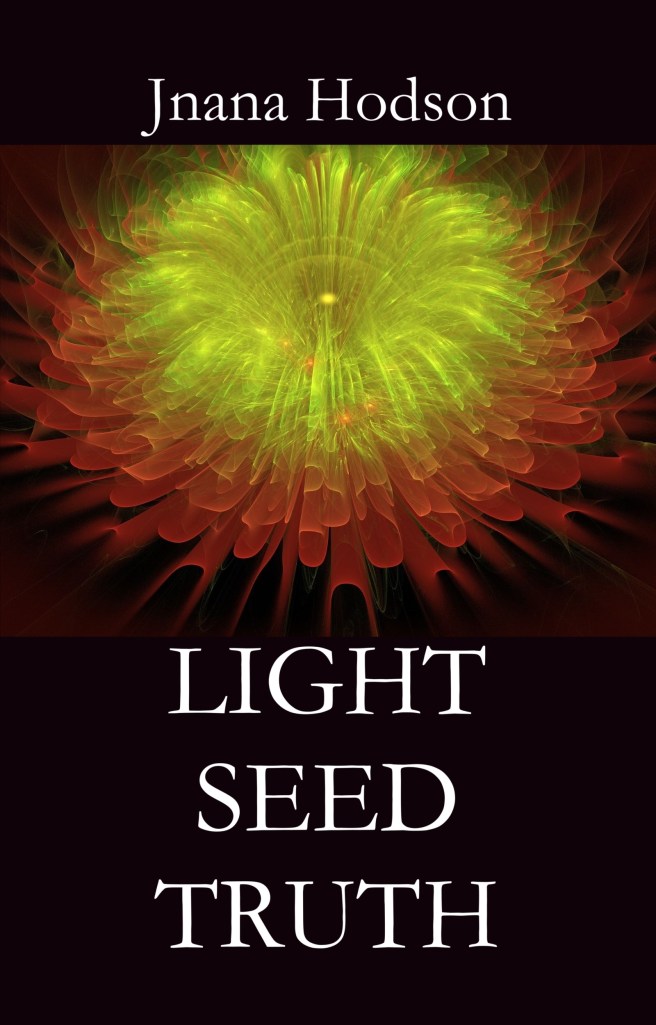
Do take a look at my ebook Light Seed Truth at Smashwords.com during its annual July sales sweep. What do you have to lose? Remember, it’s free.

I used to find ‘sale prices’ puzzling

In my mindset, a product or service has a fair-value point. You know, it costs so much to make and distribute, even before factoring in a profit. If you’re selling it at a lower price, why don’t you keep it there all the time? Maybe my outlook reflects the one-price for all practice of Quakers who objected to the upper class who expected to get a discount over the poorer masses.

Beyond that, the concept of bargaining or haggling found in many cultures absolutely repulsed me. I still feel like poor artisans and farmers in those countries are getting cheated or at least cheating themselves.

Either way, I rarely buy much and usually shy away from the more expensive range of items. Quite simply, I’m just not a shopper.

In my two years working as a field representative for a newspaper syndicate, I did finally come to appreciate the need to have something special to motivate a potential buyer. We couldn’t offer “specials,” and in most markets, we no longer had competing newspapers vying for our latest product. It was frustrating. There was nothing to make an editor jump onto our latest comic strip or columnist or game feature, no matter how excellent these were.

In the book publishing industry, free advance reading editions and review copies were sent out in the hopes of creating a buzz, but for digital books, that is a more challenging effort. Giving somebody a coupon to order online just ain’t the same as handing them a paper book.

So just what can an indy author do to get reviews or, better yet, a word-of-mouth buzz?

Welcome to Smashword.com’s big July-long ebook sale, where writers opt to present titles at sharp discount or even free.

Remember, this year I have two recent works available for free and two other new works at half-price.

Check them out at my Jnana Hodson author page! And then look at many of the fine offerings by others, too.

Acid test essayist: Jim Corbett (1933-2001)

Multilayered and deeply personal, Goatwalking: a Guide to Wildland Living is a rich blend of social activism, clandestine adventure, wilderness survival, political resistance, witness for justice, and spiritual growth and grounding.

It’s all based on Corbett’s experiences as a founder of the Sanctuary movement for persecuted Central American refugees. He escorted many of them on foot through the desert from the border to safety within defiant congregations across the Far West. On the trail, he was accompanied by milking goats who provided needed nurture – hence the title.

The book is as a much a journal as a history or social philosophy. As I found related elsewhere, when Corbett first came among Quakers, he knew more about Buddha than Jesus. But then, waiting for his next party to arrive at a remote chapel, he meditated on the crucifix on the wall before him and realized that if anyone could possibly know the terrors his charges had suffered, it was Jesus. Later, working with a dedicated priest, he was treated as an equal in everything but the serving of the eucharist – “I’m a Jesuit, a member of the Society of Jesus,” he was told, “and you’re a member of the Society of Friends,” or Quakers. “What’s the difference?”

His insights are as relevant today as they were when first published.

This month only, FREE! At Smashwords

Here’s your chance to get two of my most recent ebooks free, thanks to Smashword.com’s annual summer sales sweep.

Light Seed Truth is an original examination of ways we use metaphor to think about things that aren’t things or even energy – and that leads to many no-things that are intensely passionate for you or me or the people around us.

Also free this month is Trumpet of the Coming Storm,  a set of polemic poems I simply had to get off my chest.

In addition, I’m offering two other ebooks at half-price: Quaking Dover, a contrarian history of New England, and my playful Hamlet: A Village of Gargoyles poems collection.

To get you own copies, go to my Jnana Hodson author page at Smashwords.

Acid test mystic: James Nayler (1618-1660)

The most powerful of the public ministers in the early Quaker movement, Nayler remains unjustly tarnished by what I see as a street theater event that erupted into scandal and his conviction by Parliament (not court) on blasphemy. His shameful treatment by Quaker leader George Fox afterward furthered the sleight.

He’s seen as the most systematic theologian of the emerging movement, as I’ve written elsewhere. What fascinates me the most, though, is his articulation of the Light, as early Quakers experienced Christ. Nobody has written more insightfully in its wide-ranging appearances.

One difficulty is that the experience isn’t “like” anything else. What, for instance, is light itself like? Or the color green? Nayler’s writing, then, can make full sense only to others who have experienced a spiritual Light inwardly. Logically, we’re stuck in a tautology.

His text, though, works and sounds more like contemporary poetry than you’d expect from 17th century English prose. Well, Ezra Pound did describe literature as “news that stays news,” which I think fits here.


Officially released today, hooray!

I rather backed into this project, beginning with the elusive question, “What do Quakers believe?”

It led me to something much bigger, ranging beyond the Society of Friends, but springing from the seemingly quaint language of its earliest voices in mid-1600s Britain. There are good reasons the time and place are referred to as the world turned upside down.

Centering their experiences in three interlocking metaphors – Light, Seed, and Truth – they created what’s been called an alternative Christianity, and though their thinking and process have been diluted over the centuries since, their foundation remains revolutionary, startling, and challenging. I’ll argue that it’s cutting-edge contemporary, as well, in a time of disbelief and skepticism.

For one thing, how do you see “truth” as a verb? It becomes something quite different from carved marble or courtroom proceedings.

While some of the chapters originally appeared as chapbooks at Thistle Finch editions, this newly enlarged volume of essays is now available on your choice of ebook platforms at Smashwords.com and its affiliated digital retailers. Those outlets include the Apple Store, Barnes & Noble’s Nook, Scribd, and Sony’s Kobo. You may also request the ebook from your local public library.

The book now ranges far beyond religion and spirituality, by the way. Even atheists have their beliefs. Change the perspective, as I think I do, and you can find the exchange of first-hand experiences refreshing. How else can we talk about the deepest issues in life?

The move unites the essays in a single volume, rather than a series of four smaller chapbooks, and makes them available to a wider range of readers worldwide.

Do take a look.