In my novel, What’s Left, Cassia becomes a rising executive with half of the country as her territory. The experience of growing up in the family restaurant gives her a head start over her colleagues, but she’s also much more vulnerable in a highly competitive, often hostile, financial world, than she’d ever been back home.
What are the biggest threats in being a woman in management? How would you avoid them?
Let me repeat, What’s Left is my final novel, even though it’s appeared before several earlier ones — or their later revisions. That doesn’t mean I might not rework some more of my earlier books, but I have no intention (at this point, ahem) of undertaking such an ambitious project.
Still, if it’s ever successful, there can be a demand for a sequel. There are many possibilities that point to further development.
One plot twist I considered was this:
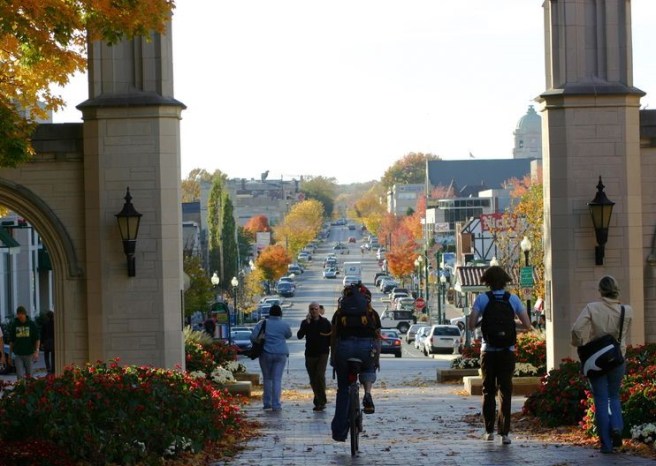
A handful of the Erinyes’ grandchildren rebel by returning to attend college across the street from Carmichael’s. Perhaps it’s inevitable that they apply for jobs in the restaurant.
Can they work? We’ll let them decide about becoming cousins.
This could have opened considerations about rebalancing the ownership, for one thing. Or more dimensions to our understanding of what it means to be a family. Or even their own reasons that parallel those of Cassia’s father in moving way back in the early ’70s.
~*~
It’s a big book, admittedly. But it could be a lot bigger.
Where would you take the story of What’s Left from what’s already there? What would you like to have answered?
~*~
I wonder where Cassia’s generation of her extended family or even their children go from here as they face today’s big challenges.
Cassia and her brothers and cousins face a crucial decision. Do they continue to jointly hold the family business as a resource for future generations, requiring them to keep working for a living, or do they divvy up their shares and then live independently wherever and however they desire?
Put yourself in Cassia’s shoes.
How would your life be different if you didn’t have to worry about how you’d make ends meet? What would you dream of doing?
~*~
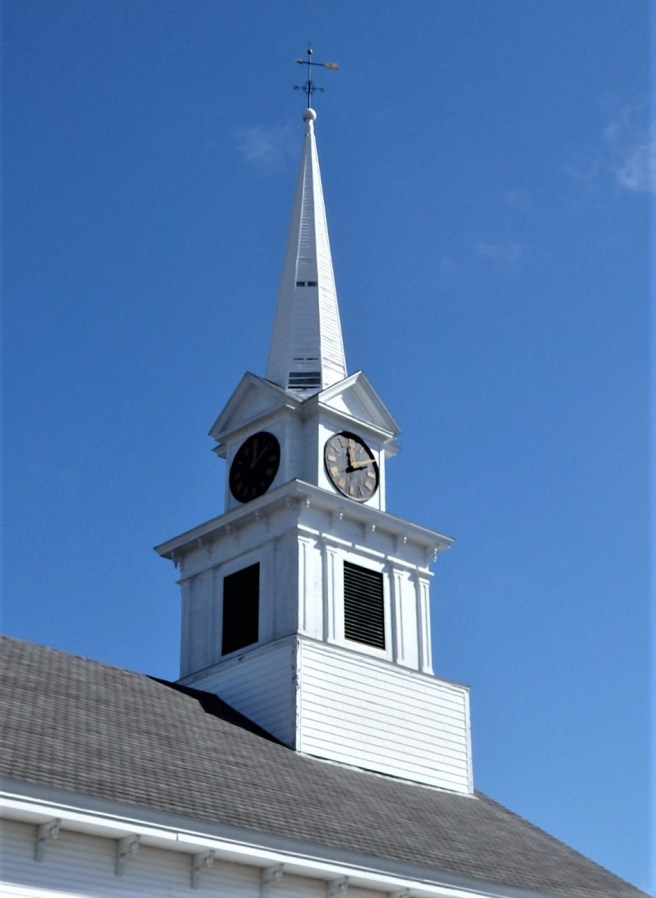
The family enterprise extends beyond the restaurant itself, as they demonstrate when they buy an old church something like this and convert it into a late-night hotspot.
I was perplexed that they kept raising the price on our broadband service, seemingly monthly, and then privately complained about monopoly abuse. We haven’t had a TV for years, but for some reason, that didn’t affect the pricing, however they tried to justify that.
Canceling when we moved, though, was a great pleasure. Besides, our new provider is $720 a year cheaper for the same service, perhaps because there’s some competition.
Not everybody’s sticking to broadband for digital access, either.
As a blogger and author, though, I’m just not ready to do all my online stuff on a smart phone. Not that the option couldn’t be tempting.
In one of the early drafts of my novel What’s Left, I tried this perspective — which I removed from the final version of the book, feeling it was too preachy:
If our workroom was where we could act honorably under the eye of God, it was still no substitute for times of celebration and worship! No, we need to take time every day for prayer and the study of scripture. Just remember: work spent in activities that help our neighbors and enable us to come together for periods of common delight is quite different from anything I see in the realm of time cards or the Harvard Business School.
~*~
Whew! Let’s try to bring this back to everyday experience.
Is there somebody you encounter someplace during the day who makes you feel special? A coworker, cafe wait person, bus driver, teacher, friend? Do tell us!
Karma yoga, by the way, is explained in my novel Yoga Bootcamp. Work itself gets complicated, no?
~*~
The old church Cassia’s family buys in my novel might have looked like this … before the wild rock concerts begin.
The spires are a distinctive part of the New England landscape, whether nestled in the mountains or close to the shoreline, like this one, where they also serve as landmarks for mariners.
Work on the modest spire of the Congregational church in Millbridge, Maine, is expected to run $400,000.
Maybe the family restaurant was oppressive? In my novel What’s Left, there’s no question the kids won’t be working shifts in Carmichael’s as they grow up. Do they ever want to rebel? Or does peer pressure and pride keep them in line?
As one of them said in an earlier draft:
So it was off to serve more Streetcars and slaw.
~*~
Well, they knew what was expected. And they knew how to pitch in and be effective.
What were you expected to do in your family? How did you help? Were you compensated in return? Should you have been?
Even though I cut this from the final version of my novel What’s Left, it’s still true:
What people need, and this is essential to a proper approach to labor, is balance.
~*~
Two things are going on here, one inside the other, but I’d like to be less confusing.
The first, quite simply, is my belief in what we Quakers call centering. We find our stopping all outwork activity for a time of deep meditation and reflection helps bring us perspective on the other parts of our lives. Add to that moderation and simplicity or focus all leading to a healthy balance of individuality, home, career, community, faith, and so on.
The second touches on attitudes toward labor itself, which quite frankly has been demeaned in modern society. What makes the concept of leisure so exalted? The danger, I suspect, is in overworking — often sucking any joy out of the project at hand.
Think of your job. What could management do to make it more human?
~*~
Classic. Somerville, Massachusetts, just outside Boston.
What do asparagus stems and lobster shells have in common?
They typically go in the trash, while the tender asparagus heads and the claw and tail meat go on the plate, maybe accompanied by melted butter.
I our household, though, we freeze the stems and turn them into cream of asparagus soup later.
And the shells, often roasted, though it’s not necessary, are simmered down into a lobster stock, which can hold its flavor for up to three months if frozen.
The stock makes for a great lobster bisque or lobster butter or fish chowder.
In essence, we wind up with more meals than one out of each ingredient – and thus getting more for our money.
In my novel What’s Left, her generation of the family will face some crucial decisions that resemble those their parents were charting when her father-to-be showed up in the household.
In a passage I cut from an earlier draft, she wonders:
What would you do?
While Dimitri and Barney have niches in the business, Nita has her chosen career. Tito, meanwhile, will likely have his hands in both the Zap enterprises and an independent law firm.
That leaves Manoula, who hopes to head off in a literary direction, not necessarily as a writer.
~*~
As I’m revisiting this, I’m getting a bit steamed. I realize how little guidance I had regarding my future. We didn’t talk much about it at home, and even college was somehow mostly off the table. The so-called guidance counselor at my large high school was mostly a disciplinary officer and military-draft registrar. College? No help from him!
I got more from the editor of the first newspaper that hired me as an intern. He had a knack for nurturing talent. I just wish he hadn’t retired when he did.
Dimitri seems to possess much of that skill, perhaps even more than Nita. They’d likely ask:
What would you really like to be doing with your life? What do you need from us to help? So what do you really want to do with your life? And what do you need to get there?