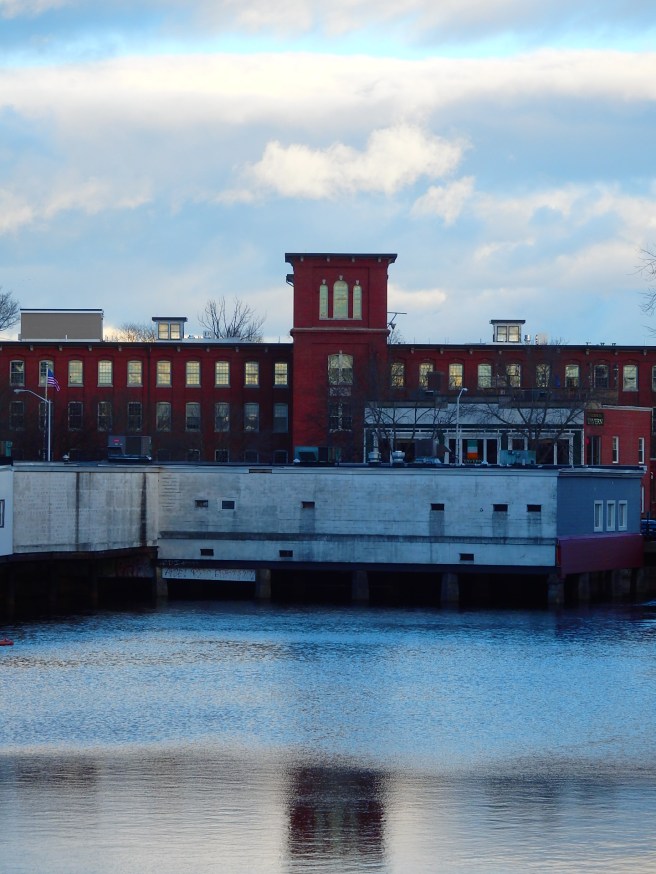
JUST TRYING TO KEEP PACE

Just a taste of what’s popping up. In case you were looking for a prompt.

~*~

  1. March, with its upheavals, has any bouts of single-digit lows unable to hold long. Typically, it’s the month most prone to heavy snowfalls, especially when temperatures hover around freezing. Country roads get their “frost heaves,” too, for bumpy travel. And bits of green begin trying to break through.
  2. “Why are you getting so upset, so defensive,” she asks after I encounter a setback that makes a mess on the counter. “It’s the sort of thing that happens to everybody” Except I want to shout, “No! It doesn’t! It only happens to me!” Actually it’s an echo of the childhood reaction after being accused, “Why did you do this to me?”Or more accurately, “How could you do this to me?” Mother blaming the Golden Boy once again.
  3. Making photocopies at our computer printer has me remembering one of my definitions of “making it” as a writer, back when – the desire for an IBM Selectric typewriter and my own Xerox copier. Just think, our computer keyboards are a vast leap forward from any typewriter, at least for klutzy typists like me, while our kids take the copier for granted. Oh, it’s just the beginning of a long list of good gear rendered obsolete in our lifetime.
  4. Been harboring a lingering notion about selecting a “top 100” or “best 100” or “favorite 100” compilation of my poems. Not that I really want another project to tackle, but looking at the range of my work over the past half-century sometimes leaves me surprised. Yes, much of it has a graffiti-like imperfection, once I decided to write on the run and revise along the lines of jazz improvisation more than aspiring to a perfectly formed artifact – or whatever. Let me say there are more rough edges than I’d like. Still, that 100 cutoff would mean an average of just two poems a year from what’s been a prolific output, even without the novels and essays. I’m still wondering how I ever did it while working full-time elsewhere.
  5. Rereading Walden with an appreciation of Thoreau’s pervasive satire. It’s a refreshing perspective.
  6. Can the question “Who are you?” be addressed by “Whom do you hate?”
  7. As an acquaintance was told at the office one Monday morning: “You have a billion dollars to reallocate.” It’s something that happens in a corporate buyout. Not that she saw any of it.
  8. Gotta try praying rather than worrying.
  9. Stay balanced and rested.
  10. We’re big on putting the lentils back in Lent.

~*~

Yes, this days our Tibetan prayer flags are frayed and thin.
Yes, these days our Tibetan prayer flags are frayed and thin.

HOLE UP OR RUN

he could hole up
with long-suppressed luminous temperaments

if only he could scale every surface except glass
shimmy up the black steel pole and raid the bird feeder
hang upside down from a sunflower

moving toward transition
an untested dream
from the stockpile     admits to darling insecurity
in the hole     the tree     the ground

faint implausible rhythms     chirps more lasting
if not so lucrative

*   *   *

every tree branches, so you choose in a flash
and keep running     in the desert he had wondered
about squirrels so far from the nearest tree
the ones who live in burrows
whether somewhere they’d made a wrong turn

a deer makes a bigger target
than foraging for dynamite

Poem copyright 2015 by Jnana Hodson
To read the full set of squirrelly poems,
click here.

ONE COUNTER GIRL TO THE OTHER

“here’s the guy
you called a moron
the other day”

“that’s Mormon,
not moron!”

vital differences
in the distinctives
add up, I trust

~*~

came home the other day and found
my apartment door unlocked, apparently from when
the maintenance crew came in to leave a form saying
my rent’s going up next month

so much for living an hour from Boston

at least nobody tried the door in the meantime

~*~

in the circling, a return, or maybe
everybody’s coming down with colds or the flu

a repressed desire for children
driving from one town to another

interrupted by an “emergency” message from the operator
even when it wasn’t an emergency

(just informed I have
with two “personal days” that must be taken before
the year ends)
my bank balance says otherwise

To continue, click here.
Copyright 2015

IN SEARCH OF DEEPER EXISTENCE

We made a leap, heading off nearly stiff-necked to find ourselves, as some diners proclaim, “served where quality counts.” Over steak dinners, this quaking closet monk is surprised by how much change can happen when I think nothing is moving. Just pass the salt, sugar, coffee, cream — thunder, please — in what they call the Brand Room surrounded by “Western art,” supposedly realistic styling of cowboys, Indians, and wildlife in dramatized poses. People from all over the world come to a few tiny rodeo towns like this to collect such canvases. Examine the pieces closely, though, and you perceive the false notes. The clothing, poses, landscapes distort. The artists react against the very masters they wish to emulate. Much of it is cranked out without looking acutely at the things being portrayed. Some may be driven by a worship of a past that never was quite that way; some, by a retreat from current events. Most viewers merely acknowledge symbol and go on as though sleepwalking, an act that continues misunderstanding. The rifle, saddle, spurs, and cougar evoke no real emotion: they are foreign to the touch and nose. But I desire to perceive this territory afresh — no matter how startling my findings deviate from convention. When I meet a bear or a buffalo, it won’t be like the dilated scoundrels in these paintings. My horse won’t rear behind me. He’ll simply center in his tracks — quiet, aware, efficient. He knows how it will be.

The Dedicated Laborious Quest begins with sustained exercise of a specific activity: a sport, an art, a science. Anything that requires years of individual exertion, even solitude, drawing upon many facets of the practitioner’s being — heart, mind, soul, and might.

Somehow, the novice begins dancing, if only in his head. Something simple, at first, until familiarity gains ground. Feet, legs, torso, arms, and hands eventually follow. A reel leads into a jig. Thought and emotions balance. Head and heart dialogue. With confidence comes freedom. More and more, the aspirant concentrates on partners or the group or motion itself, rather than his own next step or position. The music becomes more textured, until the hornpipe stands as the liveliest structure. So it’s been in this landscape. This is not just any desert, for there’s nothing generic about any detail encountered closely. With both people and places you come to know dearly, you find nuances and subtle contradictions will blur any sharp image. It’s easier to describe someone or something you meet briefly than what you know intimately. To say desert is dry and sunny misses the point, especially if you arrive in winter. At first, like so many others, we didn’t even consider this valley as desert, for it has no camel caravans or mounds of shifting sands with Great Pyramids on the horizon. One word or phrase can be misleading. Even the Evil Stepmother from folklore and fairy tales must have possessed some redeeming qualities. Could we be more specific than “evil”? Simply selfish? Or was she mean, jealous, domineering, afraid of whatever, from the wrong party? Suppose she was really a victim of some deep abuse? The portrait changes. Has anyone detailed how she dances? In the end, it’s either entertainment or worship, depending on the individual’s orientation. An authentic spiritual discipline teaches, through experience, we are not gods. Choose, then, good or evil, flowing or hoarding, living or dying.

Matching maps to the landscape, I look vainly for towns that do not exist or discover attractions placed on the wrong side of the road. Admit that everything is moving and transitory, even the mountains. Mariners, too, will speak of shifting sandbars as only one hazard of sailing on charts. Pay attention, then, but never toss your maps overboard. Are they all that different from Holy Scripture?

In a multitude of ways, people fear religion will lead them not just into wilderness but a desert. Demand, in fact, they leave everything behind. The description will vary by tradition. Entering the Void or emptiness, becoming selfless or egoless, abandoning the Little Self for the Big Self, achieving annihilation and sacrifice, attaining renunciation (Sannyasa), taking up your own Cross — these are a few of its names. Marriage adds its own complications.

Having come to the desert, we now know the fuller value of water. Something simple, essential. No one can live without it. The list of necessities is a short one; the possibilities of embellishment, endless.

There are rivers on every map you rely on. Sometimes when I walk out into the expanse, I encounter one. Sometimes, one deep enough to block my way. And then I turn to the page for a bridge.

Or, better yet, call out for my buddy, Kokopelli.

For more insights from the American Far West and Kokopelli, click here.

FOOD FOR CONTEMPLATION AND GROUNDING

Through much of the history of the Society of Friends, Quakers lived under stick codes of conduct that shaped their distinctive Plain Speech and Plain Dress, along with a host of less visible restrictions. Apart from the Peace Testimony and sets of guidelines that would have us not swear oaths, gamble, live ostentatiously, indulge in most of the fine arts or other entertainments, and so on, those days are long past.

When it comes to food, Friends have long held to the “eat to live, not live to eat” standard, one nonetheless accompanied by a delight in fresh produce, good cheese, and gardening itself. Some of this outlook is guided by our testimonies of simplicity and, by extension, honesty, as well as a respect for quality rather than quantity. Alcohol has had a more varied history, given that it was a basic of daily life at the time the movement emerged in the mid-1600s. Initially, the offense was for “being disguised by hard liquor,” rather than imbibing itself. Only later did much of the Quaker world abolish the consumption of alcoholic beverages altogether. As social drinking has become more widely acceptable in recent decades, so, too, has much of that opposition abated in Quaker households.

That’s not to say individual Friends don’t follow dietary disciplines. Vegans and vegetarians are common in our communities, even before we get to the medically prescribed limitations of gluten, lactose, diabetic, allergies, and more. (Trying to plan for a dinner of potluck can be trying these days – should we save that for a later discussion?) And, a step away, smoking is always discouraged.

As I discussed in Around the Table, a Dec. 17, 2015, posting in the Talking Money series on my Chicken Farmer I Still Love You blog, the issues of feasting and fasting, as well as dietary limitations, are major components of religious practice and awareness. To my thinking, apart from the reasoning behind a ban on one item or another is the essential strengthening of an ability to say No – to curb one’s initial desires and impulses, a virtue that can be conveyed to more difficult decisions in one’s life. We start with the simple things, after all.

Fasting, a common practice among early Friends, is a cleansing I came to appreciate through my residency in a yoga ashram in the early ’70s. It can also be quite liberating and joyful. You’d be surprised.

More recently, I’ve had to acknowledge another kind of fasting – one in which food is not totally avoided but instead the daily diet is greatly curbed, with entire categories of food perhaps removed from cooking or eating.

Looking at the complex regulations the Eastern Orthodox churches impose for Advent and Lent, my wife remarked that vegan would generally fit right in. Since we’ve already (voluntarily) been observing Advent and Lent by abstaining from alcohol, we decided to switch to a vegan cuisine for last Advent, something we’ve considered returning to with Lent, which starts Monday. Yes, I do miss the milk in my coffee, but I’d been intending to reduce the sugar intake anyway – while sweets themselves aren’t off limits, sometimes one step makes another one easier, too, as I’ve found here.

We recognize there are two ways to approach this. One is to go for self-mortification, a bit of suffering, if you will. The other is to delight in many of the options that get overlooked in the abundance we enjoy daily. We’ve been intending to eat more beans, for instance. How do we rise to the challenge? What do we have to use instead of butter or olive oil? Is margarine cheating? How about coconut milk? You get the picture.

Since the Orthodox do relax the Advent rules at times during the week, we’re pondering similar with fish and (other) meat – once or twice a week, at most, and then in small quantities – as an alternative approach . Well, we will confess that Thanksgiving Day was a big exception in our Advent observance. The rules for Great Lent, by the way, are much stricter than those imposed in the approach to Christmas. How do the Orthodox do it?

Anyone have similar thoughts on Kosher or Halal or the yogic considerations of Satvic, Rajasic, or Tomasic or any of the other places where spiritual practice meets earthly tastes? Pipe up, please!

SWIMMING WITH PISCES

Why wait for the dust to settle? Here are 10 bullets from my end.

~*~

  1. Would love to get back to another personal routine that’s somehow fallen by the wayside: sitting abed and “simmering” each morning with a cup of coffee to accompany some reading or just my own thoughts. Rather than popping right up and getting in gear. Theologian Howard Thurman was a big advocate of the practice and its reversal in the evening.
  2. Do have the indolent luxury of hiding out in our third-floor guest room (a.k.a. crafts room), opposite my studio, maybe even allowing a whole thick novel to wash over me as I read if I’m not napping there. It’s the room up there that gets direct sunlight, unlike my north-facing studio.
  3. Forsythia, which she insists are as hardy as weeds, are in danger of blooming too early. One more sign of disaster we’ve observed. We’re watching them, all the same, to bring a few sprigs in to force into flower sometime approaching Easter.
  4. Returning to the memory of hitchhiking – giving a lift to others when you can or extending their generosity, in some manner – suggests compiling a long annotated list of our experiences and what we learned, pro and con. Maybe as Letters to Youth from a retired hitchhiker or a way of finally gleaning some wisdom in reflecting on the era. Yes, it could be giddy but also risky. And I’m not the one to see it from the “hippie chick” perspective. Anyone else want to rise to the challenge?
  5. We’re well into sauna season, the little cabin at the edge of the pond. I’m still not breaking the ice for a dip. Let the younger, more foolhardy guys to that. No, there’s no reason for us geezers to tempt cardiac arrest.
  6. Curiously, I don’t seem to be getting any more done in my personal pursuits than when I was working fulltime. Or was I really neglecting a lot more then than I remember?
  7. February is such a short month, especially for those of us who have legal obligations to fulfill – car inspections and new tags, for instance. And then there are all those monthly payments coming due the equivalent of at least a weekend earlier.
  8. Quakers traditionally eschew a liturgical calendar, preferring instead that every day should be holy. Not that we commonly manage that. But that doesn’t preclude some of us from voluntarily taking up disciplines that would be mandatory in other denominations. For example, my wife and I customarily delve into Advent and Lenten readings and abstain from alcohol for those periods. (As a practice, it’s good to be able to say “No” and stick with it, especially when it comes to temptations like my martinis.) This past Advent we engaged Eastern Orthodox “fasting,” realizing a vegan diet would fit the rules if we eliminated oil on Mondays, Wednesdays, and Fridays, apart from the fish allowed on weekends. The avoidance of meat was no problem, but we really missed the cheese and eggs, which many vegetarians allow, and I nearly added milk to my coffee more than once. Almond milk, by the way, is a fine substitute, but I also gained an actual fondness for black coffee. So much for the sugar. Still, it’s surprising how many labels I began reading – cookies, chocolate – and found offending additives. With Orthodox Lent beginning February 27, we’re looking at even stricter rules. It’s what she describes as being a tea-totaling vegan with no olive oil. We really have to admire all those who take this in stride.
  9. And any day now we’ll be invaded by ants. They seldom wait for mid-May.
  10. We’ve seen too many who shout “law and order” turn out themselves to be lawless and disorderly.

~*~

You know it's a cold morning when you look out the window and see this. Especially when all the other neighbors are in the same boat.
You know it’s a cold morning when you look out the window and see this. Especially when all the other neighbors are in the same boat.

BEWARE OF OWLS DISGUISED AS PARAKEETS OR SPARROWS

Ever seen a squirrel caught in a bramble?
A seeming escape leading nowhere?
He could tell you.

*   *   *

He could tell you
he’s lucky to still be alive.

*   *   *

There are those who insist love is nothing more
than a seasonal disorder, an allergy or a virus.
Makes sense when you’re speaking of Sick With Love.
But how do you cope dealing with females
happier with thorns than leaves and berries?
Or when confronted by some dog?

*   *   *

Running along a phone line, a squirrel
never falls over. To hell with gravity.
It’s the strength of those long, skinny toes
can reach around a stick. Hold tight.

Poem copyright 2015 by Jnana Hodson
To read the full set of squirrelly poems,
click here.


THE INTERIOR SURPRISES

When the Pacific Northwest is mentioned, most people envision lush evergreen rainforests amid glacial mountains; few consider the desert that occupies most of Washington State, Oregon, and Idaho. I now explore the western end of the largely treeless expanse beginning within the Dakotas, Nebraska, Kansas, and Texas and extending almost to the Pacific Rim itself. Remember, a leafy tree requires thirty inches of rainfall a year to survive; an evergreen, somewhat less. My valley received an average of a little more than seven inches a year. Having grown up adjusting to muggy summers, I find a desert can affect my spirit in more ways than I ever would have imagined.

But you can choose, too, not to call everything by the names on maps. As geographies are being transformed ever more rapidly, few outward specifics hold long. Seek instead the vibrations of a site, sense its unseen roots and unexpressed timeless potential. In that vein, another depth appears. Perhaps each human inhabitant will go beyond basic misunderstandings. As I still hope.

Some maps are even jigsaw puzzles. And you think they’re for children?

Returning from that first trip to India, my spiritual mentor remarked that each village had felt different. “It’s more than appearances. The difference is the distinct vibration of a site. Many of their deities belong to a specific locality. One village will worship one god; another will enshrine another.” That’s how they identified the unique quality of a spot, just as Westerners have chemical elements to define physical qualities of a substance.

Even though I wasn’t quite certain of their origin or all of their psychic flavors, I sensed such subtleties. There are spiritual fingerprints certain people leave behind: a Quaker or Dunker neighborhood, for instance, may have a distinctive feel even a century after those worshipers depart. The same seems to be true for American Indian sites.

For more insights from the American Far West and Kokopelli, click here.

TRAPPED IN THE SCHEDULING

Thinking, too, of Bill Taber’s observation that Quakerism is filled with “strong women and tender men.” Think that describes us?

Which reminds me of a story Sondra Cronk was telling at Tract Association; she was back stateside between semesters at Woodbrooke (the English Pendle Hill center). Friends Meetings there (so she said) are in a very decrepit and lowly state, although as thee may imagine, some of the most powerful worship occurs in the very small Meetings that appear physically most ghostly. In any case, at one of the Quarterly or Yearly Meeting sessions, someone raised the question of whether we were letting the scheduling get in the way of Divine Leading – that is, whether our sessions are too busy to allow the Lord to do His work. Without seeing the irony that followed, the clerk replied: “I don’t see how we can possibly discuss that before 1988!” To which he was challenged: “We can’t wait that long!” “Well, then, maybe we can work it in later in 1986.” No wonder I’m so frustrated with committees! What I’m realizing is that in responding to the call not to serve on committees, I’ve been liberated to perform much needed intervisitation, as the Lord leads me. If I were to do this as part of a committee – and I may still have notes from the gatherings Ohio Yearly Meeting extended when the Lake Erie Association of Friends was not yet a YM – there would be so much effort involved in simply getting everyone together, establishing schedules, packing lunches, carpooling, and writing and duplicating reports, that the visitation would never get off the ground. Well, a committee of two, perhaps: thee and me, or Charles and me. Or even three or four in close combinations such as thee, Charles, Paula, and me. Which seems to be how early Friends did it! How enlightening!

~*~

For more Seasons of the Spirit, click here.