As a prelude to regular journaling, I found this

In one notebook, only the first eight pages were used. The remaining pages remained blank. Somehow, I was now at Indiana University, Bloomington.

I’m confused about the time of these entries. Page 2 opens, “Tiempo comes out this week: it is beautiful, austere, and masculine. Will the effort to excise the cobwebs, the Romantic [Victorian?} cancer from this God-forsaken place be worth the effort?” On page 4 there’s a bracketed [November 14] entry, “at breakfast time, the puddle was frozen. At lunchtime, a butterfly flitted in sunlight; I thought it was a falling leaf.”

Yet the entries have me suspecting the entries might actually be from early spring or later, when my love life was in turmoil. The only notation on the opening page was a pathetic: “Poem to Nicki. Can I be your older brother / if I cannot be your lover?”

There’s also a description of our visiting Toad Hall with my sister and our driving to Bedford, with the Hoosier hills creased by naked trees and framed by blocks of farmed fields, rocks cut away by creeks, golden fallen leaves, and yellow cut limestone. Also, Cezanne quarries with mottled gray skies.

Still, these details also would fit November.

~*~

My reading stack included Steppenwolf, which I read half-drunk on one of my first bottles of wine, as well as Leviathan, Dark Ghetto, Hostettler’s Amish Society, Morning Watch, Einstein on Mozart’s piano concerti, the usual studies grind, Neibuhr’s Moral Man and Immoral Society, and the Kerner Report.

Story idea: Levithan (or the perfect ruler): the sovereign as an omniscient computer. [Remember, this was at the end of the ‘60s!]
~*~

My primary focus was on Nikki or, more accurately, her absence. In the years since, I had forgotten that we had ongoing struggles long before the final split.

“The library on Saturday night is quiet: a great escape from couples.”

[I see I was using colons the way I now use dashes. One seems literary, the other journalistic, often as a substitute for parentheses.]

Sunday morning is for the purest music: Mozart piano concertos, the Shostakovich preludes, Herbie Mann, Beethoven’s sixth.

And then:

“This week has been weird. Nikki’s decision [whatever that was], then all night Wednesday after our tearful walk. My feeling suicidal playing dodge ‘em with cars. The beauty of being together, skin against skin, her breasts pressed into my arms. Pale sunrise, lavender against blue. Gut-torn scars exposed again. The same lines Fay gave. ‘But I’ll still want to know where you are, too, and know what you’re doing.’ ”

[Funny, neither of them followed up long on that.]

“She is so fucked up, makes herself unhappy when she should be the happiest,” despite the humor that makes my friends think she is so funny. … but I really don’t know her yet. …

“Her chemistry is different. She smells and tastes so different from other girls. Maybe it’s Jewish.” Hmm: “Fay and I had an unspoken language Nicki & I don’t. But Nicki is more human, more sensitive, more the artist and intellectual.”

More the child, actually. If only she would grow up Yet “she stabilized me …”

“Running the door into Paul, the pianist who has never heard of Von Karajan, as he carried hot chocolate.” Who was this guy in my dorm?

Or Jack, “who does not understand literature. I read him a few excerpts from Steppenwolf and understood nothing. Intellectual jerk.”

~*~

Artists do not make contented cows on the sidewalk.

As I was going to buy a baby-congratulations card:

Who might the mother have been? Kathy H?

three blue baby buggies
pushed by three
student-type mothers

Now I see that Nikki and I were having troubles before my trip to Florida. The trip, even so, went swimmingly.

Vietnam
Love it
Or leave it

Other bits:

The worst profs I’ve had hold doctorates from Ivy League schools.

One poly sci course offering was about why politicians must tell lies, keeping their constituencies in ideology and darkness.

Two nights a row, meatloaf. On third day, at lunch. The dieticians serve what no one else would dare do.

The best part of any book is the last half. The author has laid all his piddly groundwork: he is now ready to move, if he can.

Really?

Trout Fishing in America: big writing now. [Maybe this was my first awareness of the work, from a reference in Newsweek or Time, rather than actually having the book, something I think happened in my Montana trip in the spring of ’70, after graduation, about the time I started journaling seriously.]

This campus is filled with a bunch of would-bes: would-be writers, would-be lawyers, would-be scientists, all pretending and preventing others from getting ahead. Rah, mediocrity!

Conversation with V.O.: basis of Hobbes and of Kantian ethics is an assumption that good and the maintenance of the state are one and the same. … His wife is teaching what looks like a fantastic course on urban affairs, very problem-oriented …

Make every minute count. It will soon add up.

“I had to obey the rules of war and my flag. I am ready.” – last words of Adolph Eichmann, Nazi leader.

Her family’s Lake Worth rural route address and phone number occupied my back page. The ranch was essentially West Palm Beach.

~*~

From Spiralbound Daffodil, with commentary from now.

An unexpected travelogue from three random loose-leaf pages

First entry had dateline of New York but was from Upstate enroute to Montreal. I’m thinking this was from a family trip taking the Thruway to Syracuse and then I-81 due north to the Thousand Islands region. Pittsburgh, Toronto, and Cleveland were likely on an earlier trip.


Big, bossy women with rough, powdered faces. Big cars. Big-nosed men. The resorts, once elegant, rambling, now crowded, rundown, shabby. Poor cottages deface the landscape. Everywhere cheap tawdriness of sightseeing boats, lying pamphlets, expensive everywhere: highways, bridges.

And then MONTREAL.

Busy, cosmopolitan, the women proud to be women, they carry their heads high, proud, elegant, fashionable. Men handsome, dark, longish [styled] hair – many artsy, with sandals. Both sexes seem to enjoy themselves, full of life. The center of the city is vast, exciting, filled at night with people. The Place Ville-Marie is the most beautiful large-scale design I have ever seen: four tall office towers with a plaza, under which is a gallerie de boutiques, small but expensive shops that stretch under the street to the central subway station and the Queen Elizabeth Hotel, the city’s proudest. Everywhere construction of clean, modern glass-wall offices. But driving is nervous, quick, dangerous. Most cars are dented and crushed in, somewhere. Everybody parks in “no parking” zones. Little wonder so many take the legions of taxis or numerous buses (fare just 20 cents). Live theater abounds, as well as cinema. Visiting cultural events abound: New York Philharmonic, La Scala Opera, Hamburg Theater.

The city’s filled with apartments, many with outside stairs leading to the second and third floors. Everything in French, one finds difficulty in common communication. It is like being in Europe or some obscure corner of New York City.

We see the Expo area tomorrow. [Was it under construction? The fair took place over the summer of ’67.]

Sorry, janitor, restroom writers have struck again.

Montreal was the first city I encountered that wasn’t awash in suburbs.

~*~

Western Quebec/Eastern Ontario: Flat country that must be cruel in winer. Woods of birch, maple, and pine. Houses of brick, steep-roofed, and without ornamentation. The land is sparsely settled, with many unpainted, storm-beaten frame houses graying into ruin.

My guess this was the summer of ’66, perhaps at the end of summer. Our last family vacation?

 ~*~

From Spiralbound Years with commentary from now.


Naturally, I’ve collected tips on writing over the years

Often, writers’ advice can be extended to life beyond writing itself. Here’s a sampling.

  1. “Trust your idea, and just start writing. It can seem like a huge task, especially if you have had your work commissioned and there is a relatively fixed deadline, but once you start putting words on the page it will come together, and there is always someone you can ask for a little bit of support.” – Jaime Breitnauer
  2. “Don’t tell me the moon is shining; show me the glint of light on broken glass.” – Anton Chekhov
  3. “Keep your exclamation points under control. You are allowed no more than two or three per 100,000 words of prose. If you have the knack of playing with exclaimers the way Tom Wolfe does, you can throw them in by the handful.” – Elmore Leonard
  4. “It has become increasingly plain to me that the very excellent organization of a long book or the finest perceptions and judgment in time of revision do not go well with liquor. A short story can be written on the bottle, but for a novel you need the mental speed that enables you to keep the whole pattern inside your head and ruthlessly sacrifice the sideshows … I would give anything if I hadn’t written Part III of Tender Is the Night entirely on stimulant.” – F. Scott Fitzgerald
  5. “[S]tay focused and write what you enjoy writing. Don’t write for money or follow the trends of what might be selling at the time. Write something that you cannot only be proud of, but also enjoy the process of writing.” – Christopher J. Moore
  6. “Read it aloud to yourself because that’s the only way to be sure the rhythms of the sentences are OK (prose rhythms are too complex and subtle to be thought out—they can be got right only by ear).” – Diana Athill
  7. “Write what you love, what truly piques your curiosity every day. I’ve met authors who have told me they were sick of the subject matter in their books by the time they came out. I’m so glad I don’t feel this way!” – Haley Shapley
  8. “Fiction that isn’t an author’s personal adventure into the frightening or the unknown isn’t worth writing for anything but money.” – Jonathan Franzen
  9. “Looking back, I imagine I was always writing. Twaddle it was, too. But better far write twaddle or anything, anything, than nothing at all.” — Katherine Mansfield
  10. “How do you write? You write, man, you write, that’s how, and you do it the way the old English walnut tree puts forth leaf and fruit every year by the thousands. … If you practice an art faithfully, it will make you wise, and most writers can use a little wising up.” – William Saroyan

Largely from an advanced writing course

So how is it my Dick Allen notes from Wright State were in an Indiana University 3-subject divider book? Or that it ended with apparently Nashville [Indiana] observations? Did we visit campus first? Not that I remember! Or was it a gift from someone? Now I must wonder about my first sight of the campus.

A gift from Fay, I suppose. No, I rather assume now. She had, after all, gone off to school at Purdue in another corner of the Hoosier state. Besides, she had a devilish sense of humor and could have given me one of those instead. The two schools were Big Ten rivals, after all.

My notes included advice on five-paragraph examination-essay model and counsel to use the prof’s keywords in it.

Symbolic logic notes, too, which I no longer understand yet still admire.

Every sentence is either true or false.

Of the 1,750 dailies in U.S. in 1967, 75% had circulations of less than 25,000; 30% of readers bought the paper for sports.

Women as accessories: disposable.

When sex doesn’t deliver the goods?

Essayists must write from minority viewpoint.

Self-doubt: YOU WRITE FROM YOUR GUT.

WRITER SHOULD HAVE AN OPINION, RIGHT OR WRONG.

[what a contrast to neutral, objective journalist!]

“You can never write a perfect sentence. The perfect sentence does not exist. If you spent all your time trying to perfect your writing, you’d never publish.”

Bev Strampher: “I’m getting sick and tired of reading about all these neurotic people with weird hang-ups who do nothing but fight and argue.”

What kind of effect to I want? Who is my ideal reader and how will I hit him? (Him? It’s HER! Maybe Nicki was my ideal reader, at least with my Indiana Daily Student newspaper column.)

BECOME AN AUTHORITY … so I have, Quaker!

Build career on chain of interests.

Writers are NOT discovered … it’s politics.

Journalism not conducive to good writing/reading, does not know what to do with art writing; love of words is taken away from readers; most people are not asked to become involved.

Writers are sex-obsessed (sez our prof).

Writer should have an opinion, right or wrong.

Few professors are intellectuals.

Allen: “In 20 years, you will be better than Tom Wolfe. … You’ll be wasting your time in newspaper work.”

Transitions are artificial.

Forbidden subjects are usually the funniest: sex, politics, religion.

INSTANT HISTORY.

My ballpoint-pen ink bleeding through the pages.

[Incinerated]

~*~

From Spiralbound Years with commentary from now.

Who are they besides their latest book?

Contributors’ notes at the back of a literary quarterly or toward the beginning of a glossy magazine can sometimes be among the most entertaining reading in the entire volume.

Or they can be among the most deadly, as I’ve been thinking while scanning those in the Paris Review, where they run along the line of so-and-so is the author of the new insert-title-here book of poetry or fiction. It’s so one-dimensional.

Don’t know about you, but I definitely want to know what makes a writer tick – unique details help. Hopefully, something more than where they’re also teaching.

Yes, I know as writers we’re all hustling our books, but ultimately, we’re the brand, like it or not. (God, it hurts to admit that, but it’s true.)

The celebrity Proust Questionnaire at the closing of Vanity Fair magazine issues is a great prompt.

So here I am, pushing a whole lineup of volumes while hoping at least one of them jumps out at you and makes you get it, free or at a price – yes, I’m shy about asking for money – but still!

This matter of self-identity came into play with my poetry collection Hamlet, a village of gargoyles, which built on exercises where I found it much easier to say who I’m not than who I am.

So here I am, with a few potential contributor notes I may have sent out:

  • As a youth, Jnana admired crystals grown from supersaturated solutions. Deep blue copper sulfate was his favorite.
  • Jnana has found landscapes evolving into an awareness of spirituality and space, as well as settlement and wildlife.
  • In addition to reading and writing, Jnana enjoys hiking and camping, birding, New England contradancing, classical music, opera, jazz, visual arts, genealogy and history, theology, Quaker practice, homebrewing, and a cappella part-singing. If there were only more time, he contemplates.
  • Jnana Hodson never expected a film literature course under Harry Geduld would influence his poetry as much as college writing class under poet Dick Allen. But it did: the clash of thesis and antithesis producing an unanticipated synthesis in reaction.
  • When Jnana first began reading contemporary poetry (for pleasure, independent of classroom assignment), he sensed that often the poem existed as a single line or two, with the rest of the work as window dressing. Now he reads the Psalms much the same way, for the poem within the poem, or at least the nugget he is to wrestle with on this occasion. Psalm 81, for instance, has both “voice in thunder” and “honey from rock.”
  • Elk move through Jnana’s mind, its memory, more as emblem and ideal than creature. He has not tasted elk flesh or stroked the fur. What he’s known has appeared only on the forest floor as track and scat – no ticks on the neck or patchy summer skin. That, and the winter encounters viewed from a distance.

While we’re at it, let’s ponder the faces on back dust jacket or cover.

How few seem like people I’d like to meet. How much anger, hatred, envy, darkness – brooding – comes through? How little serenity, how little joy? Multiplicity of personality. Just who am I? Who are you?  Empathy. Discomfort. All the rest.

Who are you in relation to all this?

Sometimes it was like talking to yourself, without the ‘Dear Diary’ label

Here I thought I had thoroughly gleaned these for the fiction and poetry. In my keyboarding and review, I skip over those passages, though there are far fewer of them than I would have predicted.

Instead, here’s a rapid-fire sampling from one early volume.

~*~

Love? Every treasure is guarded by a dragon.

Man’s need to play is justified, and should be. [A revelation for oh-so-serious me, one I would have to rediscover post-Clara.]

Handbook in identity: focusing upon one partner, reaches deeper – seeks rewarding depth, dealing with another self.

Just what novel were we discussing? As for me, my needs were simple: she must be beautiful, intelligent, and younger than me … and available. In reality, she also needs to know how to steer me, which is why an older girlfriend might have been preferable. Speaking of what-ifs, I keep returning to my psychology lab partner at IU: how beautiful and, what I never saw, how available! But what did I have to offer her? [Boy, did I blow that one!]

Jobs relieved of personality: the sexual side is the only side of life where intimacy exists. Yet sex doesn’t deliver the goods.

Sex used to be one of the few places where you could make a mistake. Today, however, competitive force and efficiency are entering the bedroom …

Don Juan vs Tristan: you can’t have both.

“The last time I was at a Playboy Club, I found the same type that you’d find at a Mantovani concert.”

To the family in Mexico: Dad, Mom, 24 kids. “And since you don’t have TV, radio, movies, books, what do you do for entertainment?” Or now that they do?

Round characters have many qualities that don’t quite fit together.

“I didn’t mean to knock your dress. I like it.”

“What’s that you’re muttering?”

Comedy depends upon distance.

Always remember protagonist and antagonist in story summary.

Symbol goes beyond metaphor.

Reason is impotent to deal with the depths of human life.

Alienation.

League of Freshman Voters.

(Some bad stabs at poetry / song lyrics).

Irving Kolodin re Music Hall in Cincinnati: “I find the sense of emptiness around the orchestra” … ditto, the hall, too. Not that I noticed it in the second balcony, where the acoustics were incredibly clear.

The volume?

[Incinerated]

~*~

From Spiralbound Years with commentary from now.

The past doesn’t have to be haunting

It’s a good thing I backed off from my nearly impetuous move last June to simply burn the spiralbound notebooks unread in the face of so much dross. Instead, I plodded onward, surprised by a few gems as well as how little I had gleaned from these pages in drafting my poetry and, especially, fiction. Perhaps I had much more than I thought in my long-vanished correspondence.

Do we ever, truly, escape our past?

~*~

One thing I’m noticing is how often my journals review corrects timelines from the way I’ve constructed them in memory.

As do the facts I recorded versus details as I’ve recalled them.

It’s like seeing a photo in full color rather than out-of-focus black-and-white.

Or, as I find, God exists in the details. As does the devil. Knowing the difference can be crucial.

~*~

One thing I’ve learned in the years since is the importance of composting as a gardener.

Combine that with the joy of tasting fresh food – say, strawberries – when the season rolls around again.

The past can enrich the present.

Maybe even turn grief into gratitude.

Why we really dig Fedco seeds

In my household, like many others in northern New England, the Fedco seed catalogue and ordering from it are something of a fond ritual this time of year, even a devotion.

Here’s some background.

  1. The company is a co-op founded in 1978 by back-to-the-earth followers of self-sufficiency gurus Scott and Helen Nearing, who had moved to Maine from Vermont in the mid-‘50s.
  2. At first, it functioned as a resource for food coops and sold to no one else.
  3. Heirloom apple trees were added in 1983 and autumn bulbs the following year. Seed potatoes came next,, and in 1988 Fedco took over the organic supplier role of the Maine Organic Farmers and Gardeners Association. (Many people know MOFGA for its big, hippie-infused Common Ground Fair every September. You may have read about that here.)
  4. In its first year, with a one-page mail-order page in a food-coop newspaper, Fedco and its part-time staff handled 98 customer requests. The initial list had 81 items, mostly vegetables, some herbs, liquid seaweed fertilizer, and no flowers. These days it handles more than 38,000 orders from all 50 states for an estimated $4 million revenue.
  5. The catalogue is funky, black-and-white on newsprint or similar stock, rather than the glossy photos of big commercial garden retailers. The illustrations lean toward sketches and 19th century printers’ images. It carries more than a thousand seed listings alone, along with a host of other things gardeners and small-farm operators find useful. The descriptions reflect careful study, helping buyers make reasoned decisions, especially regarding what’s new. It’s inspirational. You can also order online, using a catalogue that does have color photos and is easy to navigate.
  6. Legalization of cannabis has generated new business, even though Fedco has so far resisted selling its plants or seeds. Much of the business is in organic fertilizer, especially for home growers.
  7. Rather than growing the seeds itself, Fedco repackages from 100 to 150 seed growers, and other suppliers, mostly in Maine. Other products are more widely sourced.
  8. Fedco concentrates on a unique niche, mostly in the Northeast, and deliberately stays small, out of direct competition with large corporations.
  9. Its 60 full- and part-time employees own 40 percent of the company, while the consumers own the remaining 60 percent and get small discounts on their orders.
  10. The company’s charter aims at pay-level equity, preventing wage extremes between high and low.

Details from the company’s website and from Jeffrey B. Roth in Lancaster Farming.

Let’s start with ‘my problem,’ meaning love

My journaling erupted as an attempt to record my failings in attempting to connect romantically after the flight of my college lover, the one you’ll know as Nicki.

As I’ve learned since, the difficulties ran much deeper than just her. It would involve questions of how I saw females, or didn’t, in looking for a lifetime mate. As I’ve come to see, that’s not necessarily “partner.” Candidly, I was looking for an accessory more than a fitting true equal.

Instead, I had a morbid desire for Nikki and previously Fay, who was a passionate girlfriend. As I see now, I’ve been prone to a pathological loyalty for good times together.

~*~

The sweep though the post-college great dark period when I started journaling greatly revises my perception of that time. I was meeting young women, sizing them up, but not connecting sexually because, as I now sense, I was so morbidly hung up on Nikki and, to my surprise, Fay from two years earlier. Fact was I didn’t see any of them deeply, as feeling and emotions: only as factoids: that’s how I spoke too! Fact, fact, fact. Not passions.

~*~

Another part of “my problem” was simply in not fitting in easily with so much around me. So the entries become an exploration of developing a better sense of myself, often through the reflections of people close to me.

There will even be some astrological perspectives I encountered along the way.

~*~

Leap ahead a bit more than a half century. To set upon this review, I had to extract 20 or so milk crates from the storage confines in a former chimney cavity in our new (though historic) home. In my previous settings, those crates were set up on their sides and stacked as impromptu bookcases. We really didn’t have the luxury of doing that here. As I was saying about downsizing?

In revisiting the earliest notebooks, expecting to find hidden gems, an immense heaviness engulfed me. These were conditions I had left, for good reason. These were individuals and groups who long ago went in other directions than mine. Do I even know their names – full names – anymore?

Most of the volumes had been heavily dredged in my writing sabbatical of 1986-87 for details to distill into my novels. Others had been mined for poems. These journals were mostly spiralbound notebooks – some in my favored 8½-by-14 dimension.

By late spring last year, I was leaning toward disposing them without further examination. They cover the years from my college graduation through Upstate New York and then the yoga ashram in the Poconos of Pennsylvania, small-town Ohio, Indiana University as a social sciences editor, and the interior Pacific Northwest – and that’s just the first decade. Next came a river city in Iowa, Rust Belt, Baltimore, and New Hampshire.

~*~

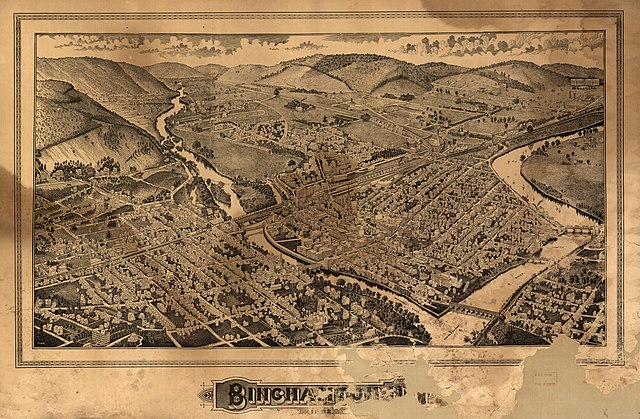
The volumes do provide of trove of my interactions in my post-Nikki round of lovers in Binghamton, and then my first marriage and divorce, as well as the subsequent engagement and later relationships leading up to my remarriage in 2000.

Curiously, beyond my sabbatical, meaning the second half of my life, i.e. New England? I see nothing that promises fiction. What I had assumed the great passion of that broken engagement would have inspired now appears banal, even tawdry.

For now, I’m finding enough gleanings to do something along the lines of Rorem’s Paris Journals, though maybe mine become Spiralbound Binghamton, Spiralbound Yoga, and so on, acknowledging the earliest volumes. I didn’t splurge on hardbound pages until Clara was no longer sleeping with me – volume 77. Clara? She’s a dozen years ahead. Still, there would be a few more spiralbound notebooks – six – plus 13 spiralbound sketchbooks and softcover sketchbooks to come.

Hello, campers!

Some of my notebooks predated the start of my journaling. One, for instance, covered day camp policies, program guidelines, songs, good storytelling guidelines.

All of these song titles, the words and tunes I’ve long forgotten.

We had so much responsibility! (And life itself was still so fuzzy. Largely a blur, I’d say now.)

“Any injury multiplied 10x by the time it reaches mother or father. Injury may be word or action.”

Taste buds: sweet, salt, sour, bitter … just four.

“All right, kiddies. If you get lost, stay there. I’ll come and find you (I hope).”

The most innocent looking kid bit another in the eye, tried opening the emergency door on the bus, hit kids over the head with a tote bag, waits for the counselors to look away, lies, swimming (?)

(Last time I was “home,” meaning my father’s funeral, I tried locating the camp along country roads, to no avail. No clue to its site on satellite maps, either. Summer camp as one more victim of shortened summers off for kids, as well as economic realities facing families.)

Those were two summers I had a remarkable tan. My hair turned nearly blond, too.

~*~

From Spiralbound Years with commentary from now.