First, to wrap up the Bloomington sojourn

“If thee needs anything and cannot find it, just come to me and I’ll tell thee how to get along without it.” — Etta Macy, Owen County, Quaker, in “Indiana’s Self-reliant Uplanders,” National Geographic, March 1976.

It’s something I’ve heard from others later, across the country.

~*~

Oh, my, one of my favorite off-the-cuff poems of all time wasn’t by the poet I’ve long attributed it to but rather our dear colleague, Richard Pflum. To wit: “In the garden / the women are pacing to and fro / speaking of fellatio.”

I stand corrected.

Reacting to an attack on “just folks poets” by an Iowa staffer in Kayak, criticizing those he looked down on in circles of poets who didn’t aspire to greatness but rather preferred comradery and “goodness.”

“All American poetry today sounds the same,” to which Paul Solyn replied, “not if you listen to it.”

“There aren’t any memorable lines in today’s work,” was equally glib. What was he expecting, advertising slogans? By the way, as one poet told me, “The lines I in my work I find most memorable, other readers don’t.”

[Gee, I found nothing about packing up everything or loading the U-Haul or farewells. Guess I was just too busy.]

~*~

Gleanings from my spiralbound journals plus commentary from now. . 

Among the wonders of nature

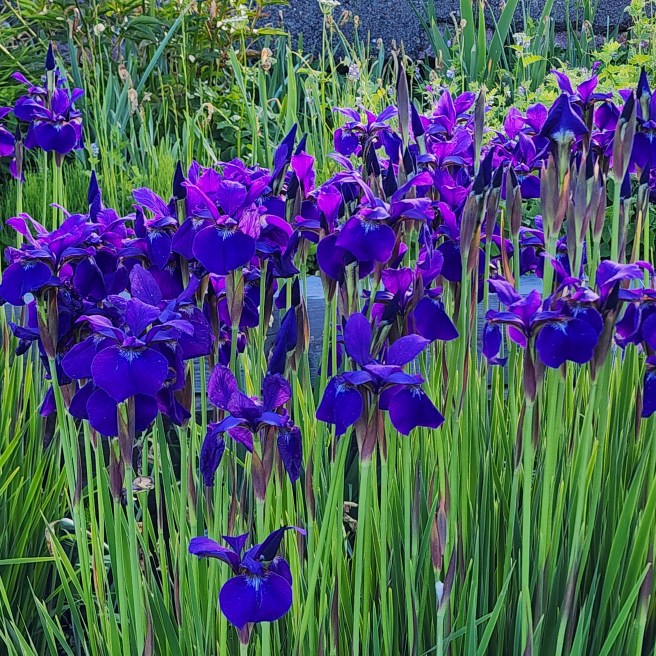
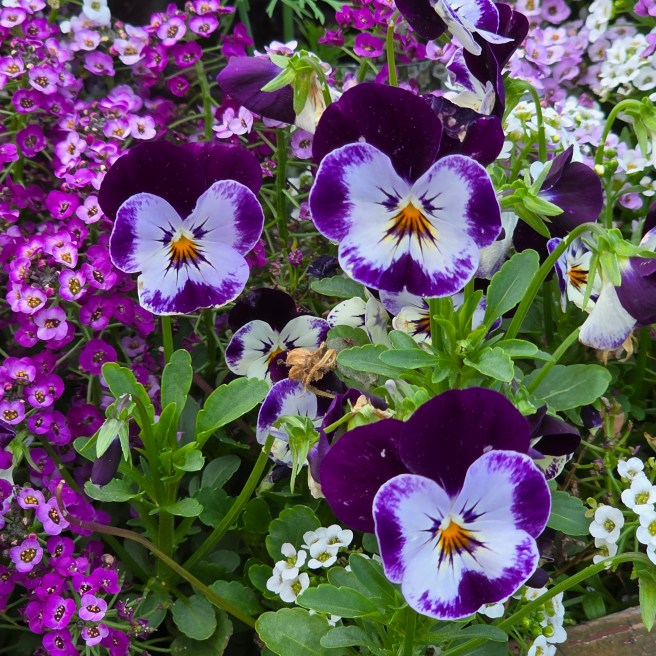
When it comes to flowers, wild or cultivated, just consider …

  1. “Those who dwell, as scientists or laymen, among the beauties and mysteries of the earth, are never alone or weary of life.” — Rachel Carson
  2. “Everything that slows us down and forces patience, everything that sets us back into the slow circles of nature, is a help. Gardening is an instrument of grace.” — May Sarton
  3. “In the spring, at the end of the day, you should smell like dirt.” — Margaret Atwood
  4. “Just living is not enough. One must have sunshine, freedom, and a little flower.” — Hans Christian Andersen
  5. “Colors are the smiles of nature.” — Leigh Hunt
  6. “The earth laughs in flowers.” — Ralph Waldo Emerson
  7. “The fairest thing in nature, a flower, still has its roots in earth and manure.” — D. H. Lawrence
  8. “Deep in their roots, all flowers keep the light.” — Theodore Roethke
  9. “The sun, with all those planets revolving around it and dependent on it, can still ripen a bunch of grapes as if it had nothing else in the universe to do.” — Galileo Galilei
  10. “Live in each season as it passes; breathe the air, drink the drink, taste the fruit, and resign yourself to the influence of the earth.” — Henry David Thoreau


Favorite garden accessories

Remember, I’m not the gardener in this operation. Still, for me?

  1. Loppers: I use mine both in the garden to trim thick-stemmed plants, and around the yard to trim hedges and small limbs of trees or prune shrubs – sometimes even to cut branches into firewood. It’s probably my most used tool, actually.
  2. Nippers: Not just to cut small plants but rope, twine, and zip-ties, too. Usually beats scissors.
  3. Speaking of twine: Jute is a favorite. Whatever you use to tie plants in place or as lines for peas and climbing beans, you’ll rarely find it when you need it.
  4. Wheelbarrow: Not just for dirt, either. Big bags of compost, mulch, or fertilizer can be a bear to tote without this. Rocks, bricks, stones, as well. Hauling things away from the beds, too, can quickly fill one.
  5. A good spade: Meaning one with a handle attached so it won’t pull out – it’s essential in planting season, especially if you don’t have a rototiller. It’s also helpful in uprooting plants at the end of the season. We also have a ton of rocks in the yard, and it gets a workout there.
  6. Trowels: Especially since they’re easily misplaced or lost, if you don’t stick them upright in the ground when you’re done.
  7. A skinny shovel: The usual broad size can be frustrating more times than you’d suspect.
  8. Five-gallon buckets: Even if you don’t collect seaweed for fertilizing and mulching, you will find endless ways to fill one: water, fertilizer, compost, garden produce, firewood tinder.
  9. Bricks: OK, not actually a tool, but they sure come in handy in holding tarps or black plastic weed-cover in place or for propping up plant pots for display. A few concrete blocks are also good to have on hand.
  10. Band-aids: No matter how careful you are, you will get nicked.

So what about you?

Why we really dig Fedco seeds

In my household, like many others in northern New England, the Fedco seed catalogue and ordering from it are something of a fond ritual this time of year, even a devotion.

Here’s some background.

  1. The company is a co-op founded in 1978 by back-to-the-earth followers of self-sufficiency gurus Scott and Helen Nearing, who had moved to Maine from Vermont in the mid-‘50s.
  2. At first, it functioned as a resource for food coops and sold to no one else.
  3. Heirloom apple trees were added in 1983 and autumn bulbs the following year. Seed potatoes came next,, and in 1988 Fedco took over the organic supplier role of the Maine Organic Farmers and Gardeners Association. (Many people know MOFGA for its big, hippie-infused Common Ground Fair every September. You may have read about that here.)
  4. In its first year, with a one-page mail-order page in a food-coop newspaper, Fedco and its part-time staff handled 98 customer requests. The initial list had 81 items, mostly vegetables, some herbs, liquid seaweed fertilizer, and no flowers. These days it handles more than 38,000 orders from all 50 states for an estimated $4 million revenue.
  5. The catalogue is funky, black-and-white on newsprint or similar stock, rather than the glossy photos of big commercial garden retailers. The illustrations lean toward sketches and 19th century printers’ images. It carries more than a thousand seed listings alone, along with a host of other things gardeners and small-farm operators find useful. The descriptions reflect careful study, helping buyers make reasoned decisions, especially regarding what’s new. It’s inspirational. You can also order online, using a catalogue that does have color photos and is easy to navigate.
  6. Legalization of cannabis has generated new business, even though Fedco has so far resisted selling its plants or seeds. Much of the business is in organic fertilizer, especially for home growers.
  7. Rather than growing the seeds itself, Fedco repackages from 100 to 150 seed growers, and other suppliers, mostly in Maine. Other products are more widely sourced.
  8. Fedco concentrates on a unique niche, mostly in the Northeast, and deliberately stays small, out of direct competition with large corporations.
  9. Its 60 full- and part-time employees own 40 percent of the company, while the consumers own the remaining 60 percent and get small discounts on their orders.
  10. The company’s charter aims at pay-level equity, preventing wage extremes between high and low.

Details from the company’s website and from Jeffrey B. Roth in Lancaster Farming.