HIGH VICTORIAN

Strolling through the neighborhood.

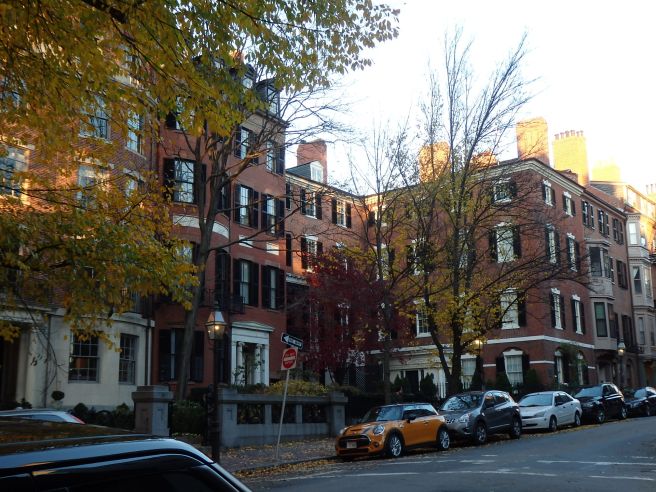
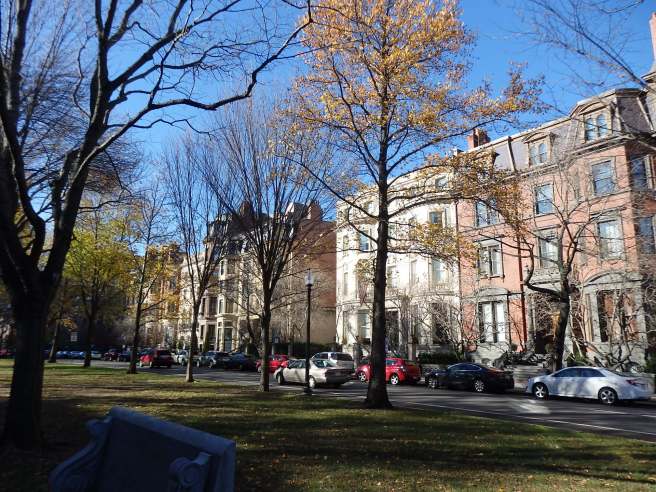
Boston’s Back Bay boulevards reflect the rising wealth of the city in the aftermath of the Civil War.

Boston is a rich and varied destination – the Hub of New England, or the Universe, as they used to say. Living a little more than an hour to the north, we’re well within its orb.

Boulevards lined with housing like this.


LOOKING IN THE MIRROR OF BIAS

Those of us on the liberal side of the social and political spectrum like to think of ourselves as open-minded, which means the times we exhibit flashes of bigotry can be especially painful.

First off, we’re blind to it. Not us, right? But we do.

And sometimes we do it to each other.

An example comes in the gold cross a young woman decided to wear. She’s nothing along the lines of a Fundamentalist or even a committed believer, but she liked her grandmother’s jewelry and this particular piece. Difficult, though, was her experience of the reactions from her fellow college students and faculty, starting with their physical motion a step backward. Literally.

There were words that would not dare be said to Jews or Muslims or ethnic groups of any stripe – and assumptions that simply did not fit. In fact, there’s a presumption of right-wing positions accompanying an ignorance of the social-justice dimensions of other Christian communities and their actions. And there’s nothing of the nuanced theology that moves beyond the cartoonish criticisms we often hear.

For the record, Quaker tradition long frowned on any jewelry whatsoever as superfluous and vain. But I’m not wearing the distinctive Plain clothing of Quaker history, either. Now how would they react to that?

QUADRILLE

four theatrical scenes

1

thirteen dancers hold large butterflies, frogs, crabs, and fish
on sticks over their heads

on our pallet, everyone laughing and tickling

Christmas lights adorn a swan the size of a sailboat on the beach
surrounded by jesters and an undertaker in top hat

and don’t giggle much

tents with electrical lighting have encamped under a bird feeder in the library

late-night lime daquiris, with or without salt

a dozen dresses covering light bulbs
hang from a leafy tree after sunset

2

the classic marble trio upholding the blue orb
stands in three stages of undress

regardless, stay cool

3

behind the eyes and ears of her diaphanous gown
she wears nothing

she still has eggshells behind the ears

Salome, with her slippery hands

4

a surgical theater of the dead Romans and Dutch masters
with a sole nun present and in prayer

while the child skateboards through the kitchen

elaborate mathematical equations in icing on the wedding cake
as animal tracks through a universe

Poem copyright 2016 by Jnana Hodson
To see the full set of
Partitas, click here.

IN A WHIMSICAL VEIN

Atop Fanueil Hall.
Atop Fanueil Hall.

The cricket design of the weather vane atop Faneuil Hall always delights me. Or, as I long wondered from the ground, could it be a grasshopper?

Whichever, the craftsman and the client both demonstrate a lasting sense of delight in the realms of nature. Turns out to be a cricket after all, crafted in 1742 by Deacon Shem Drowne, perhaps inspired by similar weather vanes on London’s Royal Exchange building. The cricket, by the way, is the only part of the historic building to remain unchanged from the 1742 original. A 1761 fire gutted merchant Peter Faneuil’s original structure, and in 1805 architect Charles Bulfinch designed additions that doubled the width and length of the building while keeping the basic style to produce what we see today.

Boston is a rich and varied destination – the Hub of New England, or the Universe, as they used to say. Living a little more than an hour to the north, we’re well within its orb.

REAL DEVELOPMENTS IN THE YEARS SINCE I DRAFTED THAT NOVEL

The years since I drafted Big Inca versus a New Pony Express Rider have brought significant, often dramatic, restoration and redevelopment to long neglected historic mills like the ones at the heart of my novel.

One impetus for the renewal appeared in a handful of towns in Maine, where credit-card giant MBNA transformed old mills into attractive call centers that in turn revitalized local economies. Even after being shut down in a later buyout, the benefits linger, and other developers had concrete models to follow.

Visionary entrepreneurs like the late Joseph Sawtelle here in New Hampshire as well as nonprofit agencies or local government-backed councils entered the picture, making mills in other towns emerge as small-business incubators or readily adaptable buildings for new arrivals, especially enterprises growing rapidly.

And, if the location’s right, they can attract artists of all stripes – painters, sculptors, printers, dancers, musicians, craftsmen, bakers and caterers – as an affordable alternative with natural light and high ceilings. (We love the annual studio tours and open houses in the mills in one nearby town.)

Sometimes the downtown locations lend themselves to conversion into residential condos as well. And then there are universities, health-care organizations, and museums that move in for convenience. (Well, one mill in downtown Manchester, New Hampshire, does have a helicopter pad on the roof.)

In other words, there are some fascinating case studies just about everywhere I turn.  But I still haven’t found any where the top of the tower is turned into a tiny penthouse, not the way Bill did at one point in the novel. I’m still quite fond of that touch.
PRELUDE & FUGUE 44/

no clouds except in the sky as yet
snow sits atop cones
in long-needled pine

*   *   *

in long-needled pine, a gray hill
beyond the snow-covered cones
becomes cloudy sky
yet pussy willows are molting

gray clouds of snowy pine
yet the sky covers cones atop long-needled pine
in the primrose sunrise the snow covers
pussy willows before you believe summer is coming

yes, beyond the snow-covered gray hill
wisps of clouds are melting
into pussy willows and pinecones

with the melting snow atop cones
the long-needled primrose sun sets
in a gray hill of pussy willows
you believe summer is coming

no clouds with the melting
wall atop gray cones

beyond the pussy-willow clouds
with the melting gray wall

birch beyond pussy willows, not clouds
melting the gray wall atop long-needled cones
beyond the pussy willows

~*~

Poem copyright 2016 by Jnana Hodson
To see all 50 Preludes & Fugues, click here.

REST IN THE AGES

Tucked away in a corner of the park, this gate.

The burial ground in Boston Common is the resting place of early patriots, among them the composer William Billings – the latter, by assumption rather than documentation. Historians will note that the headstones in the city’s oldest graveyards no longer stand over their intended bodies, but were moved around by convenience.

Boston is a rich and varied destination – the Hub of New England, or the Universe, as they used to say. Living a little more than an hour to the north, we’re well within its orb.

It's a classic New England scene, in cities, towns, and isolated countryside.
It’s a classic New England scene, in cities, towns, and isolated countryside.


HOME TO ENLIGHTENMENT STYLE

A prime location in the big city.

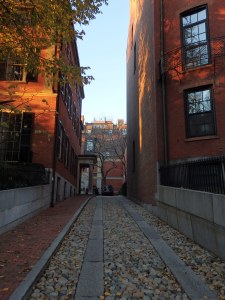
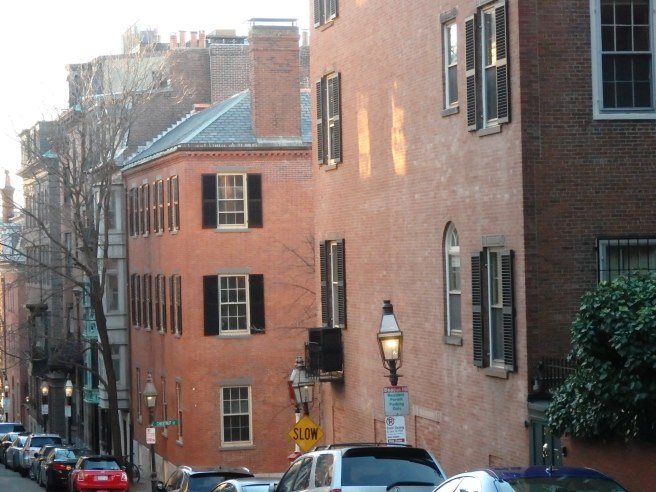
Beacon Hill’s narrow streets and closely set homes invite pedestrians to enter a timeless order and grace. It’s hard for us not to imagine living here early in the 19th century as American ideas took hold.

Boston is a rich and varied destination – the Hub of New England, or the Universe, as they used to say. Living a little more than an hour to the north, we’re well within its orb.

A quiet break in a crowded neighborhood.


Beacon Hill is, after all, hilly.

SO MUCH FOR THAT PICTURESQUE IMPRESSION

Looking at all of the old red-brick mills remaining along the waterways of New England, you’re likely to see them as strong, serious, silent enterprises in their day. Something like a library, perchance.

The reality is something quite different. They were beehives, for one thing, where workers were subject to wide fluctuations in hot and cold (no heat, which could spark fires, along with some brutal summers) – in addition to cotton lung, like the black lung suffered by miners.

As for the quiet? Forget it. These factories were powered by leather belts that ran in relays from the groaning, splashing waterwheel to squeaky overhead rollers on each floor which in turn led to all kinds of clacking machinery. The whole building shook.

Not all of them wove cotton, either, but the mechanics were the same.

The leather belts, by the way, would wear out and break. They alone led to a unique art of construction and maintenance. The city where I live had tanneries to supply the mills, unlike the next city downstream, which was involved largely in shipping.

As the ditty went:

“Portsmouth by the sea,
Dover by the smell.”

As I was saying about that initial impression? These were the nitty-gritty realities.