Who are they kidding?

I’m thinking of those ridiculous online ads that purport to be something about Maine but show us images of urban Arizona or maybe Miami, the furthest opposites to where I live yet purporting to be local for here. You know, most affordable housing or food delivery or the ten best restaurants or plumbers in Eastport. We don’t have nearly that many. Got it?

Many of them somehow zero in on tiny East Machias or, for our weather almanac, as St. John, New Brunswick, or Halifax, Nova Scotia. Do note that East Machias is not Eastport. They’re an hour apart.

There’s also the Microsoft ab that proclaims “Eastport light traffic,” which is truly baffling. There are only three or four traffic lights in the entire county, OK? Heavy traffic, apart from road construction, is usually three or four vehicles.

These are even worse than the late-night TV commercials that couldn’t come close to properly pronouncing where we lived in the Pacific Northwest.

Retrofitting Jaya into the ashram led to a chain reaction

I had expected that the deep revisions to my previously published novels in reaction to the appearance What’s Left would apply only to the ones related to Cassia’s father.

I was wrong, once again. I blame Cassia, by the way.

She had led me to present a more unified set of hippie novels and bring them more into the present. Now she wanted me to do something similar to my remaining works.

I could connect two more books through the character of Jaya. She was the center of my book that leads into the Pacific Northwest. By shifting her spiritual identity from Sufi to yogi, I could then weave her into the yoga novel, in effect creating a two-part series.

How would that work?

It all depended, I sensed, on the yoga novel. She would have to become one of the eight resident followers of the guru.

The obvious one, Swami’s right-hand disciple, was male. That shift would throw off the balance of having half of the followers being male and the other half, female. In addition, the interaction with Jaya and the guru, a female, would lack a basic tension.

Having Swami be a woman, as mine was, had presented a hurdle for many of my potential readers. The ashram was rogue enough as it was.

The gender change allowed for a more credible – and colorful – character. It also had a ripple effect through the rest of the cast.

In the end, the book had a new title and some renamed and otherwise altered characters while now leading organically into a series. Just where does she go when she leaves the ashram? You got it.

~*~

Finding the artwork that now graces the cover was a boost. Maybe it even prompted another sweep through the story to enhance the humor.

Much had happened in the yoga world in the time since I drafted the story and eventually published it. Many of the new religion organizations in America – and I’ll include yoga, despite the usual protests – had suffered serious scandals, either monetary or sexual. At least I had avoided that by keeping my story to a single day.

Bit by bit, I learned some of what happened after I had moved on. A chance encounter in a central Pennsylvania diner with one of the figures, who was waitressing on a very busy day, revealed one disturbing schism. Later, through the Internet, I heard from several key players from my residency and learned I hadn’t been ostracized, after all, but the operation had undergone a serious upheaval shortly before Swami’s death. And then I had some long phone calls with the figure who had been in the role Jaya subsumed in the revised novel. The relationship wasn’t exactly as I had assumed – or anyone else, as far as I can see. On top of that, a former girlfriend finally told me of her mistreatment when she visited. There were other dark sides I hadn’t suspected.

Repeatedly, they agreed that I was at the ashram during its glorious apogee. I missed later conflicts that erupted when the locals decided the place was a cult or events I see as fatal changes in direction, especially in terms of guru worship.

~*~

With the focus on Jaya and what she gained from her experiences on the yoga farm, I’m spared from going into an expose of a marginal spiritual community. For me, the time was a major turning point in my life, leading me to the Society of Friends, or Quakers, which to my surprise had been the faith of my ancestors.

I still believe as a nation, we could be doing much, much better. Something more like what I see in the Biblical Kingdom of God on earth.

Yoga had been a stretch for me. My preference would have been for Zen Buddhist, had a teacher appeared. Instead, this American woman in a pink jump suit came across my path. It still seems surreal.  In my hippie novels, it’s Tibetan Buddhist.

A good friend who had been an Episcopal nun had her own insights on monastic life, with many overlaps to what I had experienced. I’ve long been fascinated by American Shakers, too. More recently I’ve added Greek Orthodox examples and mysticism to the mix. And, curiously, my most “hippie” identity or fullness came during those years on the yoga farm.

There are lessons I’ve carried through life, but I should also acknowledge potentially damaging instances, including things that came up in therapy years later. My denial of emotions, especially.

Novels about yoga are surprisingly few. As touchstones for his book, I’ll instead cite non-fiction: Anagarika Govinda’s The Way of the White Clouds, Patanjali’s Yoga Sutras, collected writings of Swami Sivananda. Ram Dass’ Be Here Now, and stray bits by and about Murshid Samuel Lewis, and Kathleen Norris’ Cloister Walk, for a Christian parallel. Surprisingly, Herman Hesse’s Siddhartha left me cold.
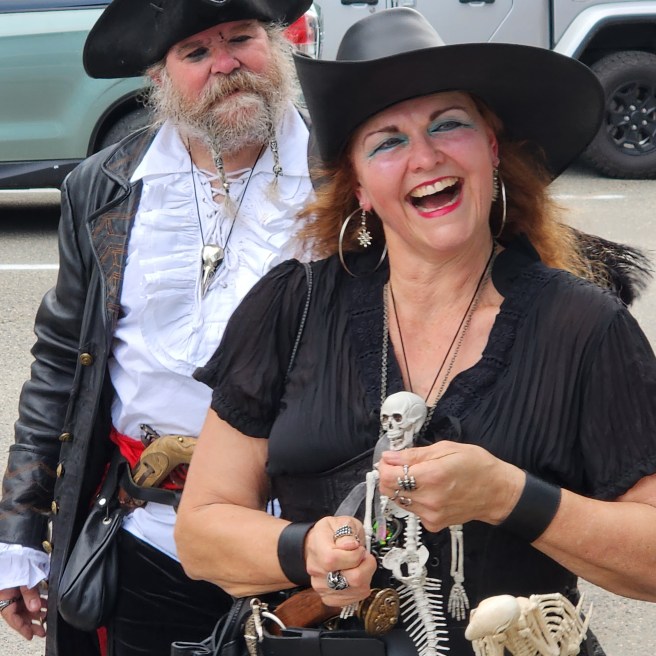
 

Ahoy, mates! It’s a small world, indeed

I’ve been caught off-guard several times while wearing my gray Louis R. French historic schooner hoodie around Eastport. (Well, one of them. I now have three, but that’s another story.)

The first encounter was at the county courthouse in Machias while researching the deeds to our home. A registrar asked what I knew about the boat and I started replying with the history. She smiled and said, “My dad worked aboard it,” back when it was a sardine carrier based in Lubec, the town just south of Eastport. During that stretch, the masts were removed and the vessel was powered by an inboard motor.

The second time was when a friend, a legendary ship pilot, smiled and said he rode many times aboard it as a kid. Bob did correct me, saying the French wasn’t a sardine carrier but a freighter carrying cat food to Canada. (“Cat food to Canada?” Sounds like a title to me.) His family did own canneries in Lubec, Eastport, Portland, and a few other places. That’s yet another history to consider.

The next incident came while leaving my dentist’s office and his wife ( a.k.a. center of operations) Mary, blurted out, “Lewis R. French? That was my family’s boat.” For 50-some years, in fact, or the time it was based on our waters, when her Burpee and Vose families possessed the vessel. From her I learned that during the Prohibition, the French was an active rum-runner. Sardine carrier? Huh? The missions do get more interesting, no?

She also said something about ghosts. Well, if they could talk.

She does have the book published later, but I do suspect some of those details are missing.

The most recent account came while watching a big cruise ship come into Eastport. A woman standing nearby saw my hoodie and then told me she used to work in the office when the French belonged to Seaport Navigation. (She confirmed that my dentist’s wife’s families were among the owners). The headquarters was on the second floor of a waterfront building that she pointed to, one where friends of ours have their gallery and apartment, and said she never got tired of the view. She remembered typing up many documents regarding  deliveries of canned sardines to the railroad line in St. Andrews, New Brunswick. Shipping them from there rather than by truck from Maine was much cheaper. By this point, the French was Seaport’s backup ship.

So sardines were still part of the story.

Shelter-in-place boredom? You kidding?

This post was supposed to appear four years ago but somehow it fell through the cracks. With a few tweaks, it retains relevance, IMHO.

Here goes, from back in Dover, New Hampshire:

~*~

Catching up with my dentist, now that his office is open again, we noted our astonishment that so many adults were complaining of being bored during the official shutdown of most businesses, schools, churches, and public services.

Bored? I repeated my adage that boredom is a luxury of the teenage years – most adults I’ve known simply don’t have time for it. Alas, it must say something about the people I associate with. (Well, frankly I find most TV to be boring, but others might say the same thing of the operas I’ve been streaming every night. ‘Nuff said there.)

My dental doc, meanwhile, expressed his gratitude for the time off as “paternity leave” he suddenly had to devote to his two- to four-month-old daughter, a once-in-a-lifetime opportunity, as well as time to catch up on a pile of desired novels. Not a bad combination.

We also touched on studies of the eye damage being done to children under age two by their extensive use of digital screens. Well, and their need for boredom to allow essential self-exploration, discovery, and growth, too.

On my end, I have to acknowledge how little cash I’ve used since March 11, the last time I went to the bank. Mostly, it’s been plastic, which fortunately hasn’t spiraled out of control.

What did you discover in this period of changed focus?

A multiparty political system is predicated on a loyal opposition

Its origin, I’ve heard, arose in the Quaker peace testimony of 1662, with its refusal to swear oaths. Before that, political factions were supported by their own armies. The Quakers, or Society of Friends, promised to hold firm to their beliefs and yet not coerce others to their stand. Persuasion was another matter altogether. And William Penn, in the colony of Pennsylvania in the years we knew it as the Holy Experiment, insisted on having at least two candidates for every public office.

The Quakers not only refused to bear arms but also conducted their faith community business by consensus, without ever taking a vote. Minority opinions were respected, often leading to a third solution superior to the original options. This was not, do note, a compromise, seen as the lower common denominator, but rather something superior.

Theologically speaking, we sensed that Christ had a better answer for us, if we would only listen. “Mind the Light,” as we said.

Flash ahead to today’s death grip in the United States, where one party has steadfastly stood to obstruct anything proposed by an administration other than theirs. President Obama learned the hard way that they wouldn’t participate in crafting a third way. And he faced their open disrespect, which continued during President Biden’s term. Just look at the F— Biden flags for confirmation. Or their chants of “Lock her up,” regarding T-guy’s first opponent. Not that they would acknowledge the same for their guy, for far better documented reasons.

The Don Old, as we’ve seen, has significantly worsened the conflict and is threatening to imprison those who don’t agree with him.

The conundrum with a democracy could rapidly pivot on what to do with a disloyal opposition.

This could get very ugly, indeed. Before and after the national election.

Cruise ships on way

Eastport is preparing to welcome eight cruise ships for visits after Labor Day. That’s about half as many as last year’s record but could top it in the number of passengers. Four others were slated to visit but had to change plans when Customs could not provide agents to clear passengers and crews into the United States.

So far, I’ve found seven of the expected ships.

  • September 3: Enchanted Princess, 1,083 feet length, 18 decks, 4,500 maximum passengers, 1,346 crew.
  • September 17: Roald Amundsen, 459 feet, 530 maximum passengers, 160 crew.
  • October 5: Zuiderdam, 936 feet, 1,964 maximum passengers, 817 crew.
  • October 13: Volendam, 778 feet, 1,718 maximum passengers, 647 crew.
  • October 14: Azamara Journey, 594 feet, 781 maximum passengers, 408 crew.
  • October 15: Viking Mars, 748 feet, 938 maximum passengers, 465 crew.
  • October 27: Le Champlain, 430 feet, 264 maximum passengers, 112 crew.
  • Next year is already shaping up to be more active.

The visits have boosted the local retail season for many merchants, especially after the Summer People have retreated to their usual haunts.


The picture really can change in a day

It was one of those stretches where nothing seemed to be happening. For me, that translates into stuck, or more accurately, an emotional funk.

And then, in a single day, the dumpster arrived, opening way for the big front of the upstairs demo to begin.

The plumber showed up, after a few months on a big project in the Midwest. He made necessary moves preparing the upstairs bathroom and laundry room for walling, lighting, and flooring to be finished before the toilet, bathtub, shower, sinks, and washer and dryer go in.

He also removed our one outdoor faucet, with its leaking pipe in the wall and no indoor shutoff valve, with three new spigots and lines, all of them closer to our gardens. This was a huge quality of life improvement we do enjoy right now.

Three cords of firewood were delivered, about a month after being ordered. It was our first time dealing with them, and while I wasn’t worried that they wouldn’t show up before the first snow fell, this was reassuring and I’m satisfied with the quality of their product. Now I’m spending an hour or so most days stacking it. (Let’s not overdo it, not at my age.)

We heard from the mason, who was slotting us in with other projects around town. He and a helper were on the scene a few days later to repair the top of the chimney. Added to his work were repairs to the facing on the foundation – something noted in the building inspection when we bid on the property – and several future tasks, including moving the wood stove and metal chimney to another part of the front parlor. This was our first time dealing with him, and I can say he takes pride in good work.

Our contractor installed the flooring on the deck, restoring use of the back door to us. The railing is next.

Each of these lifted another obstacle from the horizon. Each one felt quite invigorating. The deck even has us in amazement.

If these were paper books …

Discounted “sale” prices would be used to move a backlog of volumes, either at the bookstore itself or at the publisher’s warehouse. It was rarely a good sign.

With ebooks, there are no stacks of boxes or precious book-shelving problems.

Maybe you remember the “remaindered bin” with its cheapo prices. What you likely don’t remember was that authors didn’t get paid royalties on those.

Still, they got books moving into readers’ hands.

Events like Smashwords’ big July-long ebook sale exist to stir things up a bit.

Check out my four selected entries at my Jnana Hodson author page at Smashwords.com to pick up some real deals.

Think of it as an ‘advance reading copy,’ after the fact

Many of the books in my personal library arrived in the newsroom as advance reading copies, intended for reviews or perhaps mention in a column, except that we rarely printed one of those. Instead, the freebies went out on a shelf for first-come to be first-served.

For the book publishers and authors, it was a huge waste of money.

In addition to the two books I’m offering for free at Smashword’s big July-long sale, you can pick up a copy of my new Hamlet: A Village of Gargoyles poetry collection at just half-price.

It really is worth a visit.