ADDRESSING THE QUERIES

As Ohio Yearly Meeting’s Book of Discipline stated, the Queries and Advices “provide a means for maintaining a general oversight of the membership pertaining to our Christian life and conduct. … It remains this Yearly Meeting’s heartfelt desire that good order and unity may be maintained among us … the attention of each member of the Society should be drawn at regular intervals to individual self-examination … To aid the members in this exercise, a series of both Queries and Advices is provided to impress upon the minds of us all various principles and testimonies which should guide our daily lives.”

The tradition was for Quakers (the Society of Friends) to ponder a set of these Queries at each monthly meeting for business and have someone draft a summary to be reviewed the next month. (This is in contrast to the weekly times of worship on Sunday, or “First-Day,” morning and, if possible, sometime during the week.) The monthly meeting’s summaries would then be reviewed at the next quarterly meeting – a gathering Friends from nearby meetings – and another summary would be drafted, to be shared in a similar manner at the larger yearly meeting.

When I was living in Baltimore, one Friend suggested that those of us living at a distance from our home meetings sit down and partake in this exercise and then mail our written answers to our home meeting. Although intending to take up this practice, I procrastinated and Winona received nothing until a personal invitation arrived, gently urging me to join in the exercise.

Many of my short essays and poems originate in those responses, now turned from addressing the community of faith to the Source itself and outward again.
ROLLING THE POLITICAL DICE

One of the Quaker objections to gambling or gaming is that it instills an expectation of getting “something for nothing.” We haven’t earned the money.

And it’s not charity.

In addition, the pot might come at the expense of those less fortunate than ourselves. (That, in practice, seems to be the case with the state lotteries now found across the United States, supposedly for the support of education.)

Listen closely to the campaign rhetoric for the “something for nothing” appeals. They come from both sides of the political divide. Then ask who’s really paying – the rich or the poor, especially. Who can most afford it? And who will most benefit? And where does justice fit in the mix?

WALKING THE DOG THROUGH THE ZOO

Humankind’s attraction to other animals – the baby ones, especially – is universal. What is it in our love of pets, for instance, that so opens us to our own existence?

What I see is a recognition of our animal nature and a desire to snuggle in amid our fellow critters rather than hover above them. Well, most of them – there are those we fear or detest. Even so …

As the German grandmother loves to quote, God has a big zoo.

And that includes us.

In a Heartbeat~*~

For a look at my animal kingdom poems, click here.

WHERE ARE THE VOLUNTEERS?

Some years ago, as I recall, a New York Times op-ed piece mentioned that America’s reliance on volunteer service in public affairs shifted after World War I. We started turning more and more to paid workers – the ones we now call professionals.

Maybe some of it had to do with the shift from a rural and small-town society to big city life. And some of it, no doubt, as a matter of working inflexible hours in factories. Nowadays I’d add the shrinkage of local ownership, with executives who were expected to participate in public service, and the necessity of two-income families to make ends meet in the face of lower pay levels.

It’s a complicated issue, one that can lead to long discussion – maybe even some wailing.

I see it most directly in my Quaker circles, which function on an expectation that everyone in the faith community will offer service to the whole. That is, serve on a committee. I’m among those who are arguing that model needs to change to adapt to current conditions. Of course, it’s a matter many other groups – secular and religious – are facing. But it’s refreshing to read others who are thinking along similar lines. For one presentation, click here.

Maybe you have some helpful suggestions to add.

FROM A SECLUDED SLIP BELOW THE LEVEE

I’ve already written of living along the Susquehanna and being introduced to the trail that wove through a wooded strip between the water and the freeway.

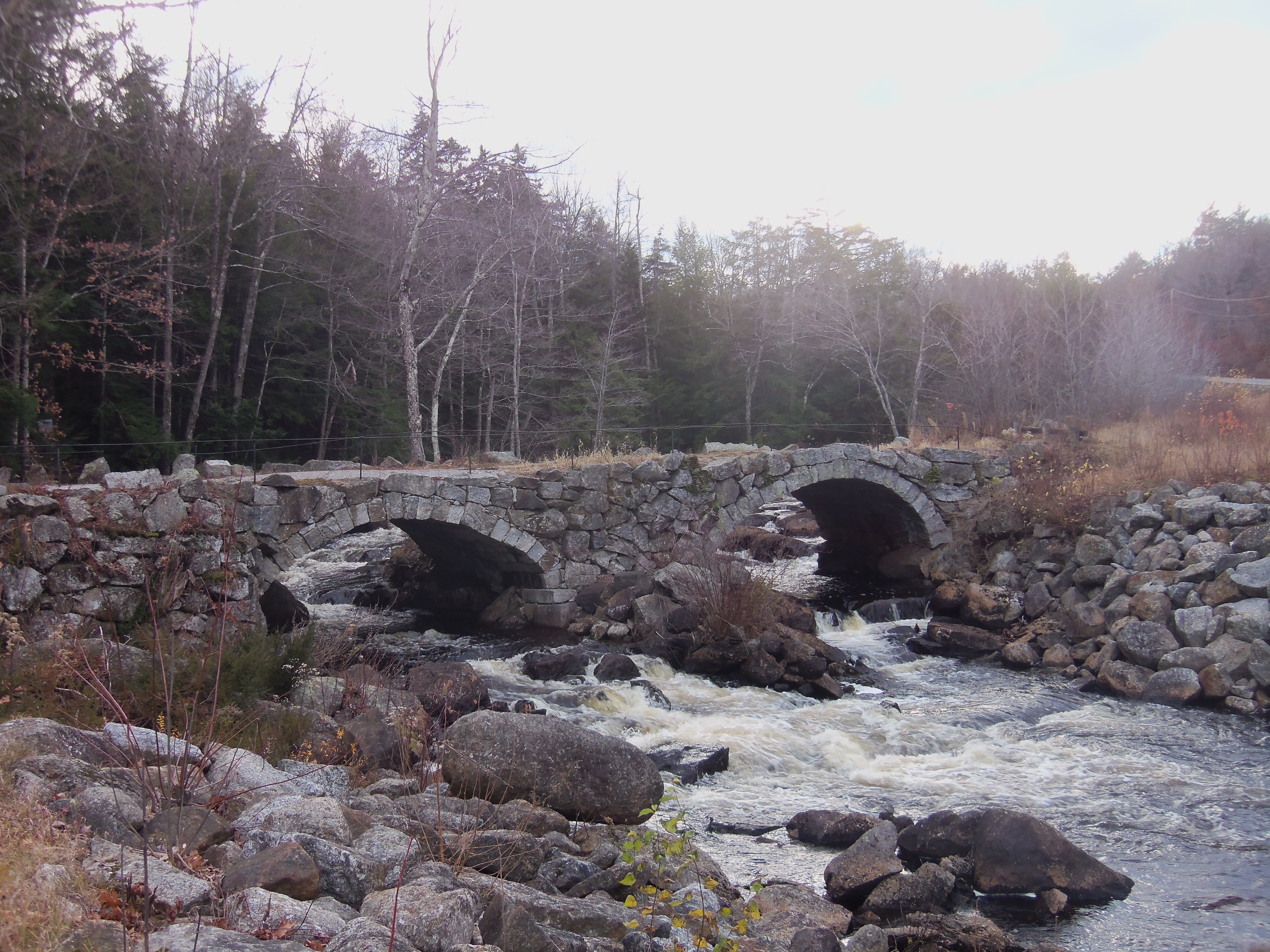
The site included a bridge that stood closed to vehicular traffic and a low dam that once diverted water to power cigar factories along the riverbanks. Only part of the foundations of the mills remained, along with some of the weir, which filled with moody water after a heavy rainfall.

At the time I was living in an inner-city neighborhood – Italian by day, Afro-American by night. The riverside provided a mostly private escape into nature.

It was enough, though, to give rise to poetry. Follow its seasons and flow in my new chapbook by clicking here.

Susquehanna 1

WALNUT ASSAULT

Among the mature trees surrounding our house are several black walnuts, including one that hangs over the 1928 one-story addition where our kitchen sits. Its open ceiling allows us to hang pots, pans, and stemware from the joists – shall we just call it a rustic look? – and I’ve sometimes considered installing a skylight or two.

On the other side of that roof, squirrels strip the nuts from the trees early in the season of a typical year. Watching their frantic action can be quite amusing, first as the leaves on a branch shake furiously and then as a squirrel bounds away with a large ball in its mouth.

A few nuts might actually survive into autumn. More likely, we find them buried the next spring as we prepare the new garden and sift compost. Having lived here for a decade-and-a-half, we think we know what to anticipate as the seasons advance.

Not this year, to our surprise, at least as far as the walnuts go.

Our awareness that something was amiss began in the middle of the night. Was somebody trying to break into the house?

The next morning, though, as wind whipped around the house, the noise really picked up. Imagine someone hitting the kitchen roof with a baseball bat. Repeatedly, sometimes three or four a minute. The whack was enough to make us jump.

I moved one car further from the house – we’d seen what large hail did to a friend’s pickup truck and the damage wasn’t pretty. These nuts were larger and heavier, after all, and ones that fell on that side of the roof were bouncing into the driveway.

The tree still has a few nuts left on the branches, but the racket has slowed considerably. Instead, some of the pathways leading to the garden are now covered in walnuts. As my wife observed, it’s like trying to walk on marbles.

Between that and the noise, it’s enough to drive anyone nuts.

Or squirrelly.

NOT JUST BETHLEHEM, THEN

In early postings about creating a suitable bibliography reflecting the hippie era, your comments suggested some of the best works are in the realm of non-fiction, in contrast to Tom Wolfe’s demand for the big novel. Yes, as we discussed, there are some good novels, the bulk of them proving that small is beautiful, in contrast to Wolfe’s standard.

My reflections the other day on Patti Smith’s memoir, Just Kids (2010), added the underground artistic scene in New York to the list and has me thinking just how different the hippie centers could be. Most of them, as I see it, eventually wound up around college campuses.

Some recent overviews of Joan Didion’s life work have brought her 1968 collection of essays, Slouching Towards Bethlehem, to mind. Without going into criticism that she concentrated on the scandalous rather than the broader scene, what is stirred in my revisiting her essays is how localized and fleeting the hippie outbreak could be as it developed.

Quite simply, what fit one neighborhood or time didn’t necessarily fit others.

Haight-Ashbury, after all, soon morphed into back-to-the-earth networks or even rural communes, along with other situations, leaving its name to linger as a legend.

I mention this simply as a reminder of how far we are from a clear understanding of this remarkable history, much less its continuing – and pervasive – streams of action.

As for the big novel? Maybe it’s still waiting to happen.