BIG STATES AS CORRECTIVE BALLAST

When the most populous states try to butt up in the presidential primary scheduling, they actually lose much of their potential power. They should be holding back, as the last line of correction, in case the field goes haywire. Whatever happened to Favorite Son nominations, anyway? The placeholders who could wheel and deal at the convention?

Instead, we’re faced with what happens when it’s all Big Money and Slick Packaging.

Just as we need a rudder to steady the course, something has to be at the back end of the boat.

CRITICS AND A MODEL OF POETIC INTENT

Arts critics are often portrayed in the negative. Listen, for example, to the excerpts of voices who denigrated what became symphonic mega-hits or operatic standards. It’s a long list.

On the other hand, some critics (when it comes to classical music, dramatist Bernard Shaw and composer Virgil Thomson come to mind) have proved invaluable in sifting through artistic output and finding those jewels who would otherwise be lost in the volume before us and the drive for monetary success. Quite simply, good critics glean value from gems lost in the estimation of box-office success, bestseller popularity, and high audience ratings. With an eye for lasting quality, they guide individuals to work – and workers – they esteem.

As I look at the flood of artistic output on the Internet in our time, the role of good critics appears to be more crucial than ever.

Let me add that good critics are also teachers. I’m deeply indebted to people like Hub Meeker of the Dayton Journal Herald or Winthrop Sargeant of the New Yorker for their role in shaping my artistic awareness. As I’ve found over the years, reading a familiar critic becomes an active dialogue.

This leads me to a recent essay by the poet Charles Simic, long a star on the University of New Hampshire campus one town over from where I live. In “The Incomparable Critic” (New York Review of Books, August 13), he touts a collected volume of reviews by Helen Vendler and her examination of contemporary poets, centering down to her high estimation of one in particular:.

However none of these [William Carlos Williams, Gertrude Stein, Robert Frost, even the Beats] had the audacity, she points out, to switch back and forth between the sublime and the ignobly ridiculous as [A.R.] Ammons did. … for Ammons there is a “continuo of the personal – the ‘noise’ of the everyday mind – from which the lyric rises and into which it subsides.” This setting “of the lyric moment within its non-lyric ‘surround,'” Vendler writes, “is the fundamental device of modern poetry, from The Waste Land to this day.

That, in itself, is an audacious insight, of one reviewer to another.

Apart from any specific works, what is described is an ideal I admire – one I’ve sensed present in the works of Philip Whalen I’ve admired. And so we continue, writing and reading, in whatever quest we follow.
KIDDIE CORNER TREATS

Having voiced my theory about adults-only food, let me now counter it with kids-only tastes. Things you loved to eat as a kid but would rather avoid now.

(Dirt doesn’t count. I’m serious.)

Velveeta would be on my list, now that I’ve discovered real cheese in all varieties.

Angel food cake would be another.

We were even given slices of raw potato sprinkled with salt as a treat while dinner was cooking.

You get the picture. Now it’s your turn to add to that list.

HALLE STREET, AS I’VE CALLED IT

Big or little, it’s a city, after all, with daily encounters. Along the street. From the porches. In third-floor apartments. It’s broken glass on cracked pavement. Parking along the curb, maybe requiring a permit. It’s the bakery, Laundromat, or bar around the corner. It’s decay and repair over the years imbedded in the floors, walls, and ceilings. It’s a stale cigarette in the morning of love.

~*~

To see more, click here.

Riverside 1


REGARDING POPULATION AND OVERSIZE POLITICAL SWAY

Those suspicious of small-state influence in the early stages of the American presidential race should also be alarmed by the disproportionate clout of the biggest states in the final count. I’m talking about the Electoral College, which has – even in modern times – given the presidency to the second-place winner in the popular vote, possibly even played into fraudulent results. Think of the George W. Bush “victories,” for starters.

For a starker perspective, consider that it’s theoretically possible for a tad over 25 percent of the American voters to elect a president. All it takes is 50 percent of the ballots, plus one vote, in each of the 11 states that hold 50 percent of the Electoral Votes. Yes, that’s 11 states in total: California, Texas, Florida, New York, Illinois, Pennsylvania, Ohio, Georgia, Michigan, North Carolina, and New Jersey.

The only thing that’s spared us so far is that these states haven’t lined up together and seem unlikely to so in the near future. But I still find the possibility scary.

A MILL RACE FOR SURVIVAL OR ELSE

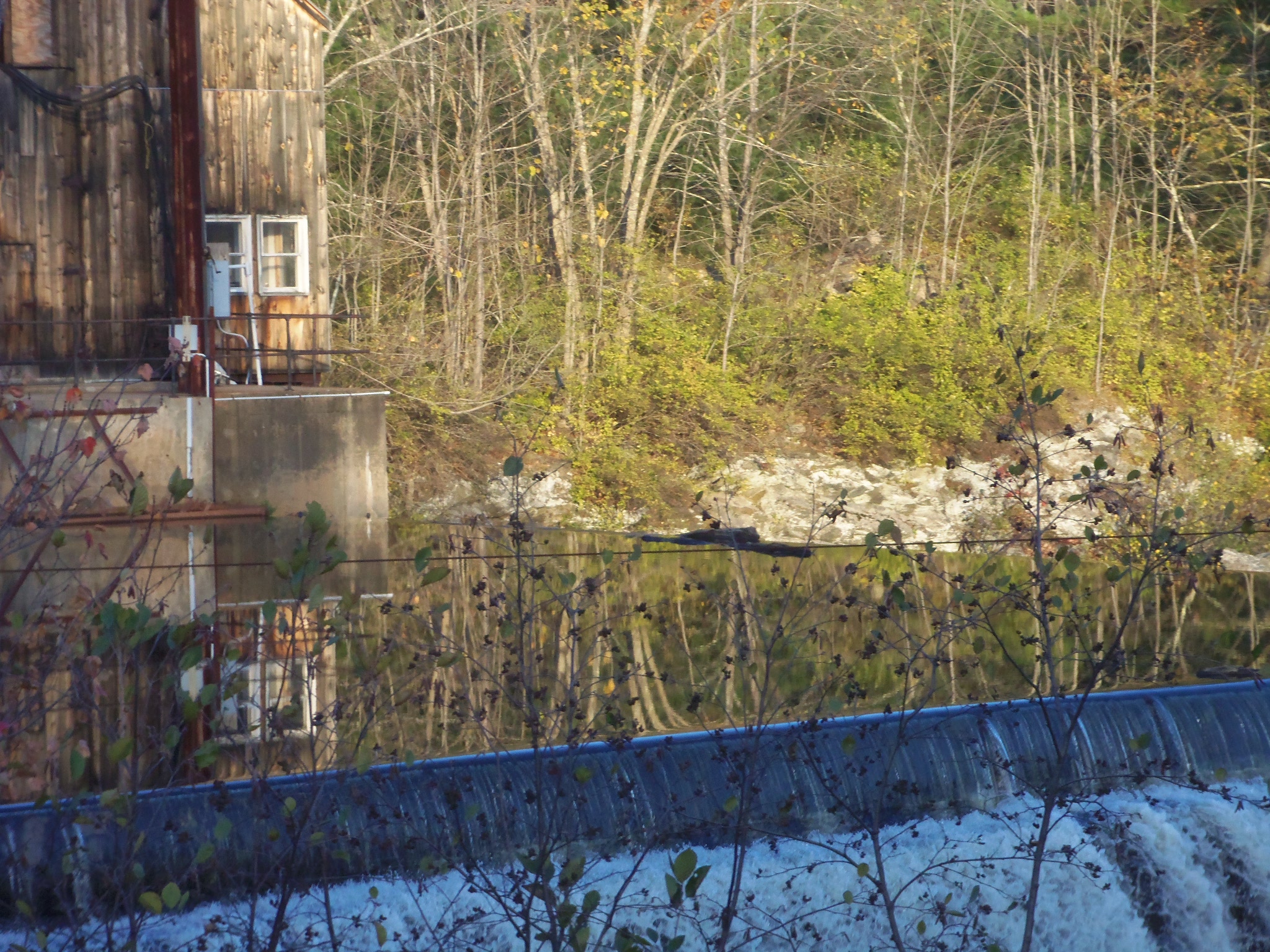
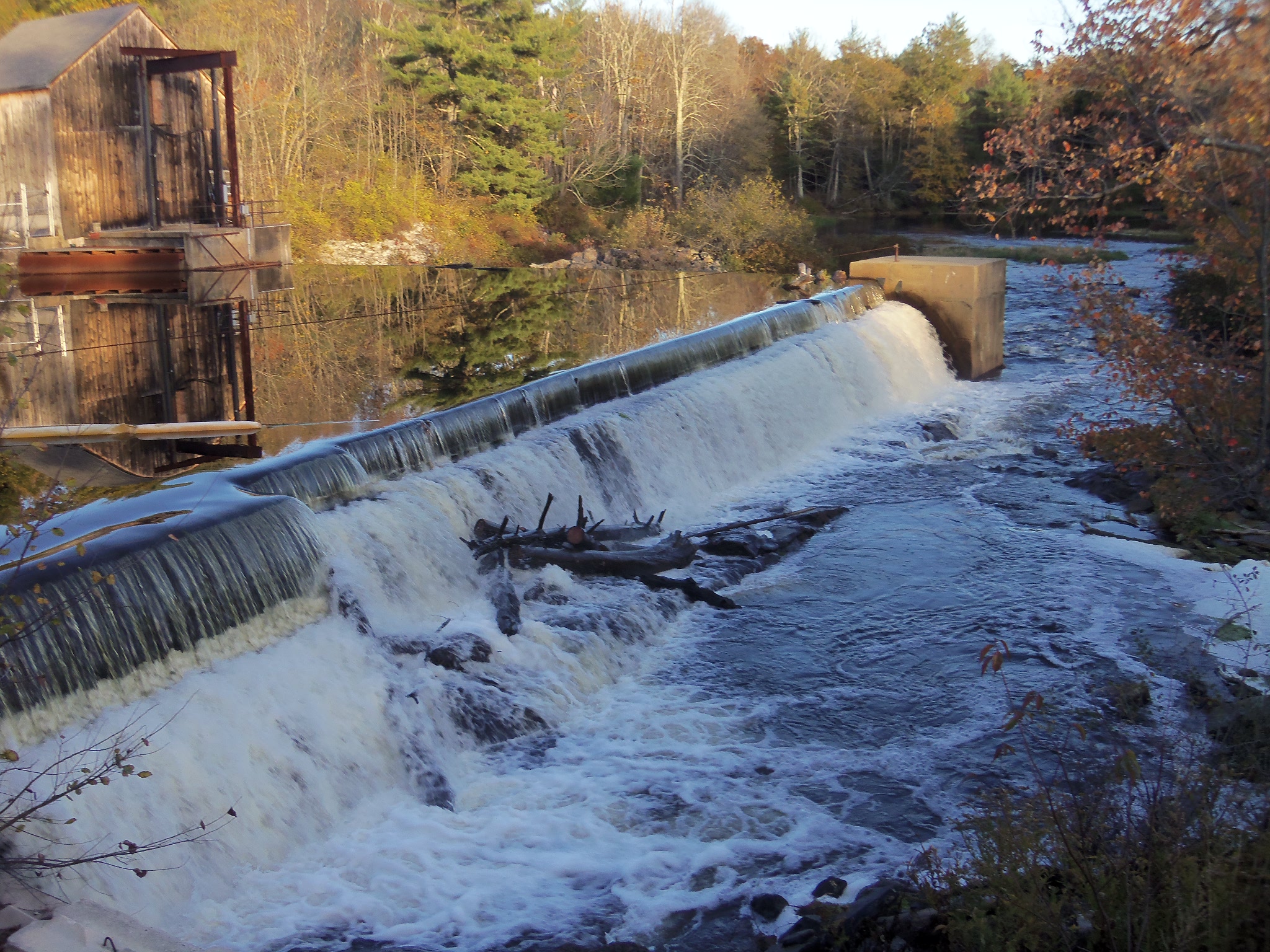
Water-powered mills, once the backbone of American industrial might, run as an emblem throughout Big Inca versus a New Pony Express Rider. The novel overlaps layers of history and ambition, geography and resettled ethnicity, growth and decay as they center in the once bustling town of yrubBury, where Bill is dispatched fresh out of college.

His mission is vague, misty, constantly shifting – and highly lucrative – even when he has no clue where it’s going. His coded messages to and from his boss in corporate HQ are his lifeline to the outside world.

It’s exciting, of course, to see preservation take shape. As what’s old becomes new again when his international conglomerate starts recasting a backwater town for its own ends, however clandestine. As we discover, behind the renovation of the decaying mills is a design for an isolated facility for a military-industrial behemoth.

At the heart of it all, Bill’s a solitary innocent puppet at the bidding of a distant boss pulling the strings from afar – a station agent out on the frontier. And then, running frantically along it.

Will he survive? And what of the mills?

Everything depends on the confrontation with the rival Big Inca.

Inca 1

~*~

The novel is available here.

A DANDY TEST MARKET

When it comes to launching a product, smart companies have long relied on test markets – small metropolitan areas where they can experiment with their advertising and sample consumer response before taking their new line national or global. They’ve learned it’s better than risking everything only to fall flat at the end of years of research and development.

In the political arena, New Hampshire’s first-in-the-nation presidential primary comes as close as we can to a test market for the candidates. Regardless of the state’s demographics, the reality remains: if you can’t win here – or finish toward the top – you’re not going to win much of the rest of the country. It’s the values that resonate.

The state is small enough the candidates can get out and meet people without having to have an enormous treasury. An advertising budget can be focused on a relative handful of newspapers and broadcasters, plus all the yard signs and buttons.

South Carolina, while small, is also nasty – and falls far to the right of the rest of the nation. Iowa, another early contender, is huge by comparison and requires much more media investment. Delaware is simply too small and unrepresentative. Any other other nicely contained possibilities? I’d like to know.

The other part of the New Hampshire tradition that’s often overlooked is that the election has legs – it originated as part of the annual town meeting day in March. As long as folks were out to do their exercise in democracy, they could also cast their votes for their party’s nominee. Besides, we didn’t have to pay to heat the town hall again. (You know that penny-pinching characteristic of our state.)

Too bad we can’t hold it all back to March, though. Christmas is way too early for this decision.