Steel rings in a stone wall
remained to tie up horses
back when.
Just in case.
To continue, click here.
Copyright 2015
You never know what we'll churn up in cleaning a stall
Steel rings in a stone wall
remained to tie up horses
back when.
Just in case.
To continue, click here.
Copyright 2015
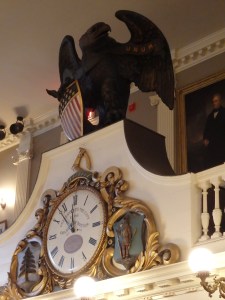
The great speeches, lectures, and debates gracing Faneuil Hall over the years reflect the rise and advance of American liberty and democracy.
Boston is a rich and varied destination – the Hub of New England, or the Universe, as they used to say. Living a little more than an hour to the north, we’re well within its orb.
“Jim’s one of our young flashes,”
a production chief told his wife
when all three paths crossed in the grocery.
To which, you might add, “in the pan.”
~*~
“I wish I could have gone to college.
I wanted to be an engineer.”
said the unshaved man in a Salvation Army pullover.
There are a lot of older people in college classes,
his nephew tried coaxing.
“I have no money,” came closing in like a curtain.
~*~
An elderly mother and middle-aged daughter
argument escalated in the sedan
in the doughnut shop parking lot.
They’d no doubt discussed this before.
At last, opening her door, the daughter repeated:
“Let’s go in and drop the subject.”
To continue, click here.
Copyright 2015
Can I really be coming up on my fifth year in the choir that’s evolved into the Revels Singers? Hard to believe, especially when I hear the astonishing, velvety sound around me in rehearsal — one that’s getting even crisper as we develop.
The only experience I’d had before joining was Mennonite a cappella hymns sung in experienced circles and then later some Quaker ad hoc four-part chorales. Working with the Boston Revels organization has been a much more intimidating and rewarding challenge, especially for an untrained singer who had only some background in violin.
One thing that has surprised me is how hard it is to hear myself. Leaving a new message on the telephone answering machine (remember those?) always came as a shock. Whose voice was that, anyway? It was lower and thicker than what I hear in my head. Add to that the reality that we don’t hear ourselves snore – how can that be? I’ve learned to recognize the vibration in my throat but never hear an actual sound. What a mystery!
As a singer, what I sense more is a vibration than hearing an actual voice. At least that’s the best I can describe. I hear the voices around me instead and adjust to them as needed. And, yes, I hear the times when we’re full and rich in all our glory.
I do recall an event a few months ago when we were in the sanctuary rather than the adjacent room of the church where we practice. We formed a big circle around the pews and were singing in mixed formation but, as it turned out, I was the only bass in my quarter of the room and so, when we had a line to ourselves, I heard my voice arching out to the center – like a fishing line being cast into water, as I recall. It was thinner and lighter than I expected. Hmm.
Another big surprise has come in the experience of performing, in contrast to rehearsals.
We practice in a room of fine acoustics and have a good time together as we move closer and closer to some higher standard. We gain a familiarity in that space and probably react to it. And rehearsing is always filled with interruptions as we reexamine a passage to tweak something, explore other possibilities, correct our pitch, or simply make it better or more convincing.
Each performance, though, is a unique experience. It feels quite different from what we normally do.
Since I’m not confident enough to give up my printed score – my memorization has always been faulty when it comes to words and music. I’m always rewriting them as I go, so on stage I need to have room to open my book. That, as I’ve learned, is not always a given. Nor is sufficient light. And even when both are adequate, there are times when I look down on the page with a sense that I’ve never, ever seen this piece of music before. How many times have we rehearsed it? Well, I am getting better at memorization, just in case.
You never really know quite what to expect, but each time you’ll discover something new. This really does put everything to the test. Outdoors, especially, can be difficult when it comes to hearing the others. You have to trust the director and, if you’re in a decent position, what you see of the others.
No matter what, though, the performance turns into an altered state of consciousness. I’m focused on our conductor, my colleagues, the music and lyrics, and to a degree on our audience and setting – and for a give span of time, we’re in a corded shell, as poet John Dryden once described it. (Somehow, I’d rather have that as chorded shell, but there I go revising.) We begin, we are, we finish. Leaving the stage, we grin at each other. That was … fun, yes, along with something quite different and inexplicable.
All that practice seems gone in such a short time. Well, it is like preparing a feast, especially if you consider raising your own ingredients. I love it when we have an audience that leaves feeling well fed, even euphoric.
We were gathering her possessions
for our return to school when I came across
Hollander’s recording of The Tempest.
“Where’d you get this?” I asked curiously,
looking up to see her disappointed face
and be told: “It was for your birthday.”
Years later, another lover
would filch the album
amid another tempest.
To continue, click here.
Poem copyright 2015
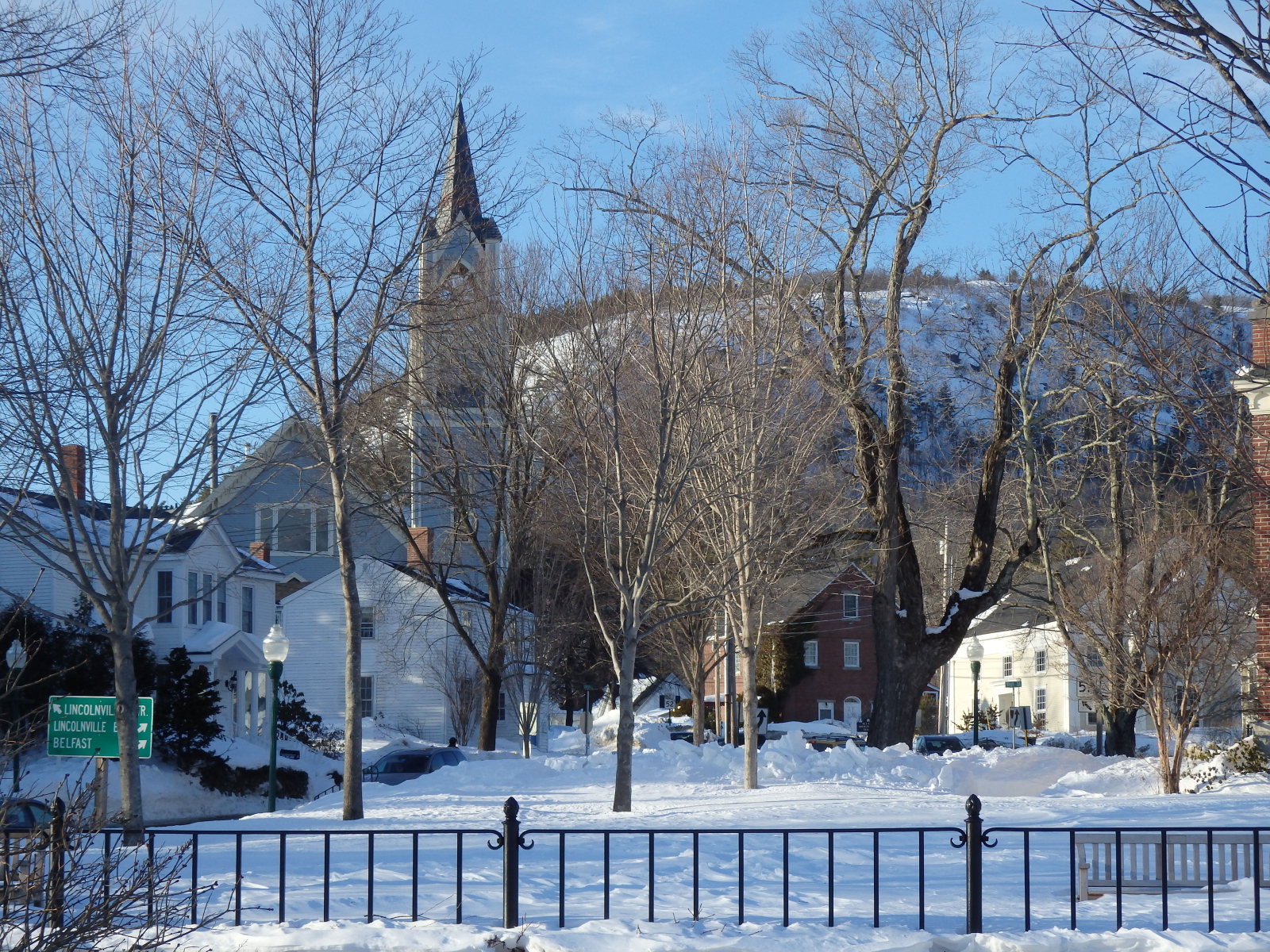
When I see this …

… I think of this.
 For the free ebook novel and more, click here.
I’ve been trying to avoid one nagging question: How does your faith make you a different person? How has it changed your life? Followed by: How do others perceive this?
The old Quaker testimonies presented faith as a matter of the way we live. Our “sufferings” for our beliefs. (It matters THAT much!) The days when Friends lived “under discipline” – language and clothing as outward expressions – remaining inescapable.
So what about today? How does being Quaker (or whatever your faith) make you not just different, but a better person than you would have otherwise been?
~*~

For more of my reflections, click here.
Think about the image the public holds of Quakers these days, and you may have to admit most folks have no idea we still exist. Quakers? Puritans? Amish? Even the oatmeal box man has largely lost any context. Even in the seacoast region, where we were once numerous, we’re largely invisible.
Part of it is our own fault, a consequence of dropping Plain dress and speech (not that we’d return to living under the strictures of old Quaker discipline). Another part of it was a consequence of the Hicksite and Gurneyite separations, which blunted the Quaker mission and message. For the record, the oatmeal company’s founders were so impressed by the reputation of Quakers that they appropriated our name; no Friends were involved. But all that was a long time ago.
Those who do have an image of us are likely to identify Quakers as either protesters, for obvious reasons, or as do-gooder philanthropists (probably in part through the Hicksite legacy and in part from the era when Friends produced a number of wealthy industrialists and financiers). Our most visible witness, the American Friends Service Committee, has contributed to both the demonstrator and charitable impressions.
Noble as that work is, the ultimate challenge we face in restoring public awareness of the Society of Friends is in voicing the spiritual foundation for our actions – the unique faith and practice we treasure. At its core, this means extending an invitation to join us in our remarkable worship. So how do we project a semblance of radiant silence? Makes for a more interesting challenge, doesn’t it?
~*~

For related poems and more, click here.
Caterpillar, one of the legendary periodicals in 20th century American poetry, set out with an intriguing premise – that three years was about all a literary journal could do before repeating itself or exhausting its commission. (Never mind that it went twice that.)
Somehow, Friends have found that for some offices, three-year terms work best; while they may be extended, six years becomes the upper limit. After that, the officer rotates into a new place of service.
The Red Barn’s been at it five years now – launching its four subsidiary blogs along the way. And for those of you who’ve been blogging much longer, you’ve truly earned my respect. It’s a lot of work, no doubt about it.
~*~
This past year, especially, has been intense as I’ve released some long pent-up emotions and thoughts about polity in action. (Remember, though, my degree was in political science, and I entered journalism with a sense of public service that was, in a psychically bruising degree, thwarted to the corporate profit sheet.)
So here we are, in face of the thugs who’ve been attacking our free speech and American values. However the election turned out.
And I’m still fired up, even if I’m looking at a more leisurely pace in the year ahead.

