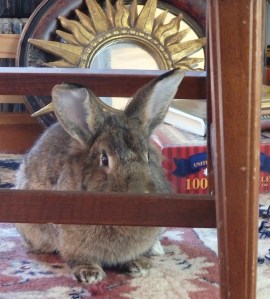
You never know what we'll churn up in cleaning a stall

One bright spot in for me in this Covid-19 self-isolation has been the Metropolitan Opera’s nightly streaming of a Live in HD performance from its archive. As I mentioned in a March 23 posting, these are free and available until 3:30 the next afternoon. Better yet, the series is continuing. I’ve now seen more operas this way than I’ve seen live and in concert combined.
As I mentioned in “Spending nights at the opera on my laptop,” watching these performances is quite different from listening to them on the radio, and some of the things that stand out for me are the extraordinary level of the acting, by not just the principal singers but everyone on stage, leading to the important presence of the chorus in its role as actors and not just voices, and the brilliance of the opera’s dancers, who I’ll argue are highly underappreciated – they even move much of the set around during some productions. Yes, and those sets and costumes are amazing, even with all of the excessive luxury, expense, and unbelievable perfection that the video cameras catch even when those in the audience are oblivious at their distance. This is as close to the ideal, overall, as anyone could ever expect in live theater.
The backstage videos and interviews have also deepened my appreciation. Many kudos.
That said, let me note ten more distinctive things that are jumping out for me as I watch:
Is there anything that’s making this period of shelter-in-place somehow special?

I’ve long been fascinated by the inner workings of English in very short segments. Typographical errors, for instance, when they seem to release some other possibilities. Aram Saroyan’s Lighght would be a prime example, presented as a poem in its entirety.
We accept the silent “gh” without question in conventional writing, but a second one brings us back to the perplexity we had as children learning some very strange spellings. And then, maybe, it points to the wonder of light itself.
There’s also the question of just how short a poem can be. One word? Two? A single line? Two lines?
Beyond that is the concrete poem, including those where typography itself seems to embody its own beauty, apart from any obvious meaning.
More recently, I’ve become fond of two or three synonyms or antonyms in juxtaposition.
I’ve played with all of these concepts, some of the results now appearing in my Thistle Finch chapbooks and others in my Kinisi series here.
And some of them could simply be prompts for a writing exercise.
Trying to figure out what to call them has always been a challenge. I wound up with Kinisi, from the Greek root for kinetic, when I noticed what attracted me to these fragments was some mysterious innate motion generated by the bits.
Here’s hoping they leap and dance in your imagination, too.
Have you ever heard someone blame religion for all the armed conflicts in the world? It’s an easy accusation to make, at least until you look deeper to see the financial, ethnic, even racial motivations underlying the violent and oppressive actions throughout history.
Karl Marx may have called religion the opiate of the people, but he also saw economic inequalities as the real oppressor. Labor inequities were only the tip of that iceberg. For once, you can call me a Marxist, at least on that count.
As a member of a historic Peace Church denomination (a grouping that also includes Mennonites, Brethren, and Amish), I can view the wider Christian stream from a critical perspective that acknowledges the many ways faith communities get co-opted by what is often called the World in earlier pronouncements or Empire in corners of our own – even seduced by the vast range of secular idols. What emerges is corrupted and even false religion, not even of a godly scope.
That perspective can provide for a long examination, one far too broad for a mere blog post.
Nevertheless, in the face of the rising stream of intolerant and often violent social and political backlash across America and Europe, especially, I sense that the anger and hatred are fueled by a post-Christian mindset, one that is ultimately materialistic, divisive, and nihilistic.
In contrast, what I’ve often found in radical faith across traditions is an alternative of hope, humility, justice, and love. Repeatedly, progressive social, political, and economic reformers have had religious roots and support. It’s not an even history, and one that is too often countered by reactionary forces, but I wonder how else the world might turn back the growing darkness without people drawn together in deep spiritual faith and discipline.
The continuing marginalization of religion – especially radical religion, like that I espouse – is one more means of inhibiting any challenge to the few who are reaping the vast benefits of the ongoing social breakdown for their own personal gain.
Where do you find refuge, renewal, and opportunities for social progress?
In this self-isolation during our Covid-19 outbreak, I no longer have weekly Meeting for Worship, regular committees or social gatherings, rehearsals, or daily indoor lap swimming to define my daily schedule. Even for an introvert like me, their absence can be disconcerting.
It does alter my awareness of aligning myself with the outside world. I mean, it’s been ages since I’ve watched television, so knowing what’s on any particular night is irrelevant.
What happens is an alternate awareness.
For example:
It was Saturday afternoon, no doubt in my mind.
No, it’s Friday, my wife asserted.
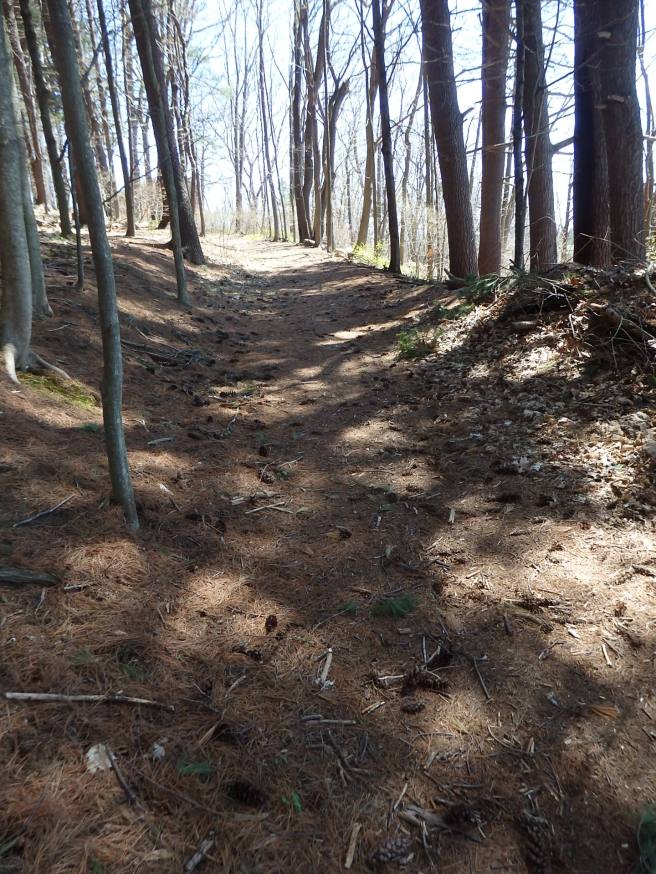
No, it’s Saturday. I had the number of the date in my head, thanks to the little numerals in the corner of my laptop screen earlier in the day. But the name of the day didn’t register. A Saturday would explain the number of people I encountered out on the trail in the woods along the Isinglass River.
Back home, ready to prove my wife wrong, I turned to the wall calendar. The date fell under a Friday, not a Saturday. How could that be?
The jolt left me feeling a bit wobbly. You know, Rip van Winkle mode. I felt I’d lost a day, like a pair of missing socks, maybe. Well, actually, I had gained one, but it didn’t feel like finding a 20-dollar bill. Something still felt hollow.
But then, something also felt healthy, as in being more fully focused on the little things I’m taking on.
It’s been a long time since I experienced that, probably nearly a half century, back when I was living in the yoga ashram, distanced from the daily affairs of society. There, every day was full and special. Yes, we had some connection with the weekly calendar – guests arriving and departing on the weekends, especially – but there were few other demands that required knowing the names of the days. Instead, it was more Today, Tomorrow, Yesterday.
I came to consider that living in “real” time, rather than externally defined hours and days and their nights.
So here we are. Yes, I still need to consult my weekly planner. No escaping that.
And my daily to-do lists remain important.
I know things will change when we all get back to normal, whatever that will be at the time. The fact remains that what we’re encapsulated in now is unique.
In drafting the first section of what’s now Nearly Canaan, I remembered:
Well, Cassia sees something similar in What’s Left.
~*~
How do you feel?